What if a mysterious smell at 30,000 feet could reroute your journey, send fellow travelers to the hospital, and trigger a national debate about airline safety—all in a single afternoon?
Story Snapshot
- Five people hospitalized after an American Airlines flight diverted due to an unexplained odor.
- Emergency responders found no hazardous materials, but the incident raised serious questions about cabin air quality.
- Industry experts and regulators now face renewed scrutiny over airline safety protocols.
- The story spotlights both the fragility and resilience built into modern air travel.
When Routine Travel Turns into Medical Emergency
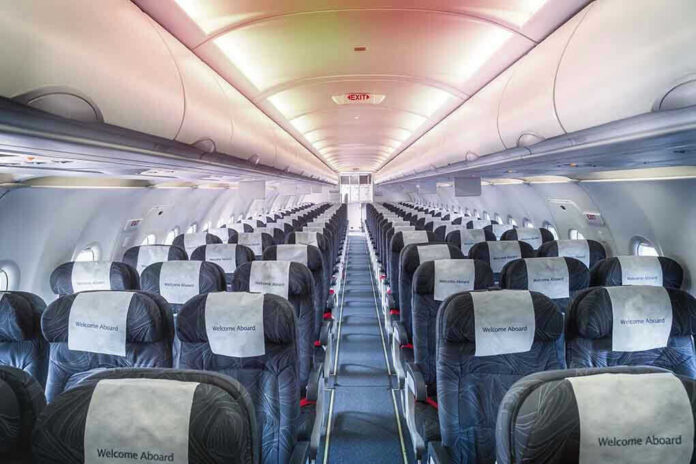
American Airlines flight AA1234 departed Miami for New York on November 20, 2025, with little fanfare. About an hour into the journey, a strong, strange odor began circulating through the cabin. Passengers and crew quickly reported symptoms ranging from dizziness to nausea, prompting the pilot to divert to Jacksonville International Airport. The decision, made within minutes, prioritized safety over convenience and set in motion a full-scale emergency response that would leave five people hospitalized and hundreds more questioning the invisible risks of air travel.
5 on board American Airlines flight hospitalized after odor diverts plane https://t.co/Kgejk2X7Bb #FoxBusiness
— CallieBenson (@CallieforTrump) November 25, 2025
Emergency teams boarded the aircraft immediately after landing. The cabin was searched for chemical spills, electrical faults, or hazardous materials, but nothing dangerous was found. Jacksonville Fire and Rescue confirmed all patients were stable and released after observation. Yet for the passengers, the ordeal didn’t end once they stepped off the plane. Many described lingering anxiety, confusion, and frustration with the lack of concrete answers. The incident wasn’t just a logistical disruption—it was a psychological jolt, forcing travelers to confront just how little control they have over what happens inside a pressurized tube miles above the ground.
Behind the Scenes: Protocols, Precedents, and Power Plays
Airlines train crews for a wide range of emergencies, from heart attacks to engine failures, but airborne odors present a unique challenge. The source could be mechanical, chemical, or biological; symptoms can range from mild discomfort to severe health effects. In the past decade, similar incidents have diverted flights and led to hospitalizations, fueling research into what’s known as “Aerotoxic Syndrome”—an umbrella term for illnesses linked to contaminated aircraft air. Regulators such as the FAA and NTSB oversee investigations and enforce compliance, but the power to act in the moment rests with pilots and flight attendants. Their judgment calls can save lives but also expose airlines to scrutiny, liability, and public outcry.
American Airlines responded with a statement emphasizing its commitment to safety and cooperation with authorities. The FAA launched a routine investigation, and the aircraft was returned to service after a thorough inspection. Yet the official findings left a lingering question: If no hazardous materials were detected, what caused the odor and the health effects? Experts speculated that a mechanical source was most likely, but no definitive answer emerged. This ambiguity reflects the broader challenge facing the aviation industry—how to protect passengers from invisible threats that may never be fully explained or resolved.
Ripple Effects: Anxiety, Accountability, and Industry Change
For the five individuals hospitalized, the incident ended with a clean bill of health. For everyone else, the implications persist. Short-term disruptions included missed connections, rebooked flights, and heightened anxiety about future travel. Long-term effects may include changes in airline policies, upgrades to air filtration systems, and renewed calls for transparency around in-flight incidents. The economic costs of emergency responses and medical care are measurable, but the social and psychological impacts are harder to quantify. Passengers now face a new layer of uncertainty every time they board a plane, while airlines worry about reputation and regulatory pressure.
Industry experts weighed in with measured confidence: Incidents like this are rare and usually well-managed, but they expose vulnerabilities in safety protocols and air quality standards. Medical professionals point out that symptoms from cabin odors are typically mild, yet they stress the need for caution and rapid response. Regulatory analysts predict that the FAA may consider stricter guidelines for monitoring and filtering cabin air. Academic studies call for more research into the health effects of exposure to unknown substances at altitude. The consensus is clear—the aviation sector must adapt to shifting risks, even if the source of those risks remains elusive.
Sources:
ABC News, “5 hospitalized after odor diverts American Airlines flight,” Nov 21, 2025.
CNN, “American Airlines flight diverted after odor sickens passengers,” Nov 21, 2025.
NBC News, “No hazardous materials found after American Airlines flight diverted,” Nov 21, 2025.
FAA official statements, Nov 21-22, 2025.