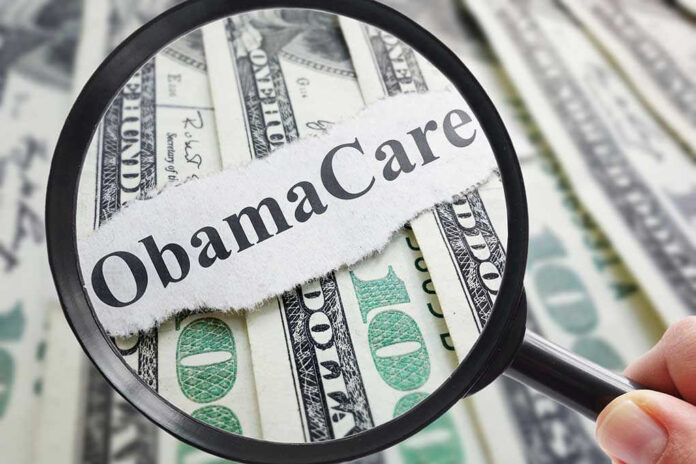
One senator’s unexpected candor about Obamacare’s failures exposed not just cracks in the law, but in the very foundation of political messaging—and his words might shift the next chapter of the healthcare debate.
Story Snapshot
- Democratic Senator Peter Welch publicly admitted major shortcomings of Obamacare during a heated Senate debate.
- The government shutdown reached record length, fueled by disputes over extending Obamacare subsidies.
- Welch’s statement gave rare bipartisan ammunition to critics questioning the law’s effectiveness.
- The confession signals a potential turning point in the ongoing healthcare reform battle.
Senator Welch Breaks Ranks on Obamacare Performance
Senator Peter Welch, a Democrat from Vermont, stood on the Senate floor and delivered a statement few expected from within his own party. While defending the Democratic position amid a record-breaking government shutdown, Welch admitted that Obamacare’s promises had not materialized for many Americans. His acknowledgment came as Democrats pressed for an extension of subsidies, the very lifeblood of the law’s support base. The moment sent a ripple through both chambers, as Welch’s candor emboldened critics and stunned party loyalists.
The admission, delivered in the heat of legislative standoff, landed with weight because it departed from years of carefully crafted talking points. Rather than repeating standard defenses, Welch conceded real shortcomings—rising premiums, narrow provider networks, and persistent gaps in coverage. This was not a rhetorical misstep. The senator’s words were deliberate, signaling frustration with a policy that, despite its intentions, had left too many constituents dissatisfied.
Shutdown Drama Highlights Fault Lines in Healthcare Policy
The government shutdown—already the longest in U.S. history—traced its roots to an impasse over healthcare funding. Democrats rallied behind the push to extend Obamacare subsidies, arguing that withdrawing them would devastate millions who depend on reduced insurance costs. Republicans countered that these subsidies masked deeper flaws in the law, artificially propping up a broken system. Welch’s admission, delivered as part of a defense, paradoxically lent credence to the Republican argument that the law required more than just additional funding.
Welch’s remarks reverberated beyond the confines of the Senate chamber. Conservative media seized on the moment, framing it as proof that even staunch supporters recognized Obamacare’s limitations. For the first time in years, a high-profile Democrat had provided critics with more than anecdotal evidence—they now had a public admission from inside the tent. The shutdown’s primary battleground, previously about budget lines and political leverage, suddenly shifted to the question of whether the Affordable Care Act could be salvaged or needed a fundamental rethink.
Healthcare Debate Reignites, Fueled by Rare Political Honesty
Welch’s confession comes at a pivotal moment. Polls show that Americans remain deeply divided over the future of healthcare, but frustration with rising costs and bureaucratic complexity is nearly universal. Previous debates focused on abstract numbers and partisan slogans. Welch’s words, by contrast, injected a dose of authenticity that resonated even with those skeptical of his party’s solutions. Some conservative commentators praised the senator for his honesty, while others saw an opportunity to press for sweeping reforms—perhaps even a total repeal.
Within the Democratic Party, reactions have been mixed. Some colleagues privately acknowledged the need for greater transparency, while others worried that Welch’s remarks could be weaponized in the next election cycle. Progressive activists called for doubling down on reform—pushing for a public option or Medicare for All—while centrists urged caution, warning that further upheaval could backfire. Welch himself remained steadfast, arguing that acknowledging failure is the first step toward meaningful progress. The healthcare debate, once mired in platitudes and posturing, now has a fresh—and potentially volatile—impetus.
What Comes Next for Obamacare and Political Discourse?
Senator Welch’s admission marks a rare moment of political vulnerability that could reshape the healthcare policy landscape. As lawmakers scramble to end the shutdown and restore government operations, the larger question looms: can honest appraisal of policy failures lead to genuine solutions, or will it simply stoke further division? Welch’s example may embolden others to speak candidly about the challenges facing American healthcare, but it may also make them targets in a hyper-partisan environment.
For voters, the exchange offers both frustration and hope—a reminder that behind every policy are real people, grappling with costs, coverage, and care. The coming months will reveal whether Welch’s candor sparks a broader reckoning or is quickly buried beneath the next political crisis. Either way, his words have ensured that the conversation around Obamacare, far from settled, is just beginning another round.
Sources:
Senate Dems will huddle on emerging shutdown deal