NBA legend urges a controversial call to action that could redefine American citizenship and duty.
Story Snapshot
- NBA legend advocates for mandatory military service in the U.S.
- Proposal aims to instill a sense of responsibility and unity among citizens.
- Discussion revolves around national service and its potential benefits.
- Debate sparked on the implications for freedom and national identity.
NBA Legend’s Proposal
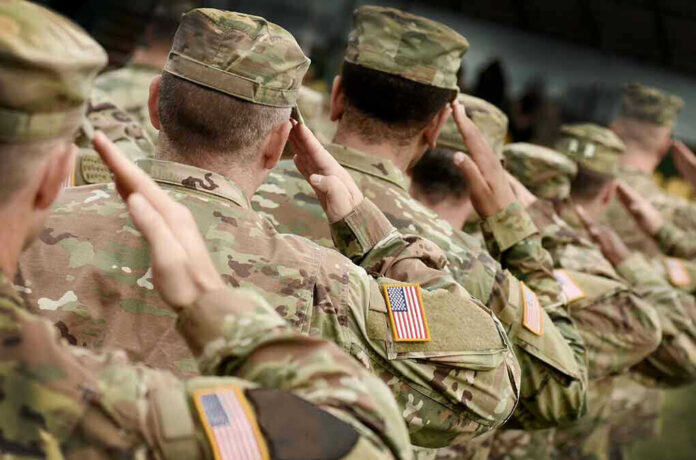
In a bold move, an NBA legend has called upon President Donald Trump to consider implementing mandatory military service in the United States. This proposal, though contentious, aims to foster a sense of responsibility and unity among Americans. The notion is not entirely new, as many countries around the world have similar mandates, but its introduction in the U.S. would mark a significant shift in national policy.
This idea has sparked a fervent debate on social media platforms, with opinions ranging from strong support to vehement opposition. Proponents argue that such a policy could bridge the widening gap between different socioeconomic groups by providing a common experience and purpose. However, critics warn of potential infringements on personal freedoms and the challenges of enforcing such a mandate in a country that highly values individual liberty.
A A former NBA player and champion, 6'10" Dwight Howard recently called upon President Trump to consider implementing a mandatory term of service for Americans. Hmmm 🤔 https://t.co/ziSs3jMAQz
— Lt. Col. David Flippo, USAF Ret. (@DavidFlippoNV) December 31, 2025
Potential Benefits of Mandatory Service
Supporters of mandatory military service highlight several potential benefits. They argue that it could cultivate a stronger sense of national identity and pride, as citizens from diverse backgrounds work together towards a common goal. Additionally, it could provide young adults with valuable skills and discipline that can be applied in civilian life. The experience of serving could also foster empathy and understanding, reducing societal divisions.
Moreover, proponents suggest that mandatory service could help address recruitment challenges faced by the military. With fewer individuals voluntarily enlisting, a mandatory service policy could ensure a steady stream of recruits, thereby enhancing national security. This, in turn, could lead to a more prepared and resilient military force, capable of responding to various global threats.
Concerns and Criticisms
Despite the potential benefits, the proposal has not been without controversy. Critics argue that mandatory military service could infringe upon individual freedoms, a cornerstone of American values. They question whether it is ethical to compel citizens to serve against their will, particularly in a country that prides itself on voluntary service. Furthermore, there are concerns about the practicality of implementing such a policy, including the costs and logistics involved.
There is also the fear that mandatory service could disproportionately affect certain demographics, exacerbating existing inequalities. The challenge lies in ensuring that the policy is applied fairly and does not become a burden or disadvantage to already marginalized communities. These concerns must be addressed to gain broader support and consensus on the issue.
Historical Context and Global Perspective
Mandatory military service is not a novel concept globally. Countries like Israel, South Korea, and Switzerland have long-standing policies requiring citizens to serve in the military. These nations often cite improved national cohesion and preparedness as key benefits of their systems. However, each country’s approach is tailored to its unique cultural and geopolitical context, raising questions about how such a policy could be adapted to fit the U.S.
In the American context, the implementation of mandatory military service would require careful consideration of the nation’s diverse values and historical experiences. The debate is complex, involving not just policy considerations but also ethical and cultural dimensions. As discussions continue, it remains to be seen whether the proposal will gain traction and what impact it could have on the fabric of American society.