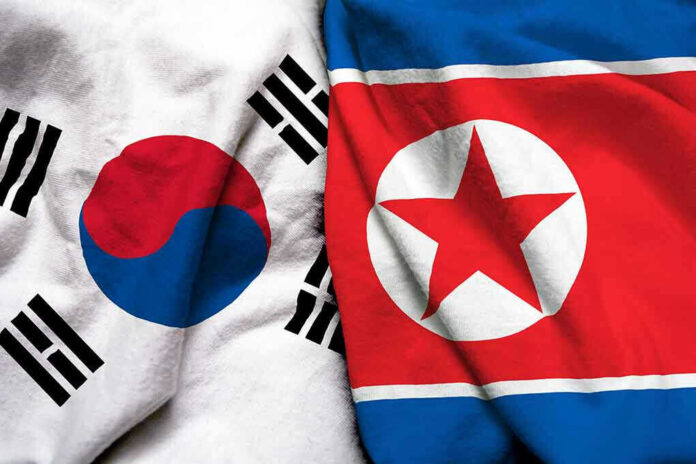
North Korea’s public rejection of South Korea as a diplomatic partner signals a dangerous escalation, spotlighting the failure of appeasement and the risks to U.S. regional interests at a time when American strength and constitutional values must not falter.
Story Snapshot
- Kim Yo Jong, sister of Kim Jong Un, declared North Korea will never accept South Korea as a diplomatic partner, escalating hostile rhetoric.
- Her remarks directly linked South Korea’s political system to decades of confrontation and accused Seoul of deceptive outreach efforts.
- The announcement comes amid heightened U.S.-South Korea military cooperation and renewed North Korean threats of “preemptive diplomatic response.”
- Experts warn this entrenches adversarial relations, increases regional risk, and highlights the failure of leftist appeasement strategies.
Kim Yo Jong’s Rebuke: North Korea Escalates Rhetoric Against Seoul
On August 20, 2025, Kim Yo Jong, sister of North Korean leader Kim Jong Un, publicly dismissed all diplomatic overtures from South Korea, stating unequivocally that Pyongyang would never accept Seoul as a partner. Her statement, broadcast through North Korean state media, targeted South Korean President Lee Jae Myung’s administration, accusing it of perpetuating confrontation regardless of supposed political ideology. This marks a direct escalation in hostile rhetoric, as Kim Yo Jong linked South Korea’s political system to decades of antagonism and rejected both conservative and progressive attempts at engagement.
In her remarks, Kim Yo Jong condemned South Korea’s military cooperation with the United States, announcing “immediate” and “preemptive diplomatic response” measures. This public rebuke was delivered during a rare North Korean Foreign Ministry meeting, underscoring her influential role in shaping Pyongyang’s foreign policy. The timing coincides with joint U.S.-South Korea military drills, which North Korea consistently frames as direct threats to its regime security. By portraying outreach efforts as deceptive, Kim Yo Jong signaled that dialogue and concessions from Seoul would only be met with suspicion and retaliation, not cooperation.
Background: Cycles of Hostility and Failed Engagement
The Korean Peninsula remains technically at war since the 1953 armistice, with diplomatic relations repeatedly cycling between brief engagement and prolonged hostility. South Korea’s current administration had attempted renewed dialogue and peace initiatives, yet North Korea’s leadership, now increasingly represented by Kim Yo Jong, has responded with hardline statements and public rejections. Previous attempts at rapprochement, especially during periods of U.S.-ROK military exercises, have resulted in similar North Korean threats and isolation. This long-standing pattern exposes the dangers of appeasement and the need for a strong, principle-driven U.S. response that defends national security and constitutional interests.
North Korea’s strategy relies on public statements to signal its intentions, often escalating rhetoric during periods of heightened military activity. The current episode demonstrates Kim Yo Jong’s growing prominence as the regime’s chief spokesperson, using her platform to project strength and reinforce Pyongyang’s uncompromising stance. For conservatives focused on protecting American values and interests, these developments serve as a stark reminder that adversaries respond not to weakness or appeasement, but to credible deterrence and resolve.
Diplomatic Deadlock and Regional Consequences
Kim Yo Jong’s announcement has left diplomatic relations frozen, with North Korea signaling further isolation and possible retaliatory actions. The immediate impact includes heightened tension on the peninsula and the risk of military provocations, such as missile tests or cross-border incidents. In the long term, experts warn this deepens the adversarial divide, making future dialogue less likely and increasing the risk of miscalculation. South Korea faces increased security concerns, while the North Korean population remains isolated by the regime’s policies. Regional actors—including Japan, China, and Russia—are closely monitoring for potential spillover effects that could destabilize the broader region.
The economic and social consequences are significant. Inter-Korean economic projects may be disrupted, defense spending is likely to rise, and anxiety in border regions will intensify. The political landscape in both Koreas will likely harden, as moderates are sidelined in favor of hardline positions. Humanitarian groups, already hampered by restrictions, face even greater challenges in reaching North Koreans in need. This situation illustrates the cost of failed engagement and the necessity for policies rooted in strength and American constitutional values, rather than appeasement or globalist agendas.
Expert Analysis: Risks of Escalation and Lessons for U.S. Policy
Industry analysts note that Kim Yo Jong’s statements align with North Korea’s established pattern of responding to perceived threats with escalatory rhetoric. Experts caution that the lack of diplomatic engagement raises the risk of miscalculation and potential conflict, particularly as both sides adopt more inflexible stances. Academic perspectives underscore the cyclical nature of North-South relations, with each period of outreach swiftly followed by renewed hostility. Some view Kim Yo Jong’s increased visibility as evidence of her growing influence and the regime’s intent to project unity and defiance.
Diverse viewpoints exist regarding Pyongyang’s objectives. Some analysts argue that such statements are primarily intended for domestic audiences, reinforcing regime legitimacy in the face of external pressure. Others suggest the rhetoric serves as a negotiating tactic to extract concessions from Seoul and Washington. However, U.S. policymakers must recognize that North Korea’s provocations highlight the failure of leftist engagement policies and underscore the importance of a robust, constitutionally grounded approach to foreign affairs—one that defends American interests and upholds the values of liberty, national security, and the rule of law.
Sources:
Kim Yo Jong dismisses Seoul as diplomatic partner, criticizes South Korea’s outreach efforts – UPI
Kim Yo Jong announces ‘preemptive diplomatic response’ over US-ROK drills – NK News
Kim Yo Jong escalates rhetoric against South Korea during joint military drills – Stars and Stripes