Kamala Harris’s declaration that Joe Biden was “fully competent” to serve another term—delivered to a stunned Jon Stewart—cracked open the deepest fault lines in America’s debate over presidential fitness, loyalty, and political truth.
Story Highlights
- Harris’s claim about Biden’s competence directly contradicted public doubts following his withdrawal from the 2024 race.
- Jon Stewart’s surprise underscored persistent skepticism about Biden’s age and ability, even among media insiders.
- The controversy is amplified by Harris’s memoir and ongoing media tour, reigniting debates about leadership transparency.
- Broader questions arise about loyalty, truth-telling, and the future of candidate vetting in American politics.
Harris’s Surprising Defense of Biden’s Competence
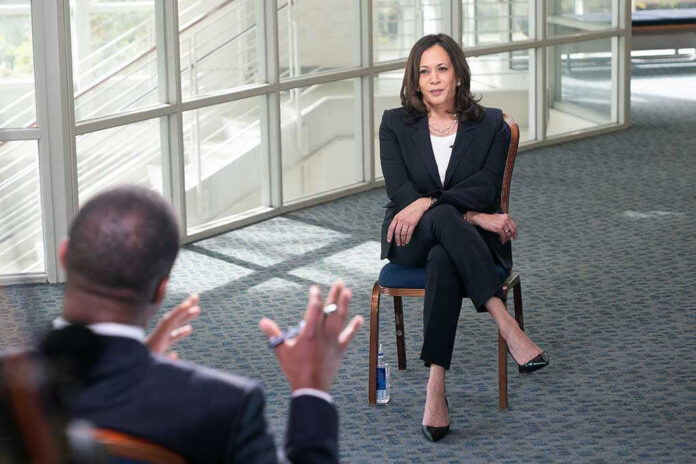
Kamala Harris, former Vice President and Democratic nominee, sat across from Jon Stewart in October 2025 and delivered a line that landed like a thunderclap: “I believe he was fully competent to serve.” Stewart, no stranger to political theater, reacted with disbelief—a moment that instantly ricocheted through the political media ecosystem. Harris’s statement came not just as a defense of Biden’s legacy but as a test of her own credibility among an electorate still bruised by the events of the previous year.
Harris’s insistence did not occur in a vacuum. Biden’s withdrawal from the 2024 presidential race had been spurred by poor debate performance and mounting scrutiny over his cognitive fitness. Harris, thrust into the spotlight as the new standard-bearer, faced the dual challenge of defending her predecessor while forging a distinct identity for herself. Stewart, whose own reputation for grilling political figures preceded him, pressed Harris with the blunt skepticism that has become his trademark.
Public Skepticism and Media Reactions
Stewart’s podcast, “The Weekly Show,” is renowned for unvarnished political conversations. In this episode, his incredulity mirrored public sentiment: polls and pundits alike had questioned Biden’s ability to govern effectively. Harris’s defense appeared at odds with widely reported concerns about Biden’s age and apparent decline during the 2024 campaign. This tension between insider loyalty and outsider skepticism became the episode’s defining dynamic, with Stewart voicing what many Americans wondered—was Harris’s statement political spin or a principled stand?
The timing of Harris’s media tour, coinciding with the release of her memoir “107 Days,” layered her remarks with additional complexity. The memoir detailed her campaign’s struggles and her complicated relationship with Biden. This context, combined with the podcast’s high-profile platform, ensured that Harris’s words reverberated far beyond Stewart’s studio. Critics seized on the perceived disconnect between her defense and Biden’s recent withdrawal, while supporters argued Harris was simply upholding the tradition of public loyalty in the face of political adversity.
Broader Implications for Political Leadership and Transparency
Harris’s comments have reignited the perennial debate over age, fitness, and transparency in presidential candidates. The Democratic Party, already grappling with leadership transitions and public trust issues, finds itself at the center of a renewed discussion about how—and when—to address the realities of aging leaders. Stewart’s reaction served as a proxy for a media and public unwilling to accept assurances that run counter to observable evidence, further complicating Harris’s efforts to control her narrative.
Historically, questions about presidential fitness are not new. Ronald Reagan and Donald Trump both faced scrutiny over age and health, but Biden’s 2024 withdrawal set a new precedent for how such concerns can upend the political landscape. Harris’s public loyalty may be strategic, aimed at preserving party unity, yet it also risks alienating voters who prioritize transparency over partisanship. The ongoing fallout from her remarks suggests a growing demand for honest discourse about leadership capabilities, especially as the nation prepares for future elections.
Expert Perspectives and the Future of Candidate Vetting
Political analysts largely agree that Biden’s withdrawal validated the very concerns Harris now downplays. Stewart’s skepticism reflects not just his personal opinion but a broader media consensus that voters deserve candid assessments of their leaders. Academic observers note that the age and fitness debate has deep roots in American history, but the rapid amplification across social and traditional media marks a new era in public accountability.
Diverse viewpoints continue to shape the narrative. Harris’s defenders see her stance as principled loyalty; critics call it calculated spin. The implications stretch beyond the individuals involved, hinting at systemic changes in how parties vet candidates and communicate with the public. As Harris continues her press tour, and Stewart’s podcast episode circulates, the open questions left by their exchange—about truth, loyalty, and the limits of political narrative—remain unresolved, ensuring this story will linger in America’s political consciousness.