

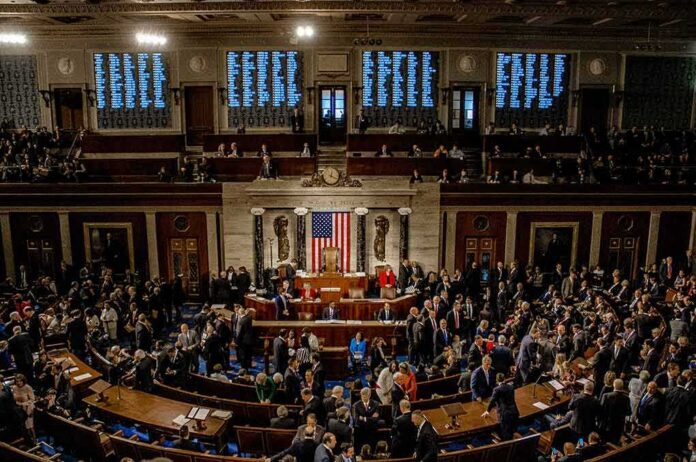
Senate Republicans kept John Thune in charge without a contest while House Republicans chose Jim Jordan in a secret ballot, sharpening a fight over whether the party wants continuity or change.
Story Snapshot
- John Thune’s selection faced no Senate challenge, signaling continuity in strategy.
- House Republicans picked Jim Jordan over Steve Scalise in a 106-73 secret vote.
- Critics say Senate continuity means caution; Thune says the plan is to drive Trump’s agenda.
- The split reflects a long-running debate in Congress: confrontation versus negotiation.
Uncontested Thune Selection Signals Senate Continuity
PJ Media reported that Senator John Thune’s selection as next year’s Senate Republican leader was uncontested, which advocates of reform cast as a signal of the status quo. The report framed the move as continuity in tone and tactics. It did not cite a specific vote tally or recorded objections. That gap leaves questions about internal dissent, but the core fact stands: no rival formally challenged Thune, and the conference moved ahead with him at the helm.
Thune and his allies present a different story. They say Senate Republicans plan to press President Trump’s agenda and confirm his nominees at speed, while guarding rules like the filibuster and avoiding shutdowns that hurt the public. Thune has listed border policy, energy production, tax policy, and a farm bill as early targets. He also ties the plan to a voter mandate to act on immigration, regulation, and national defense, arguing that discipline, not drift, guides the strategy.
House Republicans Back Jordan’s Confrontational Style
Across the Capitol, House Republicans chose Representative Jim Jordan over Representative Steve Scalise in a closed-door ballot, with a reported 106-73 result. Conservative media cast Jordan as a fighter who would not yield to Democrats, calling his win a reset for messaging and posture. Because the vote was secret, it is hard to prove a single motive. Even so, the margin shows a clear member preference for Jordan’s style at this moment.
Jordan’s rise gives reform advocates a contrast. They argue that the House signaled a willingness to sharpen lines, while the Senate opted for familiar leadership. That claim, however, rests on commentary more than hard policy evidence. The record so far does not tie Thune’s leadership to a specific retreat on border bills, energy policy, or spending fights. It shows a difference in tone and messenger, not yet a measurable difference in legislative outcomes.
What Both Sides Say They Will Do Next
Thune says Senate Republicans will confirm nominees, move border and energy bills, extend tax cuts, and run spending bills through regular order. He also says the caucus will work with Democrats to keep the government open while opposing moves he calls a power grab, such as ending the filibuster. Supporters call this a pragmatic way to notch wins under tight rules. Critics worry it invites small deals that blur differences and sap voter trust.
Reform advocates want sharper contrasts and tougher lines. They point to Jordan’s victory as proof that voters and members want a more forceful case for an America First agenda. Yet they have not offered clear tests or metrics for success. They have not shown polling, district-level data, or issue targets that a harder stance would improve. That makes their claim vivid but still unproven. The split remains about style and pace more than a confirmed policy gap.
Why This Fight Feels Familiar—and Why It Matters
Congress often cycles between two choices when out of step with voters: confront to draw a clear brand, or negotiate to shape laws from the inside. Research on party leadership describes this trade-off as common across decades, not a one-off drama. Today’s split echoes that pattern. Many Americans, left and right, are tired of leaders who talk tough yet deliver little. Both camps now claim to fix that. Results in the coming months will decide who is right—and who wasted time.
Sources:
pjmedia.com, dailywire.com, cambridge.org
© patriotsunited.org 2026. All rights reserved.