

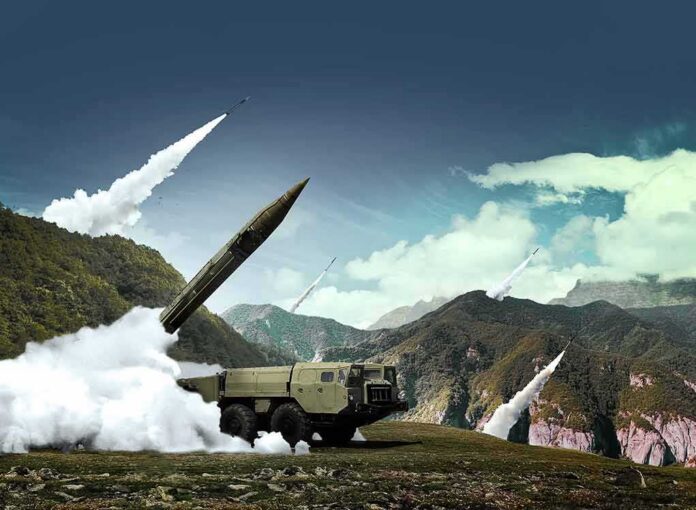
Ukraine says U.S.-made long-range missiles can hit the launchers firing at its cities, but proof of lasting impact remains thin.
Story Snapshot
- Ukraine has used U.S.-supplied long-range missiles against high-value Russian military targets.
- Kyiv reports strikes on Russian Iskander launchers inside Bryansk region, with damage still under review.
- Analysts say launcher attacks help only if part of a larger, steady campaign with enough missiles.
- U.S. policy shifted over time, allowing some cross-border use amid worries about escalation and supply.
What Ukraine Says It Can Hit And Why It Matters
Ukrainian leaders argue that U.S.-made Army Tactical Missile Systems can reach Russian launchers that fire on Ukraine from across the border. These ballistic missiles can travel about 190 miles and can be launched from High Mobility Artillery Rocket System trucks that the United States already sent to Ukraine. Kyiv says hitting mobile launchers could reduce deadly missile salvos on cities and troops. The claim aims to show that longer reach can blunt Russia’s firepower near the front.
Ukraine has already used these long-range missiles on major military targets. Reported strikes hit air-defense systems, missile ships, depots, and command nodes. Independent groups confirmed several impacts using geolocated battlefield footage, which supports that these systems have real battlefield effect, at least in some cases. These results fuel Kyiv’s case that deeper strikes can shape the fight. Still, battlefield proof tends to come in snapshots, not a full campaign picture.
The New Strike Claims Inside Russia And What We Know
Ukraine’s General Staff said its forces struck two Russian Iskander missile launchers and a Pantsir-S1 air-defense system in Russia’s Bryansk region. Officials said they were still checking the damage and did not release independent imagery at the time of reporting. That leaves a gap between the claim and confirmed destruction. In war, early reports often arrive before solid proof. The core fact remains that Ukraine is attempting to reach into Russia to hit the systems that launch at it.
Supporters of deeper strikes point to strategy as much as range. A leading defense institute in London argues that taking out operational-tactical missile complexes can reduce Ukrainian casualties. But the experts warn that single hits matter less than a coherent plan, steady targeting, and enough munitions to keep pressure on key nodes. The analysis says long-range strikes work best when they fit into a larger, linked target set across time.
Policy Shifts, Escalation Fears, And The Missile Math
United States policy on cross-border strikes shifted over time. Earlier rules tightly limited use of American missiles inside Russia. Later, Washington allowed a narrower window for cross-border defense, especially to protect Kharkiv from attacks launched just across the line. The change showed the capability was not just theoretical. It also showed how allies try to manage escalation risk while helping Ukraine push back on the sources of incoming fire.
Even if policy allows some strikes, supply and range still matter. Analysts have questioned whether Ukraine has enough long-range missiles to hunt many mobile launchers for long stretches. Mobile systems can shoot and move, which makes them hard to find before they hide or relocate. The roughly 190-mile range can reach some launch sites but not all areas deep inside Russia, especially if units reposition farther from the border. These limits shape what Ukraine can do week to week.
Why Both Sides Of U.S. Politics Should Care
American voters of many views see a pattern: leaders talk tough, but results lag the promises. Supporters say long-range strikes can shield civilians by disrupting attacks at the source. Skeptics worry about escalation, costs, and whether limited stocks get burned with little to show. The most grounded takeaway is practical, not political. Real impact depends on intelligence, quick targeting, confirmed results, and enough missiles to keep a campaign going, not on one headline strike.
Zelenskyy: “Instead of giving us the right to defend ourselves, … to strike Russian and North Korean ballistic missile launchers near our borders – we see the opposite. The speed limit on Starshield in the temporarily occupied territories remains in place” https://t.co/cJWOo7nECy
— Alex Raufoglu (@ralexdc) November 17, 2026
That leaves an accountability test that both the right and the left can support. If launcher strikes truly reduce attacks on cities, officials should show patterns over time, not just claims. If stocks are tight, leaders should explain how they will prioritize targets and replenish supplies. Clear goals, tight oversight, and measured risk are the basics citizens expect. Without them, the effort can look like another vague plan managed by distant elites, instead of a strategy that saves lives.
Sources:
economictimes.indiatimes.com, edition.cnn.com, hamerintel.com
© patriotsunited.org 2026. All rights reserved.