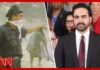
A New York Army veteran is in custody after allegedly turning a federal immigration building into a makeshift war zone with fire, fireworks, and weapons, deepening fears that the system is failing both veterans and civilians.
Story Snapshot
- Former Army soldier Andrew Arrabaca, 43, is accused of igniting gasoline and setting off incendiary devices outside the New York federal building that houses immigration courts and Immigration and Customs Enforcement (ICE).
- Authorities say he carried multiple weapons and anti-ICE materials, and made anti-American, anti-government statements as he was taken into custody.
- Three people suffered minor injuries, and investigators are now probing his past, his mental health, and a reported manifesto linked to him.
- The case highlights a larger pattern of some veterans turning their skills against their own government, while media and officials clash over whether to call him an “activist” or an “extremist.”
What Officials Say Happened Outside 26 Federal Plaza
On July 20, 2026, officials say Andrew Arrabaca arrived at 26 Federal Plaza in Lower Manhattan, a major federal building that includes an immigration court and Immigration and Customs Enforcement offices. According to the Federal Bureau of Investigation (FBI), he brought a cart loaded with gear, poured what they believe was gasoline on the steps near an employee entrance, and then lit it using a lighter and incendiary device. The fire and resulting smoke forced a shelter-in-place order for people inside the building.
Law enforcement leaders say Arrabaca also set off fireworks or similar incendiary devices and fired pellets from an airsoft rifle toward the building. The Department of Homeland Security reported that he had at least one pellet gun in his bag and launched fireworks before setting the gasoline ablaze. Officials describe a chaotic scene as flames and smoke rose near the entrance while people tried to get to safety and officers rushed in to respond.
Weapons, Injuries, and Extremist Statements
After Arrabaca was detained, investigators say they found a small arsenal of weapons and tools on him and in his cart, including two axes, a hammer, a machete, three fixed-blade knives, and six incendiary devices or fireworks. A Department of Homeland Security source also said he was carrying anti-ICE printed material, and his cart displayed a sign calling for ICE to be pushed “off our streets.” This mix of protest messaging with weapons and fire is why officials are treating the incident as more than a simple demonstration.
Three people suffered minor injuries linked to the attack: one civilian and two government workers, according to FBI officials at the press briefing. As officers moved in to arrest Arrabaca, he reportedly shouted curses and harsh language aimed at Immigration and Customs Enforcement. The FBI’s New York field office chief, James Barnacle, publicly labeled him an “anti-American, anti-government extremist,” saying that conclusion came from what Arrabaca said both during and after his arrest. That harsh label has already become a flashpoint in media coverage and public debate.
Who Is Andrew Arrabaca and What Do We Really Know So Far?
Officials say Arrabaca is a former United States Army soldier who served from 2001 to 2005 as a mechanic working on Patriot missile systems. That service record has been confirmed by multiple outlets, and his veteran status is featured in nearly every story about the case. Investigators have seized a vehicle linked to him and are exploring his prior contacts with law enforcement, though they have not yet released details about those earlier encounters.
Despite the intense media attention, prosecutors have not yet filed formal charges as of the latest briefings, and the U.S. Attorney’s Office for the Southern District of New York says charging decisions are still under review. Authorities also mention a manifesto that they believe is connected to Arrabaca, but they have not shared its contents, its date, or proven authorship. They are examining his military record and mental health history to understand how and when he may have radicalized, leaving many key questions unanswered for now.
Media Framing, Veterans, and Deeper System Worries
Major outlets and advocacy voices are already split on how to describe Arrabaca. Some stories call him an “anti-ICE activist” or “anti-ICE radical,” focusing on his protest sign and immigration stance. Others echo the FBI’s term “anti-American, anti-government extremist,” stressing his weapons, fire, and stated desire to harm people. This is not a dispute over basic facts—no one denies the fire, the weapons, or his arrest—but over what those facts mean and what story the public should take away.
Authorities said that a 43-year-old US Army veteran protesting ICE was taken into custody after he ignited fireworks and set a fire on the steps of the building that houses the agency's office in New York https://t.co/rIiZBqs94I pic.twitter.com/UilIgOysfA
— Reuters (@Reuters) July 21, 2026
This struggle over framing fits a larger, worrying trend. Research presented to Congress shows that veterans make up a higher share of domestic terrorist plots than their small share of the population. One study found veterans connected to about 10 percent of domestic terrorist attacks since 2015, even though they are less than 6 percent of Americans. Other reports note similar patterns in events like the Capitol Hill siege, where about 12 percent of charged participants had military experience.
Why This Case Hits Nerves on Both Left and Right
For many conservatives and liberals, this incident reinforces a feeling that the federal government is failing on several fronts at once. People who worry about illegal immigration and federal overreach see yet another chaotic scene at a federal building, where security failed to stop a man with weapons and gasoline before he reached the steps. People who fear abuse of power see an angry veteran, trained by the government, now turning that anger and training back on a symbol of the system.
The unanswered questions add to that unease. Why did a former soldier, once trusted to defend the country, end up here with fire and blades at an immigration court? Was he pushed over the edge by policy debates about immigration, by personal mental health struggles, or by something else entirely? Until the manifesto, mental health evaluations, and full video footage are released and examined, Americans are left with a familiar sense that key truths are locked behind closed doors while elites argue over labels instead of fixing root problems.
Sources:
youtube.com, reuters.com, facebook.com, legalinsurrection.com, wsj.com, military.com, thepostmillennial.com, start.umd.edu, tekedia.com, breitbart.com, nytimes.com
© patriotsunited.org 2026. All rights reserved.