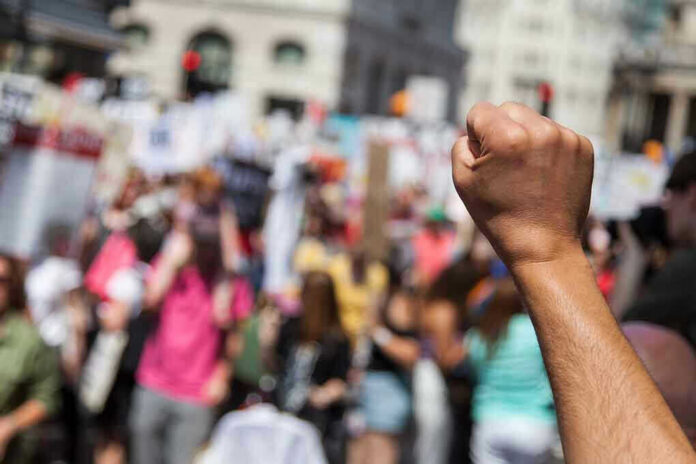
A worldwide wave of “Nakba 78” protests is putting the Palestinian cause back in the spotlight while reopening old wounds over Israel, public order, and the language used to describe 1948.
Quick Take
- The United Nations defines the Nakba as the mass displacement and dispossession of Palestinians during the 1948 Arab-Israeli war .
- Protest organizers are using the 78th anniversary to call for a right of return and broader political pressure on Israel [3].
- Event messaging in several countries frames the protests as anti-Israel and anti-far-right, not just commemorative [1][3].
- Security analysts warn that large demonstrations can bring disruption, clashes, and reputational fallout if violence or antisemitic rhetoric appears [2].
What the Nakba Anniversary Means
The United Nations page on the Nakba says the term means “catastrophe” in Arabic and refers to the mass displacement and dispossession of Palestinians during the 1948 Arab-Israeli war . The same UN material says the event remains central to Palestinian collective memory and continues to shape the demand for a right to return to homes lost in the war . That historical framing explains why the anniversary remains a rallying point every year.
The 2026 protest campaign is not a small local observance. Organizers in Britain, Australia, and elsewhere are promoting marches tied to Nakba 78, with slogans that link memory of 1948 to present-day politics [1][3]. In London, the Palestine Solidarity Campaign said the march would be held under the banner “Nakba 78: Justice for Palestine… United against Tommy Robinson and the far right,” while also saying the protest would reaffirm the right of refugees to return home [3].
How Organizers Are Framing the Protests
In Sydney, the event call says the Nakba marks the “original ethnic cleansing and occupation of Palestine in 1948” and urges supporters to demand that the government sanction Israel and stop arming what it calls genocide . In London, organizers said they will march despite police resistance and described the demonstration as both a commemoration and a political response to the far right [3]. Those messages show that the protests are built around activism, not just remembrance.
That framing matters because it pushes the issue beyond history into today’s political fight over Israel’s legitimacy, Palestinian claims, and the way Western institutions respond to street mobilization. The UN’s own summary confirms that Nakba commemoration is tied to long-running demands for restitution and return, but it does not settle the legal scope of those claims . The sources provided show the movement’s message clearly, but they do not prove every political claim made by organizers.
Why Conservatives Are Watching Closely
Large demonstrations around emotionally charged foreign-policy disputes often spill into the streets, where police, traffic, and local communities absorb the cost. A security outlook on Nakba Day 2026 warned of unrest, transport disruption, and clashes in major cities worldwide [2]. That risk is not theoretical. When crowds gather near diplomatic sites or in dense urban centers, the public conversation quickly shifts from the underlying grievance to disorder, confrontation, and whether authorities can keep the peace.
Conservative readers will also notice the familiar pattern: a historical grievance gets wrapped into a broader campaign that can be used to attack Israel, stir up anti-Western sentiment, and blur the line between political advocacy and street agitation. The source material here supports the existence of the Nakba narrative, the right-of-return demand, and the scale of the protest effort [3]. It also shows why the protests are likely to remain controversial wherever they land.
What the Record Shows, and What It Does Not
The strongest documented fact in the research is simple: the Nakba is an established historical and political reference point in international discourse, and the UN itself describes it as a mass displacement event tied to Palestinian dispossession . The research also shows that organizers are using the 78th anniversary to mobilize crowds and press governments to take action against Israel [3]. What it does not show is a complete legal resolution of the right-of-return issue or a balanced account of all wartime causes and consequences .
That gap matters. Readers should understand that protest slogans and advocacy pages are not the same as court rulings, archival records, or negotiated settlements. The material provided shows a movement with a clear message, a global reach, and a willingness to push the issue into public squares [1][2][3]. It also shows why the anniversary remains a flashpoint: one side sees historical justice, while the other sees escalating political pressure and public disorder.
Sources:
[1] Web – Palestinians gather to mark 78th anniversary of the Nakba …
[2] Web – Nakba Day 2026: Global Protest Outlook | Alert+
[3] Web – Nakba 78: March for Palestine