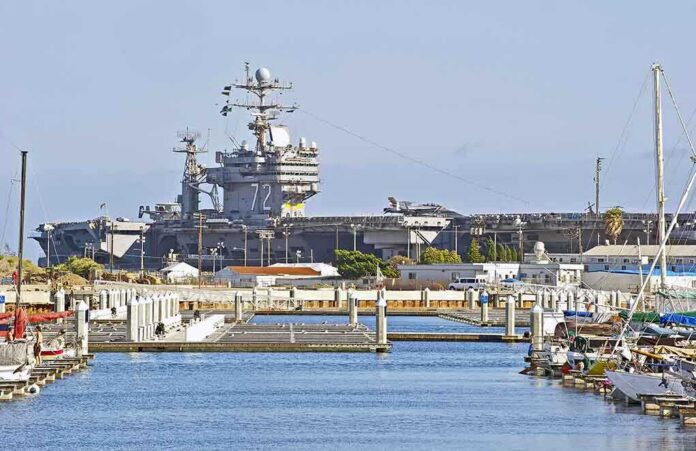
A second U.S. Navy nuclear aircraft carrier has caught fire in just weeks, raising urgent questions about fleet readiness and sailor safety under strained maintenance amid global threats.
Story Highlights
- USS Dwight D. Eisenhower fire at Norfolk Naval Shipyard injures three sailors during routine maintenance in April 2026.
- Follows massive 30-hour blaze on USS Gerald R. Ford in March 2026 Red Sea deployment, injuring over 200 sailors.
- Incidents highlight potential delays in carrier availability, straining U.S. naval power projection.
- Navy withholds key details on causes, fueling concerns over transparency and preventive measures.
Details of the Eisenhower Fire
USS Dwight D. Eisenhower (CVN-69), a Nimitz-class nuclear carrier, suffered a small fire during Planned Incremental Availability maintenance at Norfolk Naval Shipyard in Virginia. The incident occurred in the week of April 2026, after the ship arrived on January 8, 2025, following deployment. Three sailors sustained minor injuries, received treatment, and expect full return to duty. Navy spokesman confirmed the event to USNI News, noting rapid containment with no further details on cause, location, or affected systems released.
Comparison to USS Gerald R. Ford Incident
USS Gerald R. Ford (CVN-78) endured a far larger fire in March 2026 during extended Red Sea operations against Iran-related threats. The blaze started in laundry and berthing areas, raged over 30 hours, spread across compartments, and damaged living quarters for over 600 sailors. Approximately 200 suffered smoke inhalation injuries, with one medically evacuated. The carrier diverted to Souda Bay, Crete, for repairs on March 23, 2026, completing initial fixes but facing potential extended maintenance. Nuclear propulsion remained unaffected.
Unlike the Ford’s operational disruption in a combat zone after nine months at sea, the Eisenhower fire posed no mission impact as the ship was already in shipyard upkeep. Both underscore risks from high operational tempo and maintenance hazards like welding or exposed electrical systems.
Implications for Naval Readiness
These back-to-back fires expose vulnerabilities in carrier maintenance, potentially extending Planned Incremental Availability periods and creating availability gaps in fleet presence. Short-term effects include repair costs and sailor welfare issues like relocations and health treatment. Long-term, delays strain budgets and force posture, critical as President Trump’s administration confronts global adversaries with Republican control of Congress pushing America First priorities.
Frustrations mount across political lines over government failures, from past overspending to current lapses in military upkeep that threaten national security and the American Dream of strong defense through determination. Conservatives see this as deep state neglect undermining limited government principles; even liberals question elite priorities favoring reelection over sailor safety.
Stakeholder Responses and Historical Context
Navy leadership emphasizes quick containment to avoid signaling weakness amid tensions, controlling information flow through spokespersons. Shipyard workers and crews prioritize safety, with injuries highlighting persistent risks. Historical precedents like the 1966 USS Oriskany fire (44 deaths) and 1969 incident (28 deaths) show such hazards persist, though modern fires prove smaller. Experts note maintenance fires are not uncommon, but any delay exacerbates readiness shortfalls, per USNI analysis.
Sources:
A Second U.S. Navy Nuclear Aircraft Carrier Has Caught Fire
Carrier USS Gerald R. Ford Arrives in Souda Bay for Repairs After Laundry Room Fire
U.S. Sailors Sabotaging Their Own Ship Happened Before