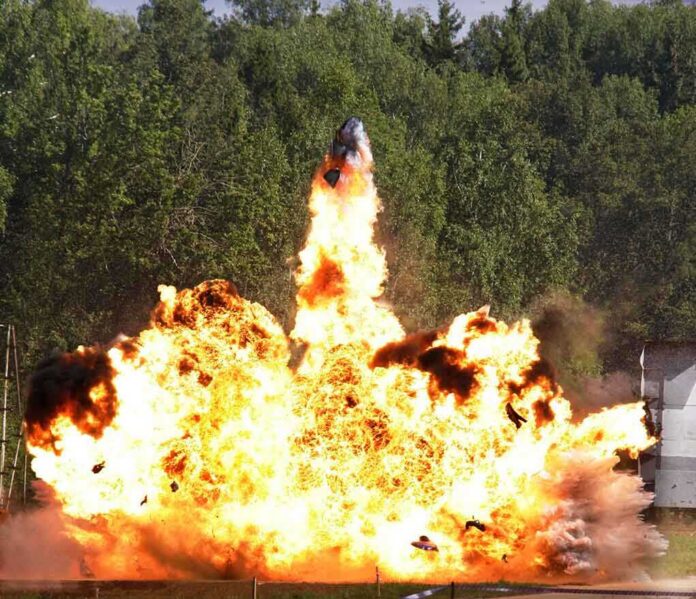
President Trump posted footage of Iran’s tallest bridge collapsing under US-Israeli airstrikes while simultaneously demanding Tehran negotiate before facing total destruction—a shocking escalation that targets civilian infrastructure and raises urgent questions about America’s deepening involvement in yet another Middle East conflict.
Story Snapshot
- US-Israeli forces destroyed Iran’s B1 bridge near Karaj, a 136-meter-high engineering landmark connecting Tehran to western regions
- Trump shared video of the destruction on Truth Social, warning “much more to follow” and demanding Iran make a deal “before it is too late”
- Two civilians injured in initial strike, with second attack targeting emergency responders attempting rescue operations
- Campaign marks strategic shift from military targets to critical civilian infrastructure including Iran’s largest steel plant
- Regional allies express concern about escalation dynamics and potential Iranian retaliation involving coordinated responses with Hezbollah
Infrastructure Warfare Escalates Beyond Military Targets
US-Israeli airstrikes destroyed the B1 bridge linking Tehran to Karaj, a structure standing 136 meters high and stretching 150 meters long that was still under construction. The bridge represented a critical transport artery designed to connect Iran’s capital with western regions, serving both commercial and civilian transportation needs. Two civilians sustained injuries in the initial strike, with emergency response teams facing a coordinated second attack as they attempted rescue operations. The targeting of this civilian infrastructure marks a significant departure from conventional military objectives, raising questions about proportionality and long-term strategic wisdom.
Trump’s Public Pressure Campaign Through Social Media
Trump posted video evidence on Truth Social showing the bridge collapse with heavy smoke billowing from the destruction site, declaring “The biggest bridge in Iran comes tumbling down, never to be used again – Much more to follow!” The president warned Iran to “make a deal before it is too late” and stated there is “nothing left of what could still become a great country.” Trump previously threatened to bomb Iran “back to the Stone Age” within two to three weeks if Tehran refuses negotiations, claiming US military action has already destroyed 90 percent of Iranian military capability. This public messaging strategy combines military escalation with negotiation demands, creating what administration officials describe as maximum pressure diplomacy.
Economic Warfare Targets Industrial Capacity
Beyond the bridge destruction, US-Israeli forces reportedly struck Iran’s largest steel plant, demonstrating a coordinated campaign against economic and industrial infrastructure. The systematic targeting creates cascading challenges for Iran’s transportation networks and supply chains, disrupting connectivity between major population centers. This approach aims to cripple Iran’s economic capacity while maintaining military pressure, though experts question whether infrastructure destruction will force capitulation or instead provoke retaliation. The strategy reflects coercive diplomacy designed to maximize leverage while theoretically leaving room for deal-making, yet the destruction of civilian infrastructure may undermine negotiation prospects.
Regional Instability and Retaliation Risks Mount
Regional allies express growing concern about escalation dynamics as reports indicate Hezbollah and Iran are coordinating potential counteroffensive responses. The destruction of critical civilian infrastructure increases the likelihood of Iranian retaliation rather than capitulation, potentially triggering broader regional conflict. Military analysts note that while infrastructure strikes create connectivity disruptions and economic pressure, they may have limited impact on Iran’s core military capacity or willingness to resist. Gulf states worry about the trajectory of this campaign, particularly as the administration announced plans for forces to hit Iran “extremely hard” for the next two to three weeks, raising questions about endgame strategy and America’s deepening entanglement in another Middle East war.
The administration’s approach raises fundamental concerns for Americans who voted against endless regime change wars and were promised America would stay out of new conflicts. The targeting of civilian infrastructure like bridges and steel plants, combined with threats of total devastation, represents exactly the kind of open-ended military engagement that fuels frustration among citizens already burdened by high energy costs and economic uncertainty. As this campaign intensifies without clear constitutional authorization or defined objectives, the gap between campaign promises and governing reality grows wider, leaving supporters questioning whether this path serves American interests or simply repeats the failures of past interventions.
Sources:
Iran’s Biggest Bridge Collapses After Strikes, Donald Trump Says More To Follow – NDTV
Trump shares video of Iran’s biggest bridge destruction – Fox News