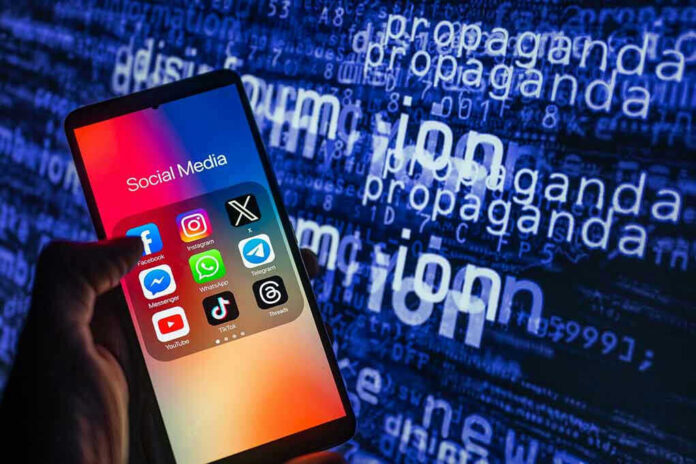
Democrats are gearing up for the 2026 midterms by investing tens of millions into a social media army aimed at controlling the narrative online.
Story Overview
- Democratic Congressional Campaign Committee unveils a $110.5 million initiative.
- $10 million dedicated to a new “social media army” of content creators.
- Four-week boot camp planned to train these creators for online influence.
- Effort aims to counter Republican dominance on social media platforms.
Democrats’ Strategic Investment in Digital Influence
In an unprecedented move, the Democratic Congressional Campaign Committee (DCCC) has announced plans to allocate $110.5 million in a fundraising effort aimed at bolstering online political influence. According to internal materials obtained by Breitbart, this includes a $10 million allocation for the creation of a “social media army” designed to shape narratives ahead of the 2026 midterm elections. This initiative also includes a comprehensive four-week boot camp to train hundreds of content creators.
The intention behind this move is to bridge the digital gap perceived during the 2024 elections, where Republicans were seen as having a stronger grassroots presence online. By recruiting and training both political and non-political influencers, the DCCC hopes to engage tens of millions of Americans, enhancing its digital footprint and influence.
Background and Historical Context
Digital campaigning has become a crucial aspect of political strategy in the United States, with both parties investing significantly in online ads since the 2010s. The 2024 election cycle saw at least $1.9 billion spent on digital ads, reflecting the growing importance of social media as a battleground for voter engagement and persuasion. The Democrats’ new initiative is seen as a response to the digital strategies employed by Republicans, who have traditionally excelled in grassroots digital mobilization.
This effort is not entirely without precedent. Both parties have previously funded digital ad campaigns and influencer partnerships. However, the scale and formalization of this Democratic initiative—particularly the training boot camp and the recruitment of non-political creators—marks a significant escalation in the professionalization of online political influence.
Key Stakeholders and Power Dynamics
The primary entities driving this initiative include the Democratic Congressional Campaign Committee and the ZINC Collective, a pro-Democrat super PAC. The latter, with key advisers such as Robby Mook (former Clinton campaign manager) and Mike Smith (former Pelosi adviser), provides strategic expertise and operational support. Content creators will function as amplifiers of Democratic messaging, aiming to reach and engage diverse online audiences. The power dynamics involve coordination between the DCCC and ZINC Collective, with content creators acting as decentralized messengers.
Decision-making is spearheaded by DCCC leadership, ZINC Collective advisers, and senior Democratic strategists. Influential content creators may also play a role in shaping the program’s effectiveness, depending on their reach and engagement with target audiences.
Current Developments and Future Implications
The plan became public through leaked slides from a DCCC donor event in early August 2025. Although no official statements have been made by the DCCC or ZINC Collective, the fundraising campaign is reportedly underway, with recruitment and training of content creators slated to begin soon. The initiative is expected to increase Democratic engagement on social media platforms, potentially narrowing the digital gap with Republicans ahead of the 2026 midterms.
In the long term, if successful, this program could set a precedent for large-scale, party-coordinated influencer mobilization in U.S. politics. This may further professionalize digital campaigning and prompt similar responses from Republicans, intensifying the digital arms race in political persuasion. Social media users will likely encounter more coordinated political content, raising questions about transparency and authenticity in political messaging.
Expert Perspectives and Industry Analysis
Analysts highlight the centrality of digital ad spending in modern campaigns, noting the nearly $2 billion spent during the 2024 cycle. The growing sophistication and scale of digital operations reflect both parties’ efforts to leverage influencers and micro-targeted content. The Brennan Center and Wesleyan Media Project have documented the rise in digital political spending, with Democrats historically focusing on fundraising and narrative contrast, while Republicans emphasize get-out-the-vote efforts.
Critics express concerns about the potential for coordinated narrative manipulation and the blurring of lines between authentic and sponsored content. The lack of official confirmation from the DCCC introduces some uncertainty, particularly regarding the precise implementation details and the extent of ZINC Collective’s involvement.