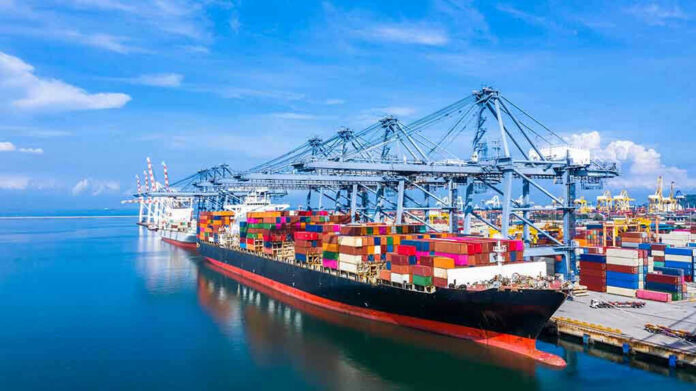
When $800 million changes hands to rebuild a war-torn Syrian port, you have to ask who really wins—Syrian workers, foreign investors, or the globalist agenda that always seems to put Americans and their families last?
At a Glance
- Syria signs a 30-year, $800 million deal with Dubai-based DP World to overhaul and run the Port of Tartus, its main Mediterranean gateway.
- This comes on the heels of President Trump lifting U.S. sanctions on Syria, reopening the door to international money and influence after years of civil war and isolation.
- The UAE and global corporations step in as key power players, highlighting a dramatic shift in regional alliances and priorities.
- Critics point to the risks: more foreign control, less sovereignty, and the potential for U.S. interests to be sidelined yet again.
Syria’s Shocking $800 Million Port Deal: Foreign Money Floods In, But At What Cost?
Syria has inked a deal that reads like a masterclass in post-war global horse trading. On July 13, 2025, the General Authority for Land and Sea Ports (GALSP) signed a 30-year, $800 million concession agreement with DP World, the global port operator headquartered in Dubai. The ink was barely dry on President Trump’s executive order lifting U.S. sanctions when the deal was announced, making it clear just how hungry foreign investors are to get their hooks into Syria’s battered but strategically located infrastructure. This is not just another contract—this is the UAE and global capital moving in with bulldozers, cranes, and, let’s be honest, a whole lot of self-interest.
For years, the Port of Tartus languished under the weight of war, neglect, and bureaucratic rot. Now, DP World, with its deep pockets and government backing, will take full control under a Build-Operate-Transfer (BOT) model. They’ll own and operate the terminal for three decades, promising investments in modern cranes, digital systems, and “world-class logistics.” Sounds great on paper, but we’ve all seen this movie before. It’s the same plot: foreign companies swoop in, take the lion’s share of profits, and leave the country with a shiny new port—and a mountain of debt and dependency.
Trump’s Policies Open the Floodgates for Foreign Influence
Let’s not kid ourselves: lifting sanctions was supposed to help stabilize Syria and maybe even support U.S. interests in the region. Instead, it’s the UAE, France, Turkey, and Qatar that are snapping up the juiciest contracts. DP World’s CEO, Sultan Ahmed bin Sulayem, stood shoulder to shoulder with Syria’s new President Ahmed al-Sharaa at the signing—an image that tells you everything about who’s running the show now. President al-Sharaa and his team are celebrating foreign investment as a win for Syria’s future, but at what price? Handing over the keys to the country’s main trade gateway to a foreign conglomerate is a bold move—one that could easily come back to bite.
Syrians are being promised jobs and a “new phase of maritime work,” but history shows that when global companies move in, the local workforce often gets the short end of the stick. The foreign investors call the shots; the profits head overseas. Meanwhile, American taxpayers are left scratching their heads, wondering why U.S. companies and workers are missing out—again—while our so-called allies and rivals divvy up the spoils.
Geopolitical Realignment: America Out, Gulf States In
This deal is about more than cranes and cargo. It’s about power. For decades, Syria’s ports were state-run and modestly developed—a strategic buffer in a region where the U.S. once called the shots. Now, in the aftermath of the civil war and the collapse of the Assad regime, Gulf states like the UAE are stepping into the vacuum. The irony is hard to miss: after years of U.S. blood, treasure, and diplomatic capital spent in the region, the real beneficiaries turn out to be global corporations and oil-rich monarchies who never miss an opportunity to cash in.
Alongside DP World’s Tartus takeover, Syria signed a 30-year deal with French shipping giant CMA CGM for the port of Latakia and a staggering $7 billion energy pact with a consortium including Qatar and Turkey. These are not isolated events—they’re the opening moves in a regional reshuffle that leaves the U.S. on the sidelines, watching as others reap the rewards of “peace through foreign investment.”
Winners, Losers, and the American Taxpayer
The deal will bring an influx of capital, new tech, and maybe a few jobs to Syria’s battered economy. But the bigger picture should set off alarm bells for anyone who cares about American influence, national sovereignty, and the relentless erosion of our leverage abroad. When foreign conglomerates and Gulf monarchies control critical trade infrastructure, the country on the receiving end loses more than it gains. It’s not hard to see who comes out on top here—and it’s not the average Syrian worker or the American taxpayer.
As the dust settles on this $800 million agreement, one thing is clear: in the new, post-sanctions Syria, the winners are those with the deepest pockets and the sharpest elbows. Everyone else—especially those of us footing the bill for endless foreign entanglements—gets to watch from the cheap seats.
Sources:
Freedom 969 – Syria signs $800 million agreement with DP World to bolster ports infrastructure
The New Arab – Syria signs $800mn deal for Tartus port with UAE’s DP World
DP World – DP World to develop Syria’s Tartus port under landmark 30-year deal
SANA (Syrian Arab News Agency) – Syria signs major agreement for Tartus port development