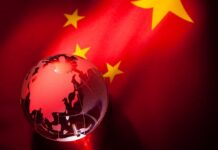
Markets convulsed the instant Washington and Beijing announced a surprise trade deal—proof that even after years of brinkmanship, the world’s two largest economies still hold the global financial system hostage with every move they make.
Story Snapshot
- A new US-China trade deal has sparked wild swings in global markets, with stocks, currencies, and commodities all caught in the turbulence as investors wrestle with hope and doubt.
- This deal goes beyond tariffs, touching on technology, intellectual property, and market access—making its potential impact far broader and its risks even harder to predict.
- Market reactions are more volatile than in past trade announcements, signaling deep skepticism about whether détente can last or if old tensions will resurface.
- The ripple effects are global: emerging markets, commodity exporters, and multinational corporations with heavy US-China exposure are all in the crosshairs.
- Implementation and enforcement details remain vague, leaving everyone from Wall Street to Main Street guessing about the deal’s real staying power.
How We Got Here
The US-China economic relationship has been a mix of codependency and cold war since China joined the World Trade Organization in 2001. Things turned openly hostile in 2018 when the Trump administration hit hundreds of billions in Chinese goods with tariffs, accusing Beijing of unfair practices and intellectual property theft. China retaliated in kind, and the resulting trade war disrupted supply chains, rattled markets, and put global growth at risk. A Phase One deal in 2020 brought a temporary truce, but compliance was spotty, and tensions over technology, Taiwan, and human rights kept negotiations on edge. By 2025, both sides were signaling a willingness to de-escalate, but talks repeatedly stalled—until this latest, broader framework was suddenly announced, catching markets off guard.
Previous trade fights—like the US-Japan tensions of the 1980s or the US-EU steel and aluminum tariffs—show that these disputes can escalate quickly and have consequences far beyond the two countries directly involved. The USMCA deal demonstrated that comprehensive agreements are possible, but only with clear rules and real enforcement. The question now is whether this US-China deal has those ingredients, or if it’s just another temporary ceasefire.
Who’s Calling the Shots?
The key players haven’t changed: the US President and Chinese leadership remain the ultimate decision-makers, with trade representatives and cabinet officials handling the negotiations. The Federal Reserve is also in the mix, trying to keep markets stable as trade winds shift. Multinational corporations—think Apple, Boeing, Huawei—have huge stakes in the outcome, as do investors and financial institutions reacting to every headline. International bodies like the WTO and IMF are watching closely, knowing that US-China relations set the tone for the global economy.
Motivations are clear but often at odds. Washington wants to protect jobs, reduce the trade deficit, and counter China’s tech rise. Beijing aims to keep its economy growing, maintain access to US markets, and reduce reliance on foreign technology. Corporations crave predictability; investors chase opportunity amid the chaos. The Federal Reserve’s main concern is keeping inflation in check and markets from seizing up—no small task when trade policy is a moving target.
What Just Happened?
In late 2025, after months of stalled talks, US and Chinese officials announced a new trade framework. The details are still under wraps, but the scope is reportedly wider than past deals, covering not just tariffs but also tech transfer, intellectual property, and market access. The immediate market reaction was a rollercoaster: stocks, currencies, and commodities all swung sharply as traders tried to parse the implications. US officials talk about “enforceable commitments” and “reciprocal access,” while Chinese statements emphasize “mutual respect” and “win-win” outcomes. Neither side has released a full text, and working groups are still hammering out specifics—meaning the real substance, and the real risks, remain unclear.
US-China new deal sends markets reeling https://t.co/eUQ8nsVG7L via @@YahooFinance
— Stanley Oakley (@StanleyOakley4) October 27, 2025
This uncertainty is reflected in the markets, which have been more volatile than during previous trade announcements. Investors seem torn between hope for a lasting truce and fear that old conflicts will flare up again. The Federal Reserve is watching closely, knowing that any misstep could ripple through the global financial system.
What Does It All Mean?
In the short term, expect more market swings until the deal’s fine print is public and credible enforcement mechanisms are in place. If the agreement holds, it could boost global GDP by over 1% in the next year—no small thing in a fragile economy. But if history is any guide, implementation will be the real test. Past deals have faltered on enforcement, and structural issues—like tech competition and geopolitical rivalry—aren’t going away.
Exporters and importers could see lower tariffs and more predictable rules, but uncertainty is still the name of the game. Workers might benefit from renewed manufacturing activity, though automation and reshoring trends could offset gains. Consumers could get some price relief, but inflation is a wild card. Emerging markets may experience capital flows and currency volatility as global investors reassess risk.
Politically, the deal’s durability will depend on domestic pressures in both countries. Hawks in Washington and Beijing are unlikely to stop pushing their agendas. Economically, reduced trade barriers could help growth, but the risk of renewed tensions is ever-present. Socially, job markets may stabilize in some sectors, but income inequality and regional disparities could persist. For industries like technology, agriculture, and manufacturing, the deal could bring more predictability—or just another round of disruption.
What Are the Experts Saying?
Financial analysts at firms like J.P. Morgan suggest that equity markets may stay range-bound until there’s clarity on the deal’s details, with a bull case depending on broad agreements and improved sentiment. Market watchers highlight the potential for a significant global GDP boost if the deal is finalized, but also warn that implementation risks and geopolitical tensions could easily undermine gains. Academics point out that US-China rivalry is structural—trade deals may ease symptoms, but they won’t cure the disease.
Optimists see the deal as a necessary step to avoid further economic disruption and foster cooperation on global challenges. Skeptics doubt its enforceability and point to the history of unmet commitments in US-China relations. Realists acknowledge the potential benefits but stress the need for vigilance and contingency planning. The consensus: the deal’s impact will depend heavily on implementation and the broader geopolitical environment.
Bottom Line
The new US-China trade deal has sent markets reeling because it’s a high-stakes gamble with no guarantees. The potential economic upside is real—global growth could get a meaningful boost if the deal holds. But the risks are just as real: vague details, shaky enforcement, and the ever-present threat of renewed tensions. For now, everyone from Wall Street to Main Street is watching and waiting, knowing that the world’s most important economic relationship is still balanced on a knife’s edge.
Sources:
J.P. Morgan Global Research: U.S. Tariffs and Trade Policy
Meyka: US-China Trade Deal Progress and Impact on Global Markets