Forty-eight new U.S. stealth fighters are being positioned within striking distance of China’s coast—tightening the Indo-Pacific “tripwire” that Beijing has spent years trying to intimidate.
Quick Take
- The U.S. Air Force is finalizing plans to base 48 new F-35A stealth fighters at Misawa Air Base in northern Japan, replacing 36 older F-16s.
- The Misawa move strengthens U.S.-Japan airpower along the “First Island Chain,” improving coverage for Taiwan contingencies and regional deterrence.
- Networking features like the Multi-Function Advanced Data Link (MADL) are designed to connect allied fifth-generation aircraft across the region.
- China’s growing J-20 fleet and sustained pressure on Taiwan are key drivers behind allied modernization and basing decisions.
Misawa’s F-35A Upgrade Shifts the Regional Balance
U.S. planners are preparing Misawa Air Base in Japan to receive 48 F-35A Lightning II fighters as the Air Force replaces 36 F-16s previously stationed there. Reporting indicates the deployment is being finalized as of February 2026, with base work underway to support the stealth aircraft. Misawa’s location in northern Japan matters because it places advanced fighters closer to China’s eastern approaches while still operating from a secure allied hub.
F-35As bring capabilities that older fourth-generation aircraft cannot match, especially in contested airspace. The research highlights an operational radius often described in the 1,000–1,300 mile range, which can expand coverage around Japan, the East China Sea, and potential Taiwan defense missions. That reach reduces reliance on vulnerable aerial refueling in early phases of a crisis. The practical effect is a faster, harder-to-detect response option—exactly what deterrence depends on.
Allied “Fifth-Gen Networking” Is the Real Force Multiplier
U.S. basing is only part of the picture because the Indo-Pacific posture increasingly depends on allied integration. The research describes a connected “air-boundary sphere” using systems such as MADL to share targeting and situational awareness among fifth-generation platforms. In plain terms, the objective is to make U.S. and allied aircraft operate less like separate squadrons and more like a single sensor-and-shooter web, complicating China’s planning across the region.
Japan’s buildup reinforces that concept. Sources cited in the research indicate Japan plans for roughly 105 F-35A and F-35B variants by 2026, alongside changes that expand how Tokyo can employ airpower. Japan is also adapting “mini-carriers” such as the JS Kaga for F-35B operations, giving it additional options to disperse aircraft and sustain presence. That matters for resilience, because concentrated bases are easier to target than distributed launch points.
China’s J-20 Numbers Drive Urgency, Even With Uncertainties
China’s J-20 fleet is described as exceeding 300 aircraft by early 2026, with some reporting suggesting rapid annual output. Those figures are frequently cited in defense reporting, but the research also flags uncertainty because some numbers are self-reported or difficult to independently verify. Even allowing for uncertainty, the trend line is clear: Beijing is investing in quantity and capability at the same time, forcing America and allies to modernize and coordinate rather than operate in isolation.
Taiwan Pressure and Past Delays Keep the Region on Edge
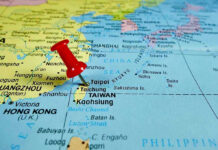
Taiwan remains a central stress point because China has increased air activity around the Taiwan Strait, including reports of record crossings of the median line after Taiwan’s 2024 election. The research also notes that U.S. prioritization of Ukraine-related aid contributed to delays in Taiwan’s incoming F-16V deliveries, with expectations that all 66 could arrive by the end of 2026. Those delays underscore why forward-deployed deterrence from Japan is treated as a near-term stabilizer.
What This Means Under Trump’s 2026 Security Posture
In 2026, with President Trump back in office and the Biden administration out, allies are watching whether U.S. commitments translate into tangible, ready forces rather than press releases. The Misawa basing plan is tangible because it modernizes a specific location with a defined number of aircraft and ties into regional partner investments. The research also describes broader F-35 growth across the Indo-Pacific, including Singapore’s scheduled deliveries beginning in late 2026, showing allied demand for credible deterrence.
48 Brand New F-35A Fighters Will Now Be Based in China’s Backyardhttps://t.co/WAhbcoQ5kr
— 19FortyFive (@19_forty_five) February 13, 2026
For conservatives skeptical of global “forever commitments,” the key detail is accountability: deterrence works when capabilities are real, survivable, and matched to clear national interests. Misawa’s F-35As are presented as a modernization step aimed at preventing war by raising the cost of aggression, not inviting it. What remains less clear from the available reporting is the precise arrival schedule for all 48 jets, but multiple sources agree preparations are active and the shift is underway.
Sources:
https://defence-blog.com/u-s-air-force-prepares-misawa-base-for-f-35-deployment/
https://en.wikipedia.org/wiki/Lockheed_Martin_F-35_Lightning_II_procurement