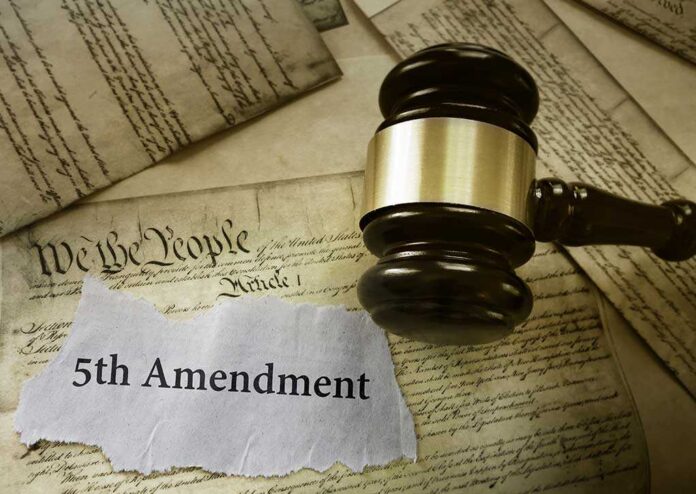
Congress is forcing the Epstein network back into the spotlight—only to face the familiar Washington escape hatch of “I plead the Fifth.”
Story Snapshot
- Ghislaine Maxwell is scheduled to give a closed-door, virtual deposition to the Republican-led House Oversight Committee on February 9, 2026.
- Maxwell, convicted for helping Jeffrey Epstein recruit and groom underage girls, is expected to invoke the Fifth Amendment—potentially as a blanket refusal rather than question-by-question.
- Rep. Ro Khanna sent Chairman James Comer a letter outlining questions about “four named co-conspirators” and 25 men tied to secret settlements referenced in Maxwell’s December 2025 habeas petition.
- Lawmakers also want answers about why certain individuals were not indicted and whether records exist identifying clients or associates.
Closed-Door Deposition Puts Epstein Accountability Back on the Table
House Oversight is set to depose Ghislaine Maxwell on Monday, February 9, 2026, in a closed-door, virtual proceeding. The committee is controlled by Republicans, and the deposition signals renewed interest in the unanswered parts of the Epstein scandal—especially who else allegedly participated and why full accountability has remained elusive. Maxwell was convicted as a key facilitator for Jeffrey Epstein, accused of recruiting and grooming underage victims within a long-running sex-trafficking operation.
The Oversight Committee’s interest intensified after Maxwell filed a habeas corpus petition on December 17, 2025, referencing “four named co-conspirators” and 25 men who allegedly entered secret settlements yet were not indicted. The underlying complaint for many Americans is straightforward: when government can prosecute some offenders while others appear protected or untouched, confidence in equal justice collapses. That legitimacy problem grows when the case involves high-profile names and elite social circles.
Fifth Amendment Strategy Could Limit What the Public Learns
Maxwell reportedly intends to invoke her Fifth Amendment privilege against self-incrimination, and the key dispute is whether she will do it as a blanket refusal rather than responding question-by-question. A broad invocation can dramatically reduce the practical value of a deposition, even when Congress has the authority to ask and record questions. For a public already cynical about institutional accountability, a deposition that produces mostly “no comment” answers risks looking like process without truth.
Rep. Ro Khanna asked Chairman James Comer to clarify in advance whether Maxwell will plead the Fifth to specific questions, outlining seven topics he plans to raise. The letter also points out a potential inconsistency: it references Maxwell’s apparent prior willingness to discuss similar subject matter in a meeting with Deputy Attorney General Todd Blanche. That contrast matters because lawmakers are trying to determine whether Maxwell is selectively refusing Congress while engaging executive-branch officials, a dynamic that can fuel political suspicion.
Lawmakers Seek Names, Non-Prosecution Explanations, and Possible Records
The questions listed for Maxwell reflect what the public has demanded for years: names, documentation, and reasons. Khanna’s proposed topics include identifying the “four named co-conspirators” mentioned in her petition and explaining why those individuals—and the 25 men tied to secret settlements—were not indicted despite alleged involvement. The case is described as spanning multiple Epstein properties, including his island, a New Mexico ranch, and a New York residence, underscoring the scale of alleged activity.
Khanna also wants answers about whether “client lists” or records exist that document identities of clients or associates. If such records exist, even confirming their existence would be consequential; if they do not, Congress will want to know why, given the breadth of allegations and the years of scrutiny. The research available does not include Maxwell’s legal response detailing what she will or won’t address, so the deposition’s usefulness remains uncertain until questioning begins.
Trump Named in Questions, but Evidence in the Record Is Still Limited
Some of the submitted questions reportedly touch on President Donald Trump, including an allegation of arrangements to provide underage girls and questions about potential pardon or sentence-reduction discussions in exchange for silence. Based on the provided research, these points appear as lines of inquiry posed by a member of Congress—not as established findings—and the material available here does not include supporting evidence, sworn testimony, or corroborating documentation. That distinction is critical when evaluating political claims.
US Congress to depose Epstein accomplice Ghislaine Maxwell https://t.co/sCvS5yFyU2 pic.twitter.com/bcmziCIdQV
— Insider Paper (@TheInsiderPaper) February 9, 2026
The research also raises national-security-adjacent questions, including whether Epstein had relationships with foreign governments or intelligence services such as Russia and Israel. Those questions, too, are presented as investigative targets rather than proven conclusions, and no additional expert analysis is provided in the source set. For conservatives who want constitutional government to function—fairly and transparently—the central test is whether Congress can extract verifiable facts without turning the proceeding into partisan theater or letting legal maneuvering bury the truth.
Sources:
Jeffrey Epstein Co-Conspirator Ghislaine Maxwell to Testify Before Congress
Representative Ro Khanna Sends Letter to Oversight Chairman Comer Ahead of Maxwell’s Deposition
Rep. Raja Krishnamoorthi (D-Ill.) talks abut the deposition of Ghislaine Maxwell