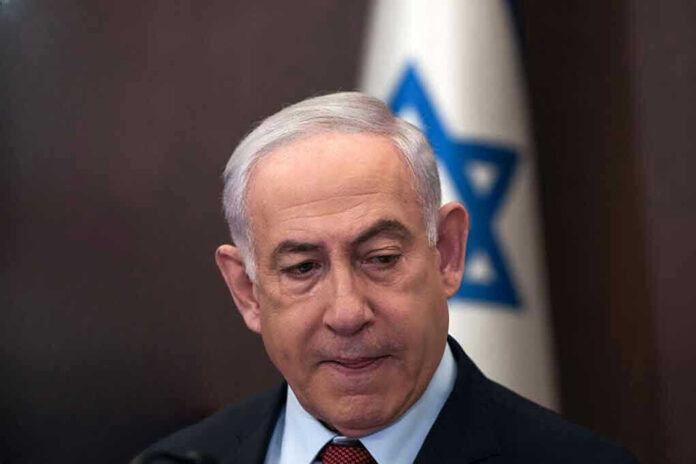
Israel’s longest-serving prime minister just made a stunning about-face that could redefine his legacy and the future of Israeli politics forever.
Story Snapshot
- Netanyahu submitted a formal 111-page pardon request to President Isaac Herzog on November 30, 2025
- This represents a dramatic reversal from his previous categorical refusal to seek clemency
- The pardon covers charges of bribery, fraud, and breach of trust across three separate corruption cases
- President Herzog’s office called it an “extraordinary request with significant implications”
- Success would eliminate daily court appearances and provide “legal and political rebirth”
The Great Reversal: From Defiance to Desperation
Benjamin Netanyahu’s journey from defiant denial to desperate clemency represents one of the most dramatic political reversals in Israeli history. The man who once declared he would never admit guilt in what he termed a “ridiculous” trial now finds himself authoring a 111-page petition seeking presidential mercy. This transformation signals that Netanyahu recognizes his legal position has become untenable and he is running out of viable options.
The timing of this request reveals the mounting pressure Netanyahu faces. Daily court appearances have constrained his ability to govern effectively, while the weight of three separate corruption cases continues to overshadow his administration. His coalition allies in the Knesset have made the pardon their top priority, demonstrating the political urgency surrounding his legal predicament.
Presidential Power Meets Political Reality
President Isaac Herzog now holds Netanyahu’s political future in his hands. Herzog’s office acknowledged receiving this “extraordinary request” and promised to consider it “responsibly and sincerely” after gathering all relevant opinions. This careful language suggests Herzog understands the constitutional and political magnitude of his decision. The president must balance his executive clemency powers against concerns about undermining judicial independence and public accountability.
The decision carries implications far beyond Netanyahu’s personal fate. Granting the pardon could establish a precedent allowing sitting prime ministers to escape serious criminal charges through executive intervention. Denying it would reinforce the principle that no one stands above the law, regardless of political position. Herzog’s choice will define how Israel balances executive authority with judicial integrity for generations to come.
Strategic Calculations and Political Consequences
Netanyahu’s pardon strategy reveals careful calculation rather than admission of guilt. Sources indicate his petition focuses on the need to “wipe the slate clean” without fully acknowledging wrongdoing. This approach attempts to secure legal relief while preserving political viability. If successful, the pardon would provide what analysts describe as complete “legal and political rebirth,” freeing Netanyahu to exercise greater power within Israeli politics.
The broader implications extend beyond Israeli borders. International observers, particularly in Washington, may view the outcome as indicative of Israeli governance standards. A pardon could enhance Netanyahu’s leverage in international negotiations by removing the distraction of ongoing legal proceedings. Conversely, denial would likely intensify legal pressure and potentially weaken his position with both domestic and international partners.
Sources:
Netanyahu Asks Israel’s President to Pardon Him in Corruption Cases