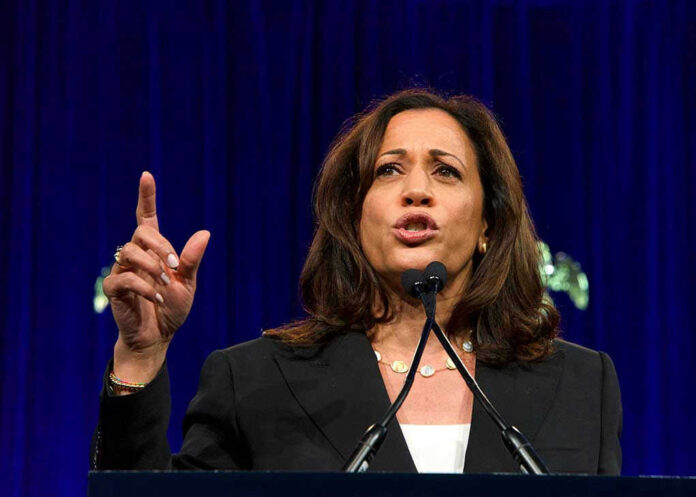
Kamala Harris delivers a stark critique of the Democratic Party, accusing it of being “stuck in the past” and failing to adapt to the changing political landscape.
Story Snapshot
- Harris criticizes Democratic leadership for outdated strategies and assumptions.
- Her memoir and public remarks highlight a need for a forward-looking vision post-Trump.
- Democratic autopsies reveal misjudgments about voter sentiment and coalition politics.
- The critique comes from a former VP and 2024 nominee, adding weight to the internal debate.
Kamala Harris’ Bold Critique
Kamala Harris has taken center stage with her blunt assessment of the Democratic Party’s failures. Her critique highlights a party struggling to adapt to a post-pandemic, economically anxious, and culturally divided America. The former vice president points to a leadership overly reliant on outdated strategies, failing to resonate with a fractured base. Her insights are not just personal grievances but reflect a broader strategic misalignment within the party.
Harris’ memoir and public statements underscore her dissatisfaction with the Democratic establishment’s inability to articulate a compelling, forward-looking vision. She charges that the party has not effectively addressed economic discontent and is out of touch with progressive movements, particularly on issues like Gaza. This sharp critique is supported by data-driven analysis from Way to Win, a Democratic-aligned donor network, which disputes the idea that leftist demands are to blame for the party’s failings.
Strategic Stagnation and Party Dynamics
The Democratic Party’s struggles are not simply a result of leftist demands but are deeply rooted in strategic stagnation. Way to Win’s report highlights long-term economic frustrations and the party’s inability to effectively communicate its successes. Harris’ critique is a call to action for Democrats to reevaluate their approach to coalition politics and voter engagement. Her position as a former VP and 2024 nominee lends significant weight to these calls for change.
Harris’ critique extends to the Democratic establishment’s handling of the 2024 election cycle. The decision for Joe Biden to run for a second term, which Harris describes as “reckless,” exemplifies the backward-looking tendencies she seeks to address. Her public remarks urge the party to look beyond immediate political cycles and to define a clear path forward for both the party and democracy.
Implications for the Democratic Party
Harris’ critique has sparked a renewed debate within the Democratic Party about the path forward. Her memoir and public speeches have intensified intra-party tensions, forcing a re-evaluation of strategic priorities. Key stakeholders, including Democratic strategists and donors, are now grappling with the implications of her insights. This internal contestation could redefine the party’s approach to organizing and messaging ahead of the 2028 elections.
Kamala Harris Gives Blunt Review of 'Stuck in the Past' Democratic Party https://t.co/itD2TsRqPf
— Mediaite (@Mediaite) December 17, 2025
The impact of Harris’ critique is expected to be profound, potentially reshaping the Democratic Party’s strategic framework. If her insights gain traction, they could lead to increased investment in long-term organizing and narrative strategies. This shift might also prompt a reevaluation of foreign policy positions, particularly regarding sensitive issues like Gaza, to better align with progressive and youth constituencies.