

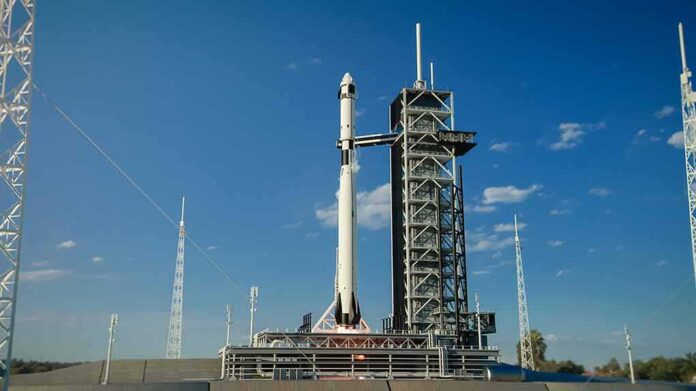
United Launch Alliance’s new Vulcan rocket failed about 10 minutes after liftoff, leaving 40 Amazon internet satellites undelivered and raising costly questions for a major U.S. space program.
Story Snapshot
- United Launch Alliance confirmed an in-flight anomaly and a failure to deliver Amazon’s mission to orbit.
- The rocket launched November 15 from Cape Canaveral with 40 Amazon Leo satellites.
- The company has not identified a technical cause and says analysis is underway.
- The loss hits Amazon’s plan to build a large internet network in low Earth orbit.
What ULA Confirmed About the Failure
United Launch Alliance said the Vulcan rocket suffered an “anomaly” about 10 minutes into flight and failed to deliver the Amazon mission to orbit. The company issued the statement soon after launch from Space Launch Complex 41 at Cape Canaveral. The mission carried 40 Amazon Leo broadband satellites aimed for low Earth orbit. The company did not name a faulty part or system. It said it needs more data before giving technical details on what went wrong.
Reports from multiple outlets matched the core timeline and payload facts. They listed the November 15 launch date, the Cape Canaveral site, and the 40-satellite count. They also placed the anomaly at roughly the 10-minute mark. That consistency supports the basic outline: the vehicle launched, a problem occurred mid-flight, and the payload never reached its intended orbit. Those facts are not in dispute at this stage of the review.
What We Do Not Yet Know
United Launch Alliance has not publicly identified the failure mechanism or a specific stage, engine, or software cause. The event followed earlier attention on a redesigned solid booster nozzle, but current reports do not tie that prior issue to this failure. Without released telemetry and an official mishap report, the record supports only what the company confirmed: an anomaly and a failed delivery to orbit. That leaves the detailed fault tree for a later, formal investigation update.
Coverage also does not prove whether each satellite was physically destroyed or simply left in a useless orbit. The shared language says the mission failed to reach orbit, or that the payload was lost. That can mean many outcomes in spaceflight. Until tracking data or operator statements appear, the safest plain reading is that the satellites will not serve customers as planned from this launch. That is the outcome that matters most to users and investors.
Why This Matters for Amazon and the Launch Market
Amazon planned a large series of launches to build a broadband network in low Earth orbit. This mission was reported as part of that long campaign. A lost batch means schedule pressure, new hardware orders, and possible insurance claims. Space insurance often focuses on launch and the first year on orbit because that window carries the greatest risk. A failure here fits that model and may affect premiums and contract terms for follow-on flights.
Commercial spaceflight accepts that launches can fail. Historical risk studies by the Federal Aviation Administration show non-zero failure rates for launch vehicles. Insurers treat this phase as the riskiest part of a satellite’s life. That does not ease the blow for customers or workers, but it explains why programs plan backups, maintain spares, and spread missions across many flights. The point now is recovery: fix the cause, adjust schedules, and keep building capacity.
Broader Stakes: Reliability, Competition, and Accountability
This setback lands in a crowded market where reliability buys trust. Companies, schools, and rural families want steady internet, not promises. When a single launch drops dozens of satellites, many see cost overruns and delays. Others see a deeper problem: big firms and agencies move on, while everyday people pay more and wait longer. That frustration runs across party lines and feeds the view that large systems miss the basics of service and accountability.
2/5 ULA said its Vulcan rocket suffered an anomaly about 10 minutes into flight and failed to deliver Amazon Leo satellites to orbit, per reports. The mission was Vulcan's return to flight and is described as ULA's first full-mission failure.https://t.co/jc1NF0iwVp
— Aped (@aped_app) November 16, 2026
United Launch Alliance and Amazon now face a clear test. They must share what they can, fix what failed, and keep future launches safe. Regulators will also review records as part of standard practice. The facts today are simple: a U.S. rocket failed mid-flight, and a major payload did not reach orbit. The next steps—transparent findings, credible fixes, and realistic timelines—will show whether leaders can deliver results that match their budgets and their promises.
Sources:
nypost.com, cbsnews.com, fox10phoenix.com, pembrokepinesflnews.com, giantswire.usatoday.com, spaceflightnow.com, wusf.org
© patriotsunited.org 2026. All rights reserved.