
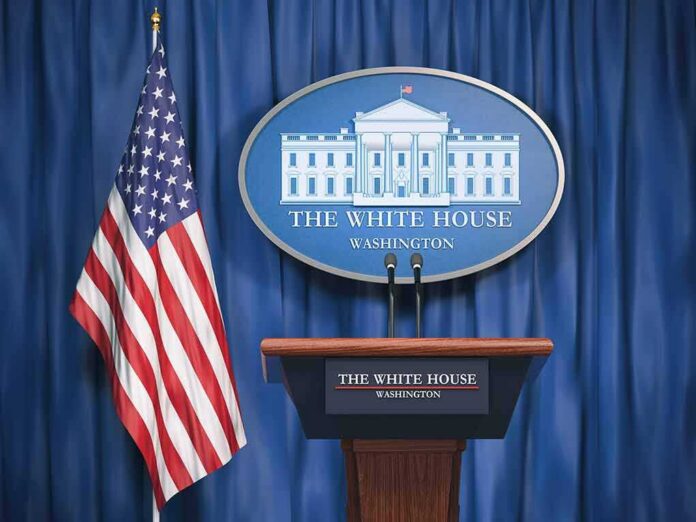
President Trump declared an “energy ceasefire” between Russia and Ukraine as missiles reportedly kept hitting power sites, exposing a risky gap between bold promises and on-the-ground facts.
Story Snapshot
- Trump said Russia and Ukraine agreed to stop attacking energy sites, but confirmation is thin.
- The White House tied the claim to a plan for large Russian diesel releases and sanctions relief reports.
- Ukraine’s president said the ceasefire announcement was news to him and asked when it starts.
- Russian strikes on energy targets were reported after the claim, clouding compliance and trust.
What Trump Announced And Why It Matters
President Trump said Russia and Ukraine agreed to halt attacks on energy infrastructure, effective right away. He paired that claim with a proposed flow of Russian diesel to ease fuel costs, including 300,000 tons first, then larger monthly volumes. The Hill and the British Broadcasting Corporation reported the diesel figures and linked them to a pause on striking energy sites. Trump’s statement did not include details on which facilities were covered or how any pause would be verified.
Reports also described Treasury moving to suspend sanctions on Russian diesel to enable the plan, though the specific legal pathway and conditions were not fully explained in public sources. The administration framed the move as practical, with near-term economic relief traded for less damage to grids, refineries, and pipelines in Ukraine. That approach reflects a trend in wartime talks to test small, targeted pauses before attempting broad peace deals.
Conflicting Signals From The Battlefield And Kyiv
CNBC and Public Broadcasting Service reports said Russian missile and drone strikes continued after Trump’s announcement, including hits on power sites. That raised immediate doubts about whether any ceasefire had actually begun or held. Ukraine’s President Volodymyr Zelenskyy told Axios, as reported by Deutsche Welle, that the ceasefire claim was new to him. He said Ukraine would accept an energy pause if Russia agreed and the start time was clear.
Zelenskyy also warned in separate interviews that the United States taking Russia’s side would be a “historic mistake.” He argued such a shift would hurt Ukraine’s ability to stand and would be a tragedy, not a smart realignment. Those remarks underscored a key political risk: if U.S. policy is seen as rewarding Moscow without verified restraint, Ukraine and many allies may pull back from cooperation, and domestic trust in the policy could erode.
Economics: Diesel Volumes And Limited Price Relief
The plan’s diesel shipments sound large, but analysts told CNBC they likely would not move United States pump prices much by themselves. Fuel markets are global and complex. A few cargoes can help in tight spots, but they rarely set the broader trend. If prices do not fall in a clear way, critics will say the United States gave sanctions relief without winning meaningful gains for consumers or for stability in Ukraine’s grid.
That outcome would also feed a wider frustration shared by many Americans: deals that help the powerful but barely touch family budgets. People on the right worry about high energy costs and inflation. People on the left worry about fairness and who gets the benefits. Both sides see Washington making promises but not delivering clear, traceable results they can feel in daily life.
Verification: The Missing Pieces That Decide Success Or Failure
Successful ceasefires need clear maps, timelines, and monitors. Reports so far have not shown a signed text, a list of covered sites, a start clock, or a process to judge violations. Without those parts, even a good idea can fall apart fast. Think about what happens if a substation is hit: who decides if it was covered, who collects the evidence, and what penalty follows? Absent answers, every strike becomes a new argument, not a step toward peace.
Past attempts at limited energy pauses show the same weakness. Governments often announce aims that sound practical and humane, but they skip the unglamorous work of monitoring and enforcement. Citizens then see lofty claims and messy results. That gap fuels the belief that elites protect their interests while regular people pay the price. A credible plan would publish verifiable terms, define penalties, and report compliance events in real time.
What To Watch Next
Watch for three things. First, official texts or licenses that explain any sanctions adjustments and their conditions; those would show whether guardrails exist. Second, independent confirmation from Moscow and Kyiv that they accept the same map of protected energy sites and the same start time. Third, on-the-ground data: fewer strikes on power plants and grid nodes, and a clear record when alleged violations occur. Without these, the “energy ceasefire” remains a claim, not a change.
Sources:
cbsnews.com, thehill.com, bbc.com, govinfo.gov, yahoo.com, newsweek.com, nbcnews.com
© patriotsunited.org 2026. All rights reserved.