
Federal agents executed a judge-approved search at Rep. Ilhan Omar’s D.C.-area home as part of a criminal investigation, sharpening fears that law and politics now collide in the open.
Story Snapshot
- Justice Department confirmed a judicially authorized search tied to an ongoing criminal probe.
- Homeland Security Investigations led the operation, pointing to an immigration focus, according to reporting.
- No charges were announced, and the warrant details remain sealed.
- Omar called the action political targeting and denied long-running fraud claims.
What Federal Authorities Confirmed And What They Did Not
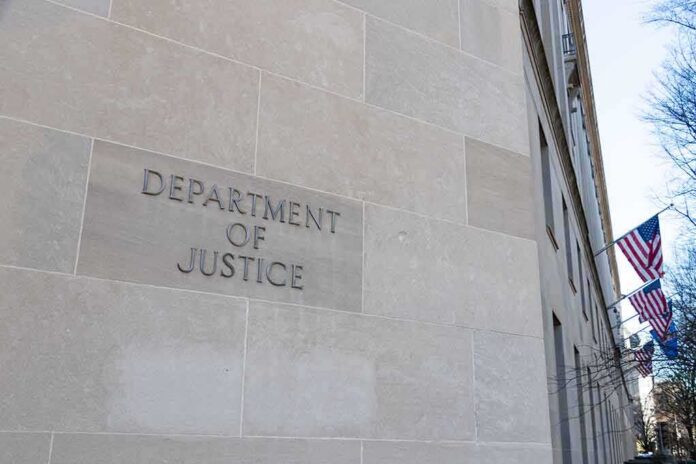
The Department of Justice said Homeland Security Investigations executed a judicially authorized search warrant in the Washington, D.C. area as part of an ongoing federal criminal investigation. The statement confirmed the warrant existed and that a judge approved it. The statement did not list a case number, suspected crimes, seized items, or targets. The Associated Press reported that no charges were announced at the time of the search. A warrant allows a search; it is not proof of guilt.
Homeland Security Investigations is the investigative arm that often handles immigration cases. Multiple outlets linked the search to possible immigration paperwork submitted long ago on Omar’s behalf, citing unnamed sources. Reuters-linked coverage and local reports said the issue involved documents from her late father when she was a child. Politico reported an administration source who tied the focus to immigration records. None of these accounts included the sealed affidavit or on-record agents.
How To Read A Judicial Search In Plain Terms
A judge-approved warrant means investigators showed “probable cause.” That is a fair probability that evidence of a crime may be at a certain place, based on sworn facts. It is much lower than proof beyond a reasonable doubt. It also differs from the standard to file charges. That gap matters. A search can be legal and still not end in an arrest or conviction. Courts stress this practical, common-sense threshold when reviewing warrants.
Anonymous-source claims deserve care, too. Reporters use them to inform the public during fast events. But anonymous tips are not the same as public evidence. Responsible practice is to seek documents, on-the-record voices, or court filings. That is why the undisclosed affidavit and sealed records here leave a large gap. Until filings are public, both sides can tell very different stories, and people fill the gap with their own beliefs.
What Omar And Her Office Say
Omar said the raid was political targeting and an attempt to silence her. Her office called it an abuse of power. She has long denied claims that she engaged in marriage or immigration fraud. Reuters reported there is no hard evidence proving those allegations, despite years of speculation. The Associated Press previously found county records did not show that she was married to two people at once. These denials and checks do not reveal the sealed warrant’s contents, but they are part of the record.
Recent financial questions also surfaced in media timelines. Omar’s office said a large disclosure discrepancy came from an accountant’s error and that liabilities were not counted at first. The independent Office of Congressional Conduct dismissed allegations tied to those filings, according to her office and coverage of the watchdog’s action. Those issues, while politically charged, were not shown to connect to the reported immigration focus of this probe.
Why The Timing And Process Fuel Distrust On Both Sides
The search landed close to an election involving Omar, which heightens suspicion. Long-standing Justice Department norms warn against actions that could sway elections or even create that appearance. Officials also tend to release minimal case detail early on. That can protect an investigation, but it also creates an information vacuum. In today’s climate, many Americans see that vacuum as proof of bias, whether against a critic of President Trump or for a Washington insider.
People across the spectrum share a core worry: the rules do not seem to protect regular citizens the way they should. Conservatives see selective enforcement and double standards. Liberals see state power used against political opponents and minorities. Both fears can be true in parts of the system at different times. The way to test them here is simple but slow: unseal the warrant affidavit, list what was seized, and, if charges come, present evidence in court, not on social media.
What To Watch Next
Watch for any move to unseal the warrant affidavit, the property inventory, and the return filed with the court. Those documents can show what agents sought and found. Look for a case number, an assigned prosecutor, and any listed statutes. If prosecutors file charges, the indictment will state the alleged crimes. If no charges follow, that also sends a message about the evidence. Until then, keep the standard clear: a lawful search is not a conviction, and a claim is not a fact.
Sources:
cnbc.com, fox9.com, politico.com, yahoo.com, thehill.com, doj.state.or.us, rivereditor.com
© patriotsunited.org 2026. All rights reserved.