
Fires outside Paris high schools and closures across France have turned student complaints about overcrowded, understaffed, run‑down classrooms into a national crisis that leaders can no longer ignore.
Story Snapshot
- Hundreds of schools were closed or disrupted as protests spread nationwide.
- Students cite teacher shortages, overcrowded classes, and dilapidated buildings.
- France’s government acknowledged real problems while condemning violence.
- Officials ordered remote lessons where blockades made campuses unsafe.
What Sparked the Street Blockades
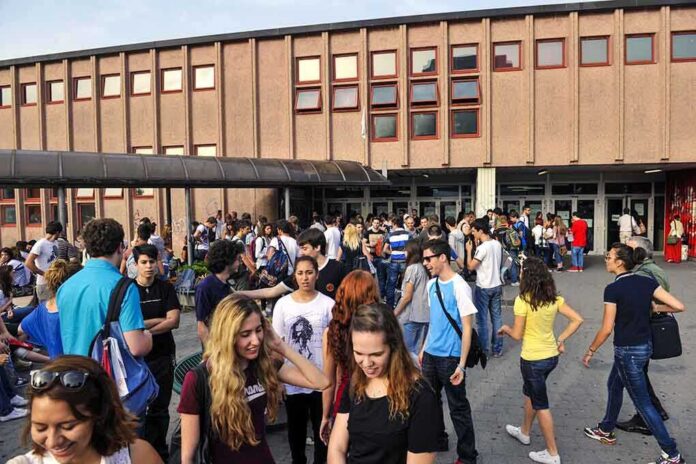
Students in the Paris region began blocking school gates after weeks of missing teachers, jammed classrooms, and failing buildings. Reporters on the ground heard the same points again and again: too few teachers, too many students, not enough nurses, and rooms that are either freezing or too hot to study in. One cited quote summed it up: classes hold 35 students and some do not have enough chairs, even as lunch breaks are too short for everyone to eat.
Specific schools reported lost class time in math, humanities, English, and sports because no teacher could cover. A parent representative at one lycée said cancellations started at the beginning of the term and kept stacking up. Students and teachers also pointed to poor facilities, including prefab rooms with power issues and classrooms that become unsafe in heat waves. These reports came not from one campus, but from many across suburbs and city centers, giving the claims broader weight.
How Big the Disruption Became
Within days, the protests reached hundreds of high schools, with closures or partial shutdowns reported as the wave spread beyond Paris. One tally said actions reached 356 high schools, while other counts put fully or partly closed schools between 400 and 500 during the peak period. The scale forced a government response. The prime minister convened crisis talks, and the education ministry told schools to switch to remote classes when campuses were blocked or unsafe.
France’s education minister said security conditions were not met at many sites and warned that some groups had turned protests violent. He said the student movement had been infiltrated by far‑left activists and argued that blockades and arson put students and staff at risk. President Emmanuel Macron called on schools to stay open and said fears about education are real, but that setting fires or trapping classmates behind barricades crosses a line. These statements framed the debate as both a safety issue and an education emergency.
What Students Want Fixed
Student demands center on people and places. They want enough qualified teachers to keep classes running, smaller class sizes that let them learn, and basic health staff such as nurses and counselors on campus. They also want safe buildings with working heat and cooling, and windows that open. Many blame years of under‑investment in public schools. Coverage describes broken infrastructure, modular rooms with outages, and schedules that run from early morning to early evening.
Officials have signaled movement on staffing. The education ministry set a timetable to fill open posts faster and to prioritize long absences. It also backed remote learning where needed to limit learning loss during blockades. Those steps show the government sees a real problem, not just disorder. But they may not heal deeper trust gaps if students keep seeing empty chairs, canceled lessons, and buildings that fail in heat or cold.
Why This Matters Beyond France
This fight touches a larger pattern: when public systems slip, citizens lose faith. France spends a sizable share of its economy on education, yet many schools still feel short on basics. International reports show France spends less per younger student than some peers even as total spending looks high, and class sizes have only inched down over time. That gap between budget lines and daily reality fuels anger, especially in poorer suburbs where needs run high.
I've seen footage of the so-called student demonstrations in France, supposedly centered on school and classroom conditions and other education-related issues. But there's one thing I simply can't wrap my head around: the sheer number of Palestinian flags prominently displayed…
— William John G. Balderama (@WJGBalderama) October 7, 2026
People across the political spectrum know this script. Leaders promise reform. Agencies hold meetings. But students still sit in crowded rooms without teachers, while fires outside the gates grab the cameras. The lesson for any government is simple: fix the basics first, and show the receipts. Publish vacancy lists, repair schedules, and hiring timelines. Until the state proves that classrooms are safe, staffed, and calm, the streets will keep doing the talking.
Sources:
youtube.com, reuters.com, dw.com, france24.com, lemonde.fr, gmanetwork.com, cnbc.com, lbc.co.uk, independent.co.uk, bbc.co.uk
© patriotsunited.org 2026. All rights reserved.