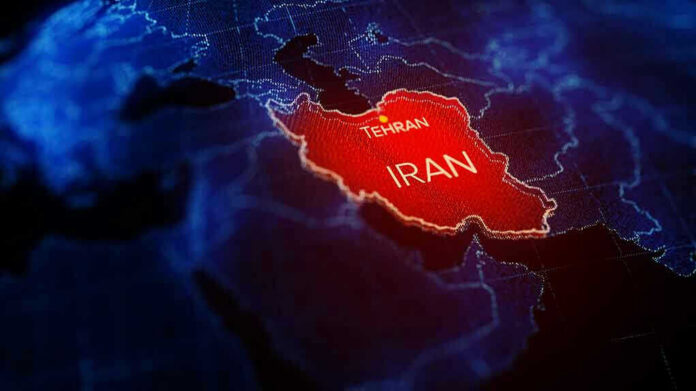
Israel eliminated Iran’s top security chief and the brutal commander of its domestic repression forces in strikes that delivered the regime’s most devastating leadership blow since Supreme Leader Khamenei’s assassination just weeks ago.
Story Highlights
- Israeli airstrikes killed Ali Larijani, Iran’s security chief and de facto leader, plus Basij paramilitary commander Gholamreza Soleimani on March 17, 2026
- The assassinations represent the highest-profile eliminations since Khamenei’s death on February 28, systematically dismantling Iran’s command structure
- Basij forces under Soleimani brutally suppressed Iranian protests and citizens demanding freedom from the oppressive regime
- Iran’s conspicuous silence on the deaths contrasts with Israeli confirmation, suggesting the regime fears revealing its growing vulnerability
- Strikes decimated most of the Basij leadership including deputies, crippling the regime’s primary apparatus for controlling its own people
Israeli Strikes Decapitate Iranian Leadership
Israeli Defense Minister Israel Katz confirmed on March 17, 2026, that overnight military operations successfully eliminated Ali Larijani, Secretary of Iran’s Supreme National Security Council, and Gholamreza Soleimani, commander of the Basij paramilitary forces. The strikes targeted both officials in separate operations, with Larijani’s last social media post appearing at 0940 GMT on March 17 before his death. Katz declared that both men “joined Khamenei in hell,” referencing the Supreme Leader’s February 28 assassination. The dual eliminations represent calculated strikes against Iran’s nuclear negotiation apparatus and its domestic repression machine, fundamentally weakening the regime’s ability to maintain control.
Basij Commander’s Brutal Legacy Ends
Gholamreza Soleimani led the Basij, the Islamic Revolutionary Guard Corps’ volunteer paramilitary force notoriously deployed to crush Iranian citizens protesting for freedom and basic human rights. The United States and European Union sanctioned Soleimani for his role in violent protest suppression from 2022 through 2024, when his forces collaborated in silencing dissent. Israeli forces struck Soleimani’s command tent headquarters, killing him alongside his deputy and other senior officials. This operation eliminated the majority of Basij leadership, dismantling the organizational structure that enabled systematic oppression. The Basij serves as the regime’s primary tool for intimidating Iranians who dare challenge theocratic rule, making Soleimani’s elimination particularly significant for freedom-seeking citizens.
Power Vacuum Deepens After Khamenei’s Death
Larijani emerged as Iran’s most powerful figure following Ayatollah Ali Khamenei’s death in an Israeli strike on February 28, 2026, the first day of escalated U.S.-Israel operations against Iran. His role directing nuclear negotiations with Western powers made him central to Iran’s strategic defense posture and international positioning. The former parliament chairman wielded influence across Iran’s security establishment, making his elimination the most consequential leadership strike since Khamenei’s death. His assassination creates further uncertainty in Iran’s command structure at a critical moment when the regime faces external military pressure and internal dissent. This systematic targeting demonstrates how precision operations can disrupt authoritarian regimes that threaten American interests and regional stability.
Iranian Silence Reveals Regime Weakness
Iran’s state media and official channels remained conspicuously silent on the confirmed deaths, with only Larijani’s office promising an eventual statement. This silence contrasts sharply with Israel’s public confirmation and celebration of the successful operations. The regime’s reluctance to acknowledge these devastating losses suggests profound concern about appearing vulnerable to both domestic and international audiences. Iranian officials previously participated in defiant public marches in Tehran, yet now avoid confirming leadership casualties. This pattern reveals a regime struggling to maintain its posture of strength while absorbing catastrophic blows. The silence undermines the regime’s credibility with its own population, potentially emboldening Iranians who seek liberation from decades of oppressive theocratic rule and support for terrorism.
Regional Implications and Ongoing Operations
The strikes occurred amid an ongoing U.S.-Israel air campaign that has reportedly resulted in approximately 1,300 casualties in Iran and 850 in Lebanon, with 12 Israeli and 13 American military deaths. Operations have damaged civilian infrastructure in Tehran including schools and hospitals, while also targeting Hezbollah positions in Beirut. President Trump’s administration coordinates with Israel on securing the Strait of Hormuz, a vital chokepoint for global energy supplies. Regional incidents including a UAE oil tank fire and Kuwait drone attack demonstrate the conflict’s expanding scope. The International Committee of the Red Cross warned that civilians are paying a “heavy price” with alarming losses and disruptions. These operations represent America’s renewed willingness under Trump to confront Iranian aggression directly, reversing years of appeasement that only emboldened the regime’s destabilizing behavior throughout the Middle East.
Sources:
Israel Claims Killing of Iranian Security Chief Ali Larijani – TRT World
Israel Says It Killed a Top Iranian Security Official and the Basij Force Chief – 2News
Iran International Coverage of Leadership Strikes
Israeli Defense News: Iran Leadership Strikes – Jerusalem Post