A U.S.-flagged tanker was hit by “unknown projectiles” while sitting in a Bahrain port—proving that in today’s Middle East showdown, even a docked ship isn’t safe.
Quick Take
- The U.S.-flagged tanker Stena Imperative was struck twice at 02:57 UTC on March 2, 2026, while moored at Khalifa Bin Salman Port in Bahrain.
- A fire broke out and was extinguished; one shipyard worker was killed and two others were injured, while the ship’s crew was reported safe and evacuated.
- Investigators have not confirmed what hit the vessel; Bahraini authorities raised the possibility of intercepted-missile debris.
- Maritime traffic through the Strait of Hormuz has effectively stopped, with war-risk insurance pulled and premiums surging.
- Analysts assessing the pattern say recent strikes look like broad “area denial” meant to disrupt commercial shipping, not precision targeting.
Strike on a U.S.-Flagged Tanker Turns a Port Into a Front Line
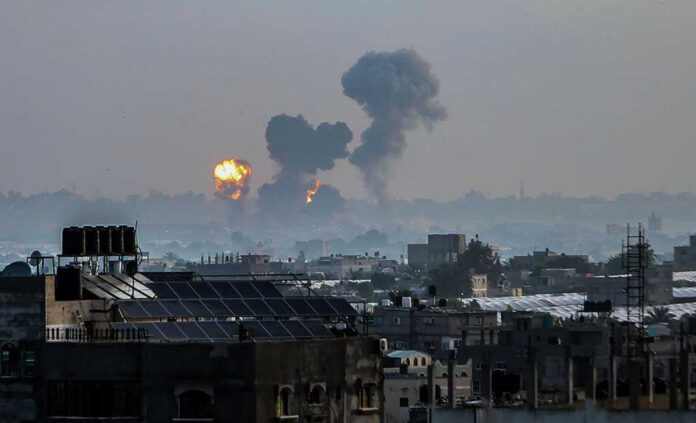
At 02:57 UTC on March 2, the 183-meter Stena Imperative was struck by two unidentified projectiles while berthed at Khalifa Bin Salman Port in Bahrain. The tanker is owned by Sweden’s Stena Bulk and operated by U.S. shipping firm Crowley Maritime, placing it squarely in the category of U.S.-linked commercial assets. A fire ignited on board, but responders extinguished it and initiated a damage assessment.
Stena Bulk confirmed the human cost landed on port personnel rather than the ship’s crew: one shipyard worker died and two were injured. Maritime security reporting indicated all crew members were safe and evacuated the vessel. That distinction matters because it shows how quickly regional conflict can spill onto civilians and critical infrastructure, even when commercial mariners are not the direct casualties in a strike.
What We Know—and What Still Isn’t Verified—About the Projectiles
The source of the impacts remains unconfirmed in the available reporting. Maritime security updates and initial accounts described “unknown” or “unidentified” projectiles, and no public claim of responsibility for this specific incident has been documented. Bahraini authorities suggested the damage could have been caused by debris from an intercepted missile, adding another layer of uncertainty. With competing possibilities and an active conflict environment, definitive attribution has not been established.
Tracking data also shows an information gap: the Stena Imperative reportedly stopped transmitting AIS on February 28 and remained dark for more than 72 hours leading into the strike window. AIS gaps can occur for many reasons, including security practices in high-threat zones, but they complicate outside verification of movements and timelines. For the public, that means basic questions—exact positioning and sequence of events—often depend on official briefings and company statements.
Regional Escalation Is Reshaping the Global Energy Shipping Map
The Bahrain port strike landed amid a fast-moving escalation that intensified after Operation Epic Fury on February 28, described as a major U.S.-Israel air campaign against Iran that killed Iran’s Supreme Leader and other top officials. Within roughly 36 hours, multiple commercial tankers were struck across the Strait of Hormuz and the Gulf of Oman, and Hezbollah formally entered the conflict with missile and drone launches toward Israel. The tempo signals a wider risk environment for commerce.
The maritime effects are immediate and measurable. Intelligence reporting indicated commercial tanker traffic through the Strait of Hormuz has effectively ceased, with hundreds of vessels drifting or holding position in the Gulf of Oman. War-risk insurance has been withdrawn in key cases, and premiums have jumped to multi-year highs, turning routine voyages into financial gambles. Reports also noted a sharp drop in visible AIS-transmitting tankers near major export hubs, underscoring a broad pullback from the corridor.
Area Denial, Not Precision: Why That Matters for U.S. Interests
Maritime intelligence analysis cited in the research argues the strike pattern resembles “area denial” more than pinpoint targeting of a specific nationality or cargo type. The spread of incidents across different ships and flags supports the view that the aim is to disrupt traffic broadly, not simply to single out one operator. That assessment fits the reality that fear, insurance withdrawal, and ship backlogs can choke a chokepoint faster than any single sunk vessel.
One dead as ship in Bahrain port struck by 'unknown projectiles'
— Muhammad Aslam ਮੁਹੰਮਦ ਅਸਲਮ (@adogar_aslam) March 2, 2026
For Americans watching from home under President Trump, the practical question is how the U.S. protects its people, partners, and commerce without sliding into open-ended commitments. The strike’s location—Bahrain, near the U.S. Navy’s Fifth Fleet footprint—highlights the strategic sensitivity of the area, but the facts available so far still leave unanswered what exactly hit the ship and who launched it. Until attribution is verified, policymakers will be balancing deterrence, defense, and de-escalation under pressure.
Sources:
U.S.-flagged tanker security program ship Stena Imperative hit in Bahrain, shipyard worker killed
One dead as ship in Bahrain port struck by ‘unknown projectiles’
March 2 Iran War Maritime Intelligence Daily
U.S.-flag bulk tanker attacked in Bahrain
US tanker struck twice in Bahrain port