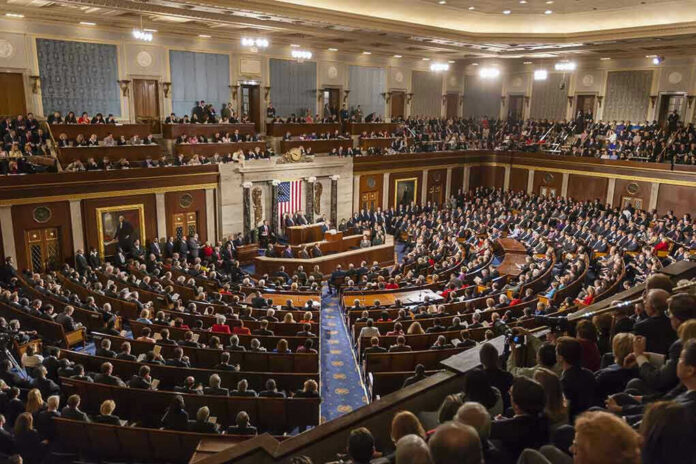
Every hidden truth about Jeffrey Epstein’s connections and crimes may soon be exposed, thanks to a Senate decision that could change how America confronts powerful secrets.
Story Snapshot
- The Senate unanimously approved a bill requiring the release of all unclassified records related to Jeffrey Epstein.
- This legislative move forces the Justice Department to unveil documents that could implicate influential figures.
- Unanimity in the Senate signals rare bipartisan demand for transparency regarding Epstein’s criminal activities.
- The bill now awaits the President’s signature, bringing America to the brink of unprecedented disclosure.
Senate’s Demand for Unfiltered Disclosure
The United States Senate acted with unusual unity, passing a bill that compels the Justice Department to release every unclassified document related to Jeffrey Epstein. This measure, already approved by the House, now sits on the President’s desk, a signature away from forcing federal agencies to reveal what they have long kept in the shadows. This move stands out not just for its bipartisan support but for its direct challenge to a culture of secrecy surrounding high-profile criminal cases. Americans who have watched Epstein’s saga unfold with frustration over withheld information now witness their representatives demanding answers on their behalf.
The bill’s passage was not marred by dissent, signaling a rare moment when political differences were set aside in pursuit of accountability. Lawmakers from both sides recognized the public’s right to know, especially when the subject is someone whose actions have reverberated through elite circles for decades. The Senate’s action reflects mounting pressure from constituents who believe that secrecy only breeds suspicion and erodes trust in institutions. By agreeing unanimously, senators delivered a message: the era of quietly filed and forgotten documents about Epstein’s network is over.
Why Unclassified Epstein Files Matter to the Public
Epstein’s case is unique not only for its criminal gravity but also for its web of connections to powerful individuals in politics, business, and entertainment. For years, rumors and speculation have flourished in the absence of concrete answers. The release of unclassified records promises to pierce the fog of conjecture, offering the public a chance to scrutinize evidence and draw informed conclusions. These documents may illuminate how Epstein operated, who assisted him, and which systems failed to protect victims while shielding perpetrators. Americans above the age of forty, many of whom recall Watergate and other scandals, understand the value of full disclosure as a deterrent to future abuse of power.
Transparency is more than a political talking point; it is a foundational principle of American democracy. When secrets are allowed to linger, they corrode accountability and enable wrongdoing. The Senate’s action, therefore, aligns with conservative values of law, order, and the public’s right to oversee its government. For those who have grown weary of half-truths and redacted reports, this bill represents the possibility of closure and clarity, not just on Epstein’s crimes but on the mechanisms that allowed him to thrive.
The Ripple Effects of Unveiling the Files
Should the President sign the bill, the Justice Department will face immediate pressure to comply. The scope of the records is expected to be vast, potentially implicating individuals and institutions previously shielded by official silence. The anticipation of what might surface has already begun to shape conversations in political and social circles. Some expect bombshell revelations; others brace for disappointment, fearing that key details may remain classified or redacted. Regardless, the process itself will test the government’s commitment to openness and the public’s appetite for uncomfortable truths.
Americans who have lived through decades of scandal know that disclosure can be both cathartic and destabilizing. The Epstein files, once released, may provoke new investigations, inspire reforms, or spark outrage at systemic failures. What remains to be seen is whether the documents will deliver justice, accountability, or merely fuel another round of speculation. The Senate’s action has opened the door, but what walks through it will depend on the integrity of the process and the willingness of those in power to accept scrutiny.
Sources:
Senate unanimously agrees to send Epstein bill to Trump’s desk once it’s received from House