When civilians become prey and cities turn into slaughterhouses, Sudan’s civil war exposes the world’s failure to prevent a modern genocide—leaving millions trapped between two armies and the abyss.
Story Snapshot
- The Sudanese civil war since April 2023 has created one of the world’s worst humanitarian disasters, with mass killings, executions, and the deliberate targeting of civilians.
- Rapid Support Forces and Sudanese Armed Forces wage urban warfare, destroying cities and driving millions from their homes.
- International intervention is conspicuously absent, as famine, sexual violence, and ethnic cleansing escalate.
- The collapse of basic services, along with relentless violence, signals a dire future for Sudan and the region.
Deliberate Civilian Slaughter Redefines Urban Warfare
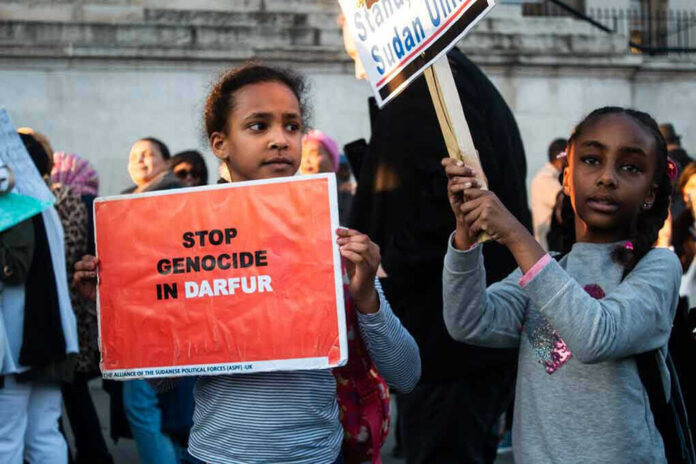
Sudan’s latest civil war erupted on April 15, 2023, as the Sudanese Armed Forces (SAF) and the Rapid Support Forces (RSF) ignited a relentless battle for control in Khartoum. The violence rapidly spread, transforming urban centers into battlefields. RSF, originally the Janjaweed militia infamous for the Darfur genocide, intensified attacks with tactics unmistakably aimed at civilians—mass executions, ethnic targeting, and systematic sexual violence.
By October 2024, the carnage reached new heights in Gezira State, where eyewitnesses described RSF-led massacres that claimed hundreds of lives in a single month. The deliberate nature of these operations, designed to terrorize and depopulate, shattered any illusion of civilian protection. The siege of El Fasher, culminating in October 2025, became a tragic emblem: after 500 days, the city fell into chaos as thousands fled amid reports of large-scale atrocities.
Humanitarian Collapse: Famine, Flight, and the Ruins of Society
The humanitarian fallout dwarfs most modern crises. Over 8.8 million Sudanese are internally displaced; another 3.5 million have become refugees, escaping with nothing but the clothes on their backs. Urban warfare has obliterated hospitals, schools, and infrastructure. Famine tightens its grip, with aid agencies warning of imminent starvation and the collapse of basic health services. Media outlets, once vital for documenting abuses and raising alarms, have been systematically silenced or destroyed.
Sexual violence, weaponized by both SAF and RSF, has become a widespread tool of terror. Women and children, particularly from ethnic minorities in Darfur, suffer disproportionately, compounding trauma and social fragmentation. International agencies agree: the scale of displacement and suffering surpasses anything seen in Sudan’s recent history, evoking memories of the Darfur genocide but on a broader, more devastating scale.
Failed Diplomacy and the Specter of Genocide
Despite mounting evidence of war crimes and crimes against humanity, external intervention remains toothless. The United Nations, African Union, and humanitarian organizations sound the alarm, warning of looming genocide as both SAF and RSF reject negotiations and vow further offensives. International backers—including neighboring states and Gulf powers—fuel the conflict through weapons and political support, while mediation attempts repeatedly collapse.
Experts, including Human Rights Watch and Genocide Watch, insist the violence is not random but methodical: urban warfare, ethnic cleansing, and famine are wielded as instruments of power. Analysts emphasize the historical roots—decades of impunity and failed governance—and warn of Sudan’s potential state collapse, with destabilizing effects across East Africa. The political vacuum grows as local leaders and civil society are decimated, leaving ordinary Sudanese with little hope for relief.
Long-term Consequences: Regional Shockwaves and the Erosion of Hope
The devastation carries profound consequences for Sudan and beyond. Economic collapse and infrastructure destruction threaten regional trade and security. The humanitarian sector, overwhelmed and targeted, struggles to respond to needs that far outstrip resources. Social fragmentation deepens as cycles of violence and ethnic division become entrenched, making reconciliation increasingly remote.
Refugee flows into neighboring countries risk destabilizing fragile states, while the loss of media and civil society undermines transparency and accountability. The entrenchment of military elites and the absence of international resolve suggest a protracted crisis, with generations at risk of trauma and poverty. As Sudan teeters on the edge, the world watches—yet meaningful action remains elusive.
Sources:
Wikipedia: Sudanese Civil War (2023–present)
Genocide Watch: Sudan Genocide Emergency
Human Rights Watch: World Report 2025 – Sudan
Doctors Without Borders: Timeline
International Rescue Committee: Crisis in Sudan