Sixty-four bodies, four fallen officers, and the echoes of gunfire reverberating through Rio’s favelas—Brazil’s latest crackdown on the Red Command gang was more than a police operation; it was a seismic jolt that exposed the city’s deepest divides and forced the world to reckon with the true cost of order.
Story Snapshot
- Brazilian police and soldiers launched the largest anti-gang raid in Rio’s history, leaving at least 64 dead, including four police officers.
- The Red Command drug gang, notorious for violent turf wars, was the prime target in the Complexo de Alemao and Penha favelas.
- Human rights organizations and the United Nations condemned the scale of violence, demanding urgent investigations.
- The operation’s fallout ripples through Rio’s communities, casting shadows over public safety, human rights, and the city’s global reputation.
The Deadliest Day in Rio: Operation in the Favelas
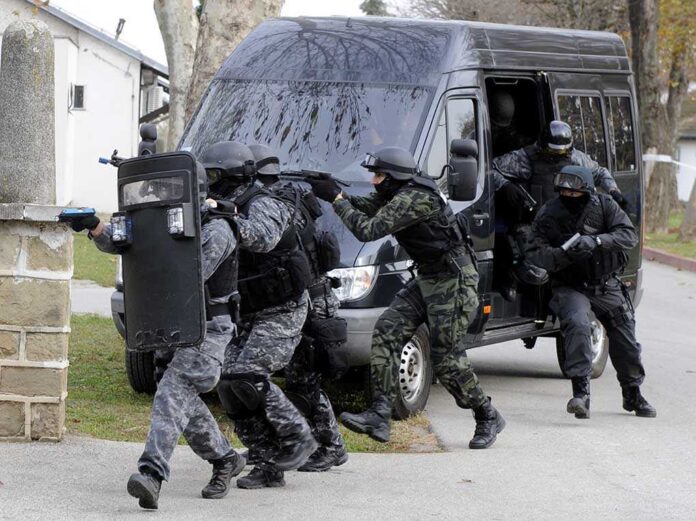
On October 28, 2025, Rio de Janeiro’s Complexo de Alemao and Penha favelas were thrust into chaos as more than 2,500 security forces, wielding helicopters and drones, converged on the city’s most fortified criminal stronghold. The Red Command, a gang whose name is spoken in hushed tones across Brazil, found itself surrounded by a war machine. When the shooting stopped, at least 132 people—mostly alleged gang members but also four police officers—lay dead. The toll stunned even those hardened by Rio’s long history of violence. This was not just another raid. This was the state declaring it would not cede an inch to narco-terrorism, no matter the cost.
Amid the billowing smoke and the rattling of automatic weapons, residents described scenes that could have come from a war zone. Armored vehicles rolled down narrow alleyways as police searched homes and detained dozens of suspects. The operation’s planners, led by the state’s civil police and sanctioned by Governor Claudio Castro, claimed a major victory against the drug trade. Yet, for many in the favelas, it was an all-too-familiar nightmare—one where security promised from above rains down as fear on the ground.
Old Enemies, New Tactics: The Red Command and the State
The Red Command, or Comando Vermelho, is as much a part of Rio’s history as its sun-drenched beaches. Emerging from the chaos of Brazil’s prisons in the 1970s, the gang has evolved into a criminal empire, controlling swathes of urban territory and waging bloody wars with rivals and police alike. The government, faced with international scrutiny ahead of high-profile events like the COP30 climate summit, deployed unprecedented firepower in this raid. Helicopters hovered overhead, drones mapped escape routes, and a media blitz accompanied the operation. Governor Castro’s message was blunt: Rio would not be held hostage by organized crime. But the specter of human rights abuses loomed large, as rights groups and the United Nations decried the high body count and called for independent investigations.
The power struggle goes beyond bullets and barricades. For the authorities, every gangster taken down and every weapon seized is a symbol of progress. For the Red Command, each fallen member is fuel for the gang’s narrative of resistance. The real losers, however, are often the innocent—families caught in the crossfire, children too afraid to leave their homes, and communities left to pick up the pieces.
Aftermath and Outcry: Unanswered Questions, Unfinished Business
As the world digested the scale of the violence, calls for accountability grew louder. Human rights organizations demanded transparency and independent investigations into the deaths, arguing that the line between justice and vengeance had grown dangerously thin. The Rio state public defender’s office even suggested the death toll might be higher than official figures, deepening suspicions about the state’s narrative. For local residents, the immediate aftermath was marked by mistrust and anxiety: shops shuttered, schools closed, and families mourned loved ones—some accused, some merely caught in the wrong place at the wrong time.
The long-term impact of the raid remains to be seen. While the government vows that such operations are essential to restoring order, critics warn of deepening rifts between police and the communities they are meant to protect. Past crackdowns have rarely ended the cycle of violence. Instead, they often reinforce the gangs’ hold by breeding distrust and resentment. With Rio’s international image—and billions in potential investment and tourism on the line—the stakes have never been higher. The city faces a crossroads: double down on militarized policing, or seek new strategies that blend security with respect for human rights and the rule of law. As the dust settles, one truth is clear—Rio’s war for its soul is far from over.
Sources:
Rio police raids kill at least 132, corpses line street