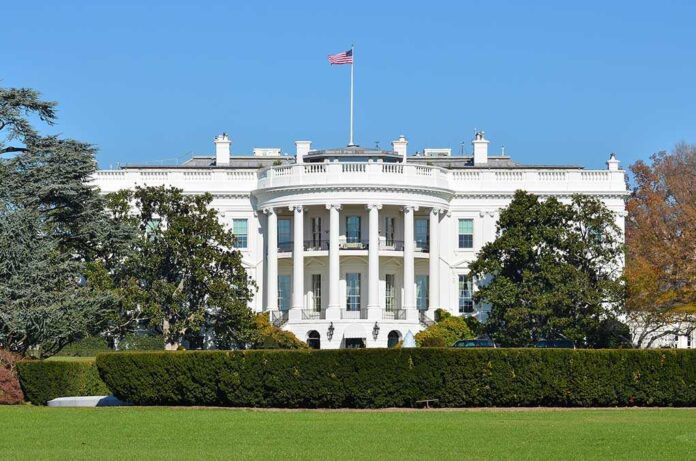
The shooting of two National Guard members near the White House has become a flashpoint in the debate over U.S. immigration policy.
Story Snapshot
- Two National Guard members were critically wounded near the White House on November 26, 2025.
- President Trump labeled the attack an “act of terror” and announced plans for an immigration crackdown.
- The suspect, an Afghan national, was admitted to the U.S. under a refugee program.
- The incident raises questions about immigration vetting and national security.
Incident Details and Immediate Responses
The shooting near the Farragut West Metro station, just a stone’s throw away from the White House, left two West Virginia National Guard members critically injured. The attack, which officials described as a targeted ambush, shocked the nation and quickly became the center of a heated political debate. The suspect, a 29-year-old Afghan national, was apprehended by law enforcement after being shot and stabbed during the altercation. His entry into the United States in September 2021 under the Biden administration’s Operation Allies Welcome has sparked controversy.
President Trump wasted no time in addressing the nation, characterizing the shooting as “an act of evil, an act of hatred, and an act of terror.” In his speech, he announced plans for a sweeping immigration crackdown, specifically targeting Afghan nationals admitted to the U.S. under the previous administration. Trump’s statements have intensified the national conversation about the adequacy of vetting procedures for refugees, particularly those from Afghanistan.
Political and Security Implications
The shooting has brought national security concerns to the forefront, with Trump describing it as “the single greatest national security threat facing our nation.” The administration’s response includes deploying an additional 500 National Guard troops to Washington, D.C., to bolster security. The attack’s timing, on the eve of Thanksgiving, has heightened its symbolic weight, drawing significant media attention and public scrutiny.
Critics of the previous administration’s refugee policies argue that the vetting process was inadequate, given the scale and speed of the Afghan evacuation. The suspect’s background and entry into the U.S. have become pivotal points in the political narrative, influencing ongoing discussions about immigration policy reform.
Current Investigation and Public Reaction
The investigation into the shooting is still in its early stages. FBI Director Kash Patel and other officials confirmed the targeted nature of the attack but acknowledged that the suspect is not cooperating. The motive remains unknown, leaving many questions unanswered. Law enforcement agencies have reviewed video footage from the scene and concluded that there are no additional suspects, reinforcing the belief that this was an ambush-style attack by a lone gunman.
The incident has evoked a range of reactions from political leaders and the public. While some support Trump’s call for stricter immigration measures, others express concern about potential discriminatory impacts on Afghan nationals and Afghan-Americans. The incident underscores the complex intersection of national security and immigration policy, with significant implications for future legislative and executive actions.
Broader Context and Future Implications
The shooting is situated within a broader historical context of U.S. military engagements and refugee resettlement policies. The chaotic withdrawal from Afghanistan in 2021 and the subsequent evacuation of Afghan nationals have left a lasting impact on U.S. immigration discourse. The Trump administration’s current stance represents a shift toward more stringent immigration enforcement.
The long-term implications of this incident are profound. It may lead to revised vetting procedures for refugees and heightened security measures in the nation’s capital. The political and social ramifications extend beyond immigration policy, influencing public perceptions of national security and refugee resettlement programs. As the investigation unfolds, the nation watches closely, aware that the outcome will shape the future of U.S. immigration policy and national security strategy.