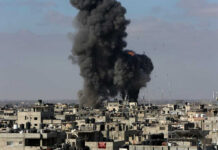
UN nuclear watchdog admits Iran’s nuclear program survived U.S. and Israeli strikes intact, leaving America facing a resurgent threat from a regime that funds terror worldwide.
Story Highlights
- IAEA Director Rafael Grossi confirms Iran’s 440.9 kg of 60% enriched uranium stockpile remains, enough for up to 10 nuclear bombs if weaponized.
- Iran blocks IAEA access to key enrichment sites like Natanz and Fordow, creating massive verification gaps post-strikes.
- Core underground facilities show no damage, proving military action alone cannot dismantle Iran’s decades-old nuclear infrastructure.
- Grossi pushes diplomacy as the only path, despite Iran’s history of deception and sponsorship of groups like Hezbollah and Hamas.
- President Trump’s administration must confront this reality to protect U.S. interests and allies like Israel from nuclear blackmail.
IAEA Confirms Program Survival After Strikes
IAEA Director General Rafael Grossi stated in March 2026 that Iran’s nuclear capabilities “still has survived” the 12-day conflict. Israel initiated strikes, followed by U.S. bombings on sites including Natanz and Isfahan. Grossi emphasized the program’s vast scale, built over decades with decentralized underground facilities. Enriched uranium stockpiles at 60% purity persist, just a technical step from weapons-grade 90%. This stockpile of 440.9 kilograms could yield up to 10 bombs if weaponized, per IAEA assessments. Core sites holding material report no damage.
Iran Denies Inspectors Critical Access
Iran refuses IAEA entry to four declared enrichment facilities since the June 2025 war. Inspectors lost “continuity of knowledge” over nuclear materials at Natanz, Fordow, and a new underground site near Isfahan. The agency cannot verify if enrichment continues or track stockpile movements. Partial access occurs only at unaffected sites like the Bushehr power plant, which holds no material. Satellite imagery shows minor damage to surface buildings, but underground infrastructure endures. This opacity heightens risks for U.S. security and regional stability.
Expert Consensus on Military Limitations
Grossi described Iran’s program as resilient, noting “the material will still be there, the enrichment capacities will be there.” Arms Control Association’s Kelsey Davenport highlighted mobile storage containers, allowing potential dispersal of uranium. Experts agree final enrichment to weapons-grade could take weeks. Military strikes degrade but do not eliminate capabilities due to buried designs. Grossi calls for negotiations, yet Iran’s past violations undermine trust. This demands maximum pressure from President Trump’s team to enforce real restraints.
Implications for U.S. National Security
The surviving program threatens Israel, Gulf allies, and U.S. forces in the region. Iran’s regime, a leading state sponsor of terrorism, gains leverage through nuclear ambiguity. Verification crises erode the nonproliferation regime’s credibility. Long-term, diplomacy requires ironclad verification Iran has dodged before. Trump’s “America First” strategy must prioritize preventing a nuclear-armed Iran, combining strength with skepticism of endless talks. Limited IAEA data underscores urgency for robust intelligence and deterrence.
Sources:
UN Nuclear Watchdog Says It’s Unable to Verify Whether Iran Has Suspended All Uranium Enrichment
Arab News on Iran’s Nuclear Developments
Strikes May Set Iran Back — But Likely Won’t End Nuclear Program, UN Watchdog Chief Says
UN Nuclear Watchdog Reports No Damage to Iranian Nuclear Material Following Strikes
IAEA Director General’s Introductory Statement to the Board of Governors, 2-6 March 2026