Global power struggles now turn on obscure minerals, and a single $8.5 billion deal between the United States and Australia could tip the balance of economic warfare with China in the years ahead.
At a Glance
- Trump and Albanese strike a landmark $8.5 billion rare earths agreement
- Deal aims to counter China’s tightening grip on critical mineral exports
- Rare earths form the backbone of tech, defense, and energy sectors
- Move signals a new front in the West’s economic rivalry with China
Rare Earths: The Hidden Arsenal of Modern Power
Rare earth elements are not rare by nature, but they are rarely out of the headlines for anyone paying attention to global power games. These 17 minerals are the invisible backbone of everything from smartphones and electric cars to stealth fighters and missile guidance systems. China currently controls the bulk of the world’s supply and refining capability, transforming these elements from mere commodities into strategic weapons. When Beijing announced new export restrictions, the message to the West was clear: Dependence has consequences.
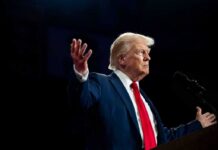
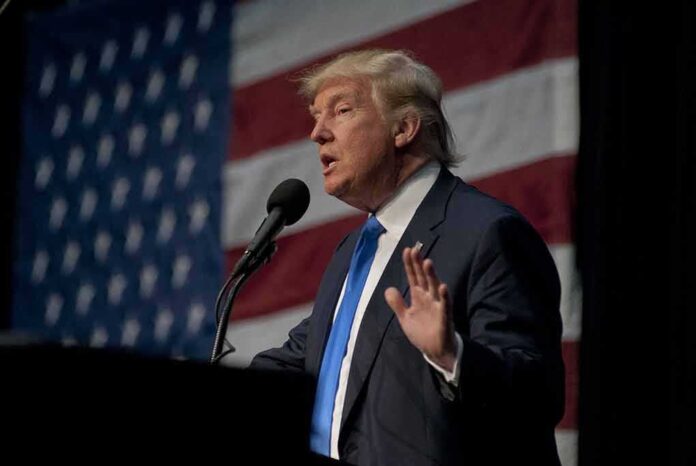
Trump’s administration responded with urgency. The $8.5 billion pact inked with Australian Prime Minister Anthony Albanese is not just a trade contract; it is a geopolitical play that signals America’s refusal to be held hostage by supply chains running through Beijing. The deal’s scale is staggering, promising a pipeline of critical minerals that could help American industry—and its military—weather any trade storm China tries to conjure.
The Real Stakes: Why Rare Earths Matter More Than Oil
When the world obsessed over oil shocks in the 1970s, few imagined that minerals hidden beneath the Australian outback would one day wield similar influence over the fate of nations. Rare earths are essential for advanced electronics, renewable energy infrastructure, and the next generation of weapons systems. Losing access to these minerals would cripple U.S. manufacturing and defense capabilities. The Trump-Albanese agreement is a hedge against that existential risk, locking in resources that underpin everything modern society takes for granted.
Australian suppliers, already world leaders in mining technology and environmental standards, now stand ready to ramp up production and ship directly to U.S. partners. The agreement is structured to encourage both investment in new mines and expansion of refining capacity—historically a weak link for Western countries. By securing this pipeline, the U.S. and its allies hope to break the monopoly that has allowed China to threaten economic retaliation any time political tensions flare.
Economic Security as National Security
Common sense holds that a nation cannot be secure if it is not economically independent in critical sectors. American conservatives have long argued for reducing dependence on adversarial regimes, and this rare earths deal is a textbook example of that doctrine in action. The $8.5 billion commitment is not just about minerals; it is about jobs, industrial resilience, and the freedom to act without fear of economic blackmail. This is a play for the long game, not a short news cycle victory.
The ripple effects extend beyond Washington and Canberra. European leaders, caught in their own dilemmas over Russian gas and Chinese tech, are watching closely. The hope is that this deal will spark a broader Western strategy to secure supply chains for the materials that will define the 21st century. If successful, the U.S.-Australia partnership could become a model for other resource alliances, turning raw materials into pillars of democratic strength.
President Donald J. Trump welcomes the Prime Minister of Australia, Anthony Albanese @AlboMP, to the White House. 🇺🇸🇦🇺 pic.twitter.com/zKdY2qpEs7
— The White House (@WhiteHouse) October 20, 2025
The Next Moves: What This Means for the West and the World
The Trump-Albanese rare earths pact is only the opening gambit in what promises to be a long, grinding contest over critical resources. China will not relinquish its dominance easily, and other players—Russia, Brazil, even Africa’s emerging mining sectors—are keen to stake their own claims. The race is on to secure not just the minerals themselves, but the know-how to process and deploy them at scale.
For everyday Americans, the story may sound remote, but its consequences will be felt everywhere from the price of electric vehicles to the reliability of the power grid and the strength of the nation’s defenses. The question is no longer whether the West can afford to act; it is whether it can afford not to. The $8.5 billion deal is a down payment on that answer—a signal that, when it comes to the future of technology and security, America intends to write its own rules.
Sources:
Trump, Australia’s Albanese sign critical minerals agreement to counter China