America was promised “no new wars,” yet a Pentagon briefing after overnight strikes on Iran is forcing Trump voters to ask whether Washington is sliding back into the same open-ended Middle East playbook.
Quick Take
- Pentagon leaders Pete Hegseth and Joint Chiefs Chairman Gen. Dan Caine held a March 31, 2026 press conference after overnight U.S. Central Command strikes on Iranian targets.
- Official U.S. military-linked sources describe the targets differently: one cites “three Iranian nuclear facilities,” while the headline framing references a major strike tied to Isfahan.
- The briefing emphasized operational “success,” but provided limited publicly available detail on scope, damage, objectives, or what comes next.
- Because the reporting relies on U.S. official channels, independent verification and Iranian response details were not available in the provided materials.
Pentagon briefing follows overnight CENTCOM strikes
Defense Secretary Pete Hegseth appeared at the Pentagon on the morning of March 31, 2026, alongside Air Force Gen. Dan Caine, the Chairman of the Joint Chiefs of Staff, to brief the public after overnight U.S. Central Command airstrikes on Iranian targets. The webcast listing placed the briefing start at 8:04 a.m. EDT and indicated it ran roughly 56 minutes, signaling a high-priority message timed immediately after the operation.
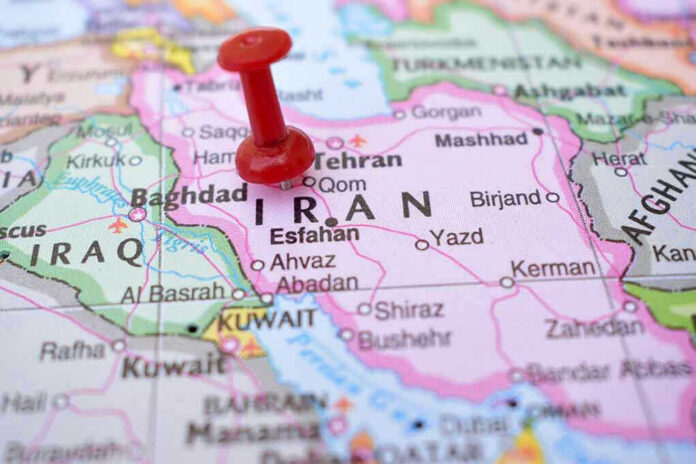
Official descriptions of the target set were not fully consistent across the provided material. One U.S. military-linked page described the strikes as hitting “three Iranian nuclear facilities,” while the story framing also referenced “massive airstrikes on an Iranian military base in Isfahan.” Without additional documentation in the supplied sources, the public is left with an unresolved question: whether the operation focused on nuclear infrastructure, conventional military assets, or both.
What officials did—and did not—put on the record
The available research indicates Hegseth and Caine “lauded the success” of the strikes, a message that typically aims to deter adversaries and reassure Americans about U.S. capability. However, the provided sources did not include specific quoted statements, battle-damage assessments, or a detailed explanation of the legal and strategic rationale for the operation. That matters because in the absence of detail, Americans are asked to trust conclusions rather than evaluate facts.
The lack of broader context in the materials also makes it difficult to judge whether the strike was a limited, defensive action or the opening phase of a larger campaign. No independent reporting, third-party expert analysis, or on-the-ground confirmation was included in the research set. For a war-weary public—especially voters who backed Trump expecting restraint—missing information is not a minor gap; it is the difference between a finite mission and another blank-check conflict.
Conservative concerns: mission creep, accountability, and constitutional clarity
Trump’s second-term coalition includes many voters who are furious about inflation, globalist priorities, and federal overreach at home, but who are now equally skeptical of foreign interventions that never seem to end. This briefing lands in that political reality. A fast-moving military action can be necessary, but conservative voters also expect clear objectives, a defined end state, and transparent accountability for costs, risks to U.S. forces, and potential retaliation.
The Constitution places war powers in tension between Congress and the Commander in Chief, and major escalations naturally raise questions about authorization, scope, and duration. The provided sources do not address congressional involvement, rules of engagement, or what thresholds would trigger further action. With only official framing of “success” available here, readers should treat early narratives as incomplete and continue watching for follow-up documentation and formal justification.
Information limits and what to watch next
The strongest factual elements in the supplied research are the timing, participants, and existence of the Pentagon webcast and Joint Chiefs posting. The weakest elements are the missing operational details and the unresolved discrepancy over targets. Until additional releases clarify the aim and results—along with any Iranian response—Americans should be cautious about assuming the operation’s scale or future trajectory. Limited data is available in the provided materials; key insights are summarized without speculation.
For now, the most important watchdog questions are straightforward: What exactly was struck, what measurable objective was achieved, and what is the administration’s plan to prevent a short operation from turning into a long war? Conservative voters do not need spin; they need clarity, constitutional seriousness, and an exit strategy that matches the promise to put America first—at home and abroad.