America’s “no man left behind” victory in Iran is now colliding with a harder question for Trump’s base: how many more missions like this before a rescue turns into a full-blown war?
Story Snapshot
- U.S. forces rescued both crew members from a downed F-15E inside Iran in two separate, high-risk operations, with the second rescue occurring after more than 24 hours of evasion.
- President Trump publicly confirmed the second recovery and called it one of the most daring search-and-rescue operations in U.S. history.
- Reports describe heavy air cover, commando ground action, and a rescue helicopter taking small-arms fire that wounded crew members.
- Iranian state media pushed disputed claims—including asserting it downed a U.S. F-35—and information operations aimed at propaganda and leverage.
- Some supporters who backed Trump to avoid new wars are questioning how the U.S. got into a situation requiring deep-penetration rescues inside Iran.
What Happened: Two Separate Rescues Deep Inside Iran
U.S. officials and military reporting indicate an F-15E Strike Eagle was brought down over Iran on Friday, April 3, 2026, triggering an immediate combat search-and-rescue effort. One crew member was recovered relatively quickly, while the second—described in reporting as a highly respected colonel and the aircraft’s Weapon Systems Officer—avoided capture for more than a day. The second extraction concluded early Sunday, April 5, after intense operations and multiple aircraft supporting the effort.
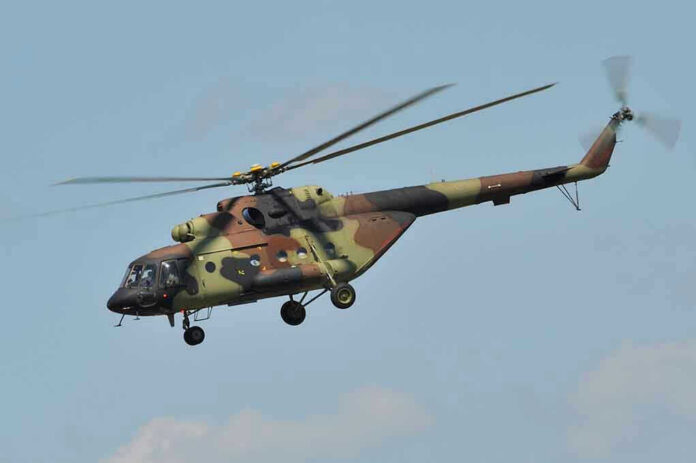
Open-source video and reporting describe low-altitude flights over southern Iran’s Khuzestan Province as U.S. rescue assets moved in a high-threat environment. Accounts cite a mix of specialized aircraft—such as tanker-support and personnel recovery helicopters—paired with close air support overhead. Reporting also indicates Iranian forces fired at rescuers, including small-arms fire that struck a helicopter and wounded some aboard. After the second rescue, officials said U.S. forces exited Iranian airspace safely and the recovered airman received medical care.
What We Can Verify—and What Looks Like Hype
President Trump’s public message emphasized the drama and scale of the mission, portraying it as a landmark moment for U.S. capability and resolve. Multiple outlets broadly align on the core facts: an F-15E downing, a first rescue soon after, a second recovery after 24+ hours, and significant U.S. air and special operations involvement. The “CIA trick” and “final twist” framing circulating online is not substantiated in the provided reporting, and no named, verifiable details confirm an intelligence gimmick beyond standard evasion, communications, and recovery procedures.
Iran’s information campaign appears to be part of the battlefield. Iranian media promoted debris imagery and claimed it shot down a U.S. F-35, a claim the available reporting treats as disputed and not confirmed by U.S. sources. Separately, reporting referenced Iranian efforts to locate the missing airman, including the broader theme of turning a downed American into a trophy for propaganda or bargaining power. That context helps explain why U.S. commanders accept extraordinary risk in recovery missions: captivity can become a strategic weapon.
The Costs and Risks: A Rescue Mission Is Not “Free”
Even with both crew members recovered, the operation underscored how quickly a single shootdown can escalate into a multi-day, multi-platform fight. Reporting tied the rescue environment to intense clashes and heavy suppression needs, and it also described a separate incident in which an A-10 supporting the mission was hit and later crashed in Kuwait after the pilot ejected. Those details matter politically because they translate into real costs, real danger, and potential pressure for retaliation—exactly the cycle many voters hoped Trump would avoid.
Why MAGA Is Split: “No One Left Behind” vs. No New Wars
Trump’s coalition includes voters who cheer military competence and the sacred duty to recover Americans under fire, and that instinct remains strong in this story. At the same time, the downing and the deep-penetration rescues are happening amid heightened U.S.-Iran tensions and a wider regional conflict backdrop involving Israel. That is where frustration is building: supporters angry about inflation, energy prices, and years of foreign entanglements are now asking how U.S. policy prevents another open-ended Middle East commitment—especially if the next incident goes worse.
Limited details in the current reporting leave unanswered questions voters typically want clarified in a constitutional republic: what mission put an F-15E over Iran, what authorizations governed the operation, and what the administration’s end-state is if the conflict widens. The rescue may be a tactical success, but it also spotlights the strategic dilemma: when American forces operate near—or inside—hostile territory, the U.S. often inherits a choice between escalation or humiliation. That reality is now driving a louder debate on the right.
Sources:
US forces rescue downed fighter pilot in Iran, search for second continues