President Trump announced U.S. military forces will remain stationed around Iran indefinitely until a comprehensive agreement prohibiting nuclear weapons and guaranteeing open passage through the Strait of Hormuz is fully enforced, raising concerns about prolonged Middle East entanglement and the government’s commitment to another open-ended deployment.
Story Snapshot
- Trump declared on April 8, 2026, that all U.S. ships, aircraft, personnel, and weaponry will stay deployed near Iran until a “real agreement” is reached, threatening escalated military action for non-compliance.
- The announcement follows a fragile two-week ceasefire that began just before Trump’s strike deadline, with peace talks scheduled in Islamabad but deemed “illogical” by Iran after Israeli strikes killed 250+ in Lebanon.
- U.S. forces recently surged over 150 aircraft into Iran for a rescue operation, destroying two stranded transport planes to protect sensitive technology, demonstrating the scale of American military presence.
- Defense Secretary Pete Hegseth confirmed forces are “not going anywhere” to enforce compliance, while the Strait of Hormuz remains a critical focal point for global oil transit and economic stability.
Trump’s Ultimatum and Deployment Orders
President Trump posted on Truth Social late evening April 8, 2026, announcing that all U.S. military assets would remain positioned in and around Iran until a comprehensive agreement is honored. The directive specifically demands Iran abandon nuclear weapons development and keep the Strait of Hormuz open for international shipping. Trump warned that violations would trigger military action “bigger, and better, and stronger than anyone has ever seen before,” signaling his administration’s willingness to escalate beyond current operations. This statement came hours after a two-week ceasefire took effect, one hour before Trump’s previously issued strike deadline.
Military Posture and Recent Operations
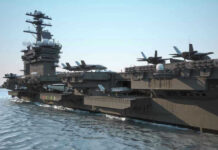
The U.S. military maintains what defense analysts describe as a “naval armada” alongside extensive air assets positioned around Iran following joint U.S.-Israel strikes that began February 28, 2026. Recent operations demonstrated the deployment’s scale when over 150 aircraft surged into Iranian territory for a search-and-rescue mission to recover a downed F-15E aviator. U.S. forces destroyed two stranded American transport planes during the operation to protect classified technology from capture. Defense Secretary Pete Hegseth stated forces would “hang around” to ensure compliance, emphasizing the administration’s determination to maintain pressure on Iran’s substantially degraded military capabilities throughout the ceasefire period.
Questionable Origins and Ceasefire Fragility
Pentagon briefings to Congress revealed no intelligence indicating imminent Iranian attacks on U.S. assets before the February 2026 escalation, raising questions about the justification for the military buildup that preceded open conflict. The current two-week ceasefire arrangement remains precarious, with Iran declaring permanent peace negotiations “illogical” after Israeli airstrikes on Lebanon killed more than 250 civilians. Peace talks scheduled in Islamabad face uncertain prospects as regional tensions persist despite the temporary halt in hostilities. This pattern mirrors previous Middle East interventions where initial deployments evolved into prolonged occupations without clear exit strategies, frustrating Americans across the political spectrum who question whether their government serves elite interests over the national welfare.
Strategic and Economic Implications
The Strait of Hormuz represents a critical chokepoint for global oil transit, making its status a matter of international economic concern beyond regional security. Disruptions to shipping through the strait could trigger significant price spikes in global energy markets, affecting American consumers already struggling with inflation from years of fiscal mismanagement. Trump’s emphasis on keeping the waterway open addresses legitimate economic interests, yet the open-ended military commitment raises concerns about costs and risks. The administration positions the deployment as enforcing “America is back” dominance, but the lack of a defined timeline or clear metrics for success suggests another indefinite military engagement that diverts resources from pressing domestic needs while benefiting defense contractors and Washington’s permanent bureaucracy.
Defense analysts view Trump’s rhetoric as credible enforcement backed by superior military capabilities, while skeptics question whether the ceasefire can survive amid ongoing Israeli operations and Iranian resistance to external pressure. The deployment keeps U.S. forces on high alert with authorization to rapidly escalate if Iran violates terms, effectively placing American personnel in harm’s way for an agreement whose permanence remains uncertain. Both supporters of decisive American strength and critics wary of endless wars share frustration with a political establishment that repeatedly commits military forces without transparent debate about long-term objectives, costs, or the interests truly being served by sustained Middle East interventions.
Sources:
US military to remain deployed around Iran until “real agreement” is complied with: Trump
Trump: U.S. Military Will Remain Deployed Near Iran Until a Real Agreement Is Reached
Trump says US military to stay deployed near Iran until ‘real agreement’ reached
US deployed more than 150 aircraft to rescue downed aviator in Iran
2026 United States military buildup in the Middle East