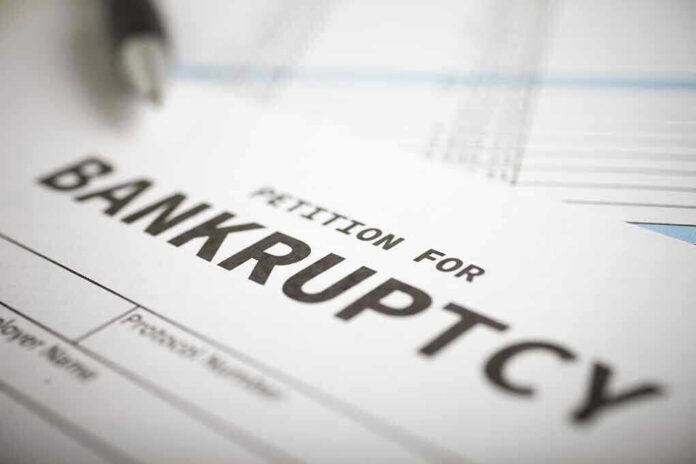
Gold Tree Studios, a Hollywood post-production darling, finds itself in Chapter 11 just months after its parent company announced a staggering $1 billion financing deal.
Story Overview
- Gold Tree Studios, tied to Al Pacino’s “Lear Rex,” files for Chapter 11 bankruptcy.
- Parent company Gold Tree had recently announced a $1B financing deal.
- The studio lists $100,000–$500,000 in assets against $1–10 million in liabilities.
- Financial filings do not provide a clear explanation for the bankruptcy.
Gold Tree Studios’ Sudden Downfall
Gold Tree Studios, known for its work in Hollywood post-production, shocked the industry by filing for Chapter 11 under Subchapter V in a California federal bankruptcy court. The filing came mere months after its parent company, Gold Tree, trumpeted a $1 billion financing package from Malka Group aimed at expanding its studio operations. This stark contrast between the financial headlines and the reality of bankruptcy has left many industry insiders questioning the financial underpinnings of this ambitious studio.
Hollywood post-production firm tied to Al Pacino project files for Chapter 11 after parent company touted $1B financing https://t.co/qJILtCPfId
— Insider News (@InsiderNews) December 11, 2025
The studio, responsible for post-production on the highly anticipated film “Lear Rex,” starring Al Pacino, has listed its assets between $100,000 and $500,000, with liabilities ranging from $1 million to $10 million. Despite this, the filings fail to shed light on the specific financial missteps that led to such a drastic move. This lack of transparency adds another layer of intrigue to an already perplexing situation.
Contradictory Financial Narratives
Gold Tree Studios, a mere three years old, was touted as a cutting-edge facility on LA’s Sunset Strip. Its rapid expansion to locations in Buffalo and Vancouver Island highlighted its aggressive growth strategy, even amidst the 2023 labor strikes that disrupted Hollywood. The $1 billion financing deal was supposed to be a turning point, promising to propel the studio’s capabilities and reach. Yet, the abrupt bankruptcy of its subsidiary suggests a more complex narrative, where rapid expansion may have outpaced financial prudence.
The billion-dollar financing, which was widely publicized to bolster the studio’s footprint and production slate, now stands in stark contrast to the financial distress of Gold Tree Studios. This scenario raises questions about the allocation and management of the funds, as well as the oversight by the parent company and its investors, including the Malka Group.
Impact on “Lear Rex” and Industry Repercussions
The immediate concern centers on “Lear Rex,” the film adaptation of King Lear, featuring a star-studded cast. With Gold Tree Studios handling its post-production, the bankruptcy filing could lead to delays or necessitate a shift to other facilities. Such disruptions could ripple through the production timeline, affecting not only the film’s release but also the reputation of those involved.
Beyond the immediate fallout for “Lear Rex,” this financial debacle sends a cautionary signal to the broader independent post-production sector. It underscores the volatility of mid-tier studios operating on thin margins and highlights the risks associated with aggressive growth funded by large-scale financing without corresponding revenue stability. As the industry grapples with the post-strike landscape, this case may prompt a reevaluation of financial strategies and governance within similar companies.