Iran’s theocracy looks most dangerous when its aging supreme leader goes silent—because power doesn’t disappear, it shifts into unelected hands with fewer restraints.
Quick Take
- Multiple analyses say Ayatollah Ali Khamenei’s seclusion and reported health decline have fueled paralysis and factional infighting inside Iran’s regime.
- Reports describe Khamenei taking refuge in underground facilities during major security crises, with aides and family members managing access and communications.
- Economic stress—high inflation, a collapsing rial, and shortages—continues to pressure the Iranian public while the regime leans on repression.
- Conflicting death-toll estimates from January 2026 protests highlight how little transparency exists under the Islamic Republic.
- Khamenei’s continuing defiance on uranium enrichment and missiles suggests no near-term moderation despite leadership uncertainty.
Khamenei’s “eclipse” and the problem of an inaccessible ruler
Analysts tracking Iran’s leadership say the central story is less a confirmed medical diagnosis than a pattern: Khamenei’s age, a long-rumored post-2014 health decline, and repeated bouts of seclusion that leave the system struggling to function. When the supreme leader becomes difficult to reach, decision-making bottlenecks form across security, economic policy, and foreign affairs. That vacuum can empower intermediaries—family, aides, and hardline actors—without public accountability.
During the June 2025 Israel-Iran conflict described in the research, Khamenei reportedly stayed in a Tehran bunker for days and communicated through a close aide rather than direct engagement with institutions. The reporting also describes how that kind of isolation can produce competing command centers, confusion among military units, and policy drift. Conservative Americans understand the danger of opaque power: when leadership is hidden, citizens can’t verify who is actually steering the ship—or whose agenda is being imposed.
Succession uncertainty raises stakes for hardliners and the security state
Iran’s constitution concentrates extraordinary power in the supreme leader, so succession is not a routine transition; it is a potential regime shock. Research summaries point out that Iran lacks a clear “kingmaker” structure like 1989, when elites could manage an orderly handoff. Several accounts emphasize that when Khamenei cannot actively arbitrate disputes, factional competition intensifies. The result is not liberalization but a greater incentive for power brokers to prove loyalty through coercion at home and aggression abroad.
Some reporting also highlights the role of Khamenei’s inner circle, including a son said to be overseeing his office during periods of heightened security risk. The underlying fact pattern here is access: whoever controls the leader’s calendar, phone lines, and messaging can shape what he hears and how fast orders move. Even if particular claims about internal roles are difficult to independently verify, the broader governance problem remains clear—an unaccountable regime becomes even less transparent under stress.
Economic breakdown and protest crackdowns expose regime priorities
The research ties leadership paralysis to stalled reforms and worsening economic conditions, including extremely high inflation and a rial exchange rate described as collapsing past extraordinary thresholds. Those pressures are not abstract; they translate into shortages and public anger. When governments lose economic credibility, they often reach for force. Reports cited here describe lethal crackdowns and the use of hospitals and detention practices to sweep up dissidents, underscoring that the regime’s first instinct is control, not consent.
Conflicting death tolls show why transparency matters
One of the most consequential details is the wide spread in reported fatalities from January 2026 unrest. The research notes official Iranian figures alongside much higher estimates from international reporting, with Khamenei publicly acknowledging “thousands.” That discrepancy illustrates a familiar pattern in authoritarian systems: information is treated as a weapon. For Americans who value constitutional checks and free speech, Iran is a reminder that when the state monopolizes truth, citizens lose the ability to hold leaders accountable—peacefully or legally.
Defiance on nukes and missiles continues despite leadership strain
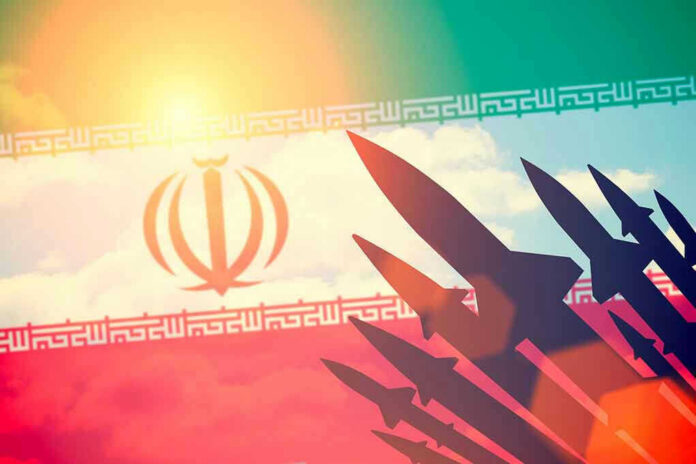
Even with questions swirling about seclusion, chain-of-command, and succession, reporting from February 2026 indicates Khamenei maintained a hard line against U.S. demands on enrichment and missile issues. That matters for U.S. policy under President Trump because it suggests leadership instability is not automatically a path to de-escalation. A regime can be internally brittle and still externally hostile. Limited data in open sources makes precise intent hard to measure, but the posture described remains confrontational.
For U.S. interests, the immediate takeaway is sober and practical: Iran’s internal uncertainty can increase miscalculation risks in the region, especially when unelected security factions operate with less coordination. At home, Americans should recognize the contrast between constitutional government and rule by hidden committees. The frustration many voters felt under the prior era—globalist wishful thinking, weak deterrence, and evasive bureaucracies—helps explain why clarity and strength matter now when dealing with regimes that thrive on secrecy.
Sources:
Khamenei’s Eclipse: Absolute Rule Crumbles into Paralysis and Infighting in Iran
Iran News in Brief, January 31, 2026
What happened at the protests in Iran?
Iran Update, February 17, 2026