
Three top U.S. leaders have landed emergency aircraft in 2025, and the latest was Defense Secretary Pete Hegseth—raising urgent questions about the reliability of America’s aging executive transport fleet right as global stakes hit fever pitch.
Story Snapshot
- Pete Hegseth’s C-32A military plane made an emergency landing in England due to a cracked windshield during a return from NATO meetings.
- This is the third executive aircraft incident this year, all involving senior U.S. officials and mechanical failures.
- The episode has spotlighted aging fleet maintenance, diplomatic mission continuity, and safety protocols at the highest levels.
- Media coverage was shaped by Pentagon-media tensions, leaving official statements as the core public record.
The Windshield That Changed the Flight Path
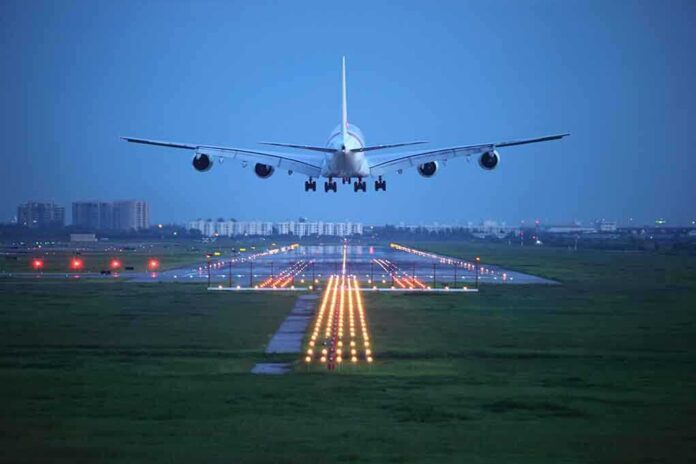
An outbound NATO Defense Ministers meeting in Brussels concluded for Defense Secretary Pete Hegseth, but airborne over the Atlantic, a crack appeared in the cockpit windshield of the C-32A. The aircraft, a modified Boeing 757-200, was loaded with one of America’s top national security officials, senior staff, and crew. The pilots responded with textbook precision: a rapid descent to 10,000 feet, exactly as protocol demands when pressurization might be compromised. Off Ireland’s coast, the plane diverted to England’s RAF Mildenhall and landed safely, the Secretary and all aboard unharmed.
Pete Hegseth confirmed his safety and gratitude on social media, stating, “All good. Thank God. Continue mission!” Pentagon spokesperson Sean Parnell echoed the official reassurance, emphasizing that standard procedures had worked as intended. Open source flight trackers documented the descent and emergency landing, providing hard data for both public concern and technical analysis. The incident’s timing—while returning from critical Ukraine defense discussions—meant any delay carried genuine strategic impact.
Recurring Failures Signal Fleetwide Concerns
This was not an isolated case. In February, Secretary of State Marco Rubio’s C-32A suffered a windshield malfunction and was forced back to Joint Base Andrews mid-flight. In September, President Donald Trump and the First Lady transferred to a support helicopter after Marine One landed unexpectedly due to a hydraulic issue en route to Stansted. With three mechanical incidents involving top officials in eight months, a pattern emerges: America’s executive air fleet is showing its age, and reliability is no longer abstract but mission-critical.
The C-32A, central to high-level U.S. transport, is deep into its service life. Upgrades and maintenance continue, but a new replacement program is only beginning. Each incident puts a spotlight on inspection protocols, fleet management, and the calculus between further extending old aircraft and fast-tracking new investments. For Pentagon planners and congressional oversight, these failures are more than technical glitches—they are warning signals for national continuity and operational security.
Diplomatic, Political, and Public Ramifications
Hegseth’s emergency landing disrupted his return from a pivotal NATO meeting, with possible delays for defense coordination at a time when Ukraine support is under the microscope. The fact that RAF Mildenhall facilitated the landing highlights the close U.S.-U.K. military partnership and the operational realities of alliance logistics. Yet the absence of the Pentagon press corps—excluded due to ongoing disputes over journalist rules—meant coverage relied solely on official statements, leaving the public with filtered information and no independent eyewitness reporting.
Multiple major outlets verified the basic facts, but the lack of technical details regarding the cause of the crack, the specific aircraft’s maintenance history, and the aftermath of repairs leaves open questions. Each new incident risks shaking public confidence in executive safety, with potential ripple effects for political leadership and global perceptions of U.S. operational competence. The broader aviation world is watching, as repeated windshield issues could prompt industry-wide reexaminations of the Boeing 757 platform’s integrity in both government and commercial fleets.
Technical Realities and Systemic Risks
Windshield cracks at altitude can stem from bird strikes, temperature extremes, manufacturing flaws, or simple fatigue from thousands of pressurization cycles. Aviation experts recognize the 757 platform’s general reliability, but as these aircraft age, risk profiles change. The emergency descent to 10,000 feet is standard for suspected depressurization, and the crew’s execution reinforced the value of rigorous training and safety culture. However, repeated incidents suggest maintenance trends and inspection regimes need urgent review—not just for individual aircraft, but for the entire executive transport system.
The Pentagon’s evolving replacement program for aging airframes now faces heightened scrutiny. Congressional appropriators, defense planners, and aviation safety authorities alike must weigh the costs of delay against the stakes of continued mechanical failures. For American conservative values, the imperative is clear: protect leaders, guarantee mission continuity, and ensure that government spending aligns with both safety and strategic reliability. The events of 2025 have made these priorities impossible to ignore.
Sources:
The War Zone: C-32A Carrying Hegseth Makes Emergency Landing In England After Rapid Descent
ABC News: Pentagon chief’s plane diverted to UK due to cracked windshield
The Independent: Pete Hegseth plane emergency windshield