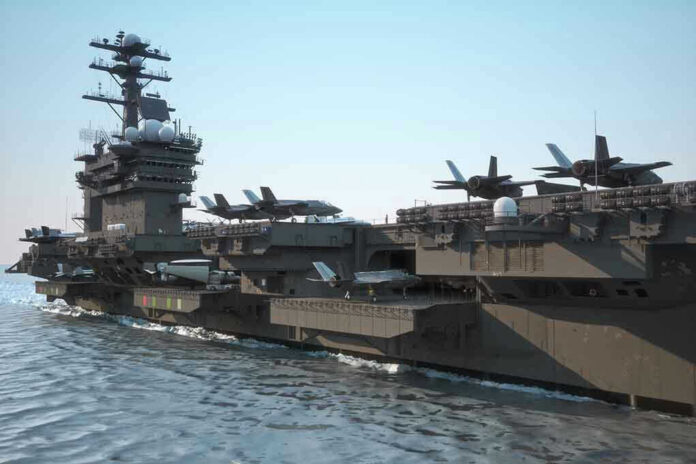
A self-inflicted laundry fire on America’s $13.3 billion flagship carrier has sidelined the USS Gerald R. Ford during critical operations against Iran, exposing Navy maintenance failures and crew exhaustion that betray President Trump’s promise to avoid endless wars.
Story Highlights
- Fire erupted March 12 in the Red Sea, burning 30+ hours through vents, displacing 600+ sailors to sleep on decks and tables amid war with Iran.
- Crew of 5,000 faces 10-month deployment strain, 19-hour shifts, and prior plumbing sabotage, fueling sabotage rumors in NCIS probe.
- $13.3 billion Ford-class carrier docks in Souda Bay for repairs, revealing Pentagon data gaps on EMALS, radar, and elevators.
- Non-combat setback weakens U.S. posture in Operation Epic Fury, raising questions on overworked sailors and deferred maintenance.
Fire Erupts Amid Red Sea Operations
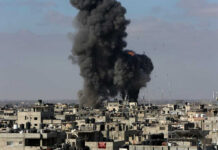
On March 12, 2026, a fire broke out in the aft main laundry facility of USS Gerald R. Ford while the carrier operated near Al Wajh, Saudi Arabia, in the northern Red Sea. The blaze smoldered over 30 hours through ventilation systems despite initial containment efforts. Two sailors suffered non-life-threatening injuries initially, with a third medevaced later. Damage control teams extinguished remnants by March 13, but the incident destroyed berthing spaces for over 600 sailors.
Crew Exhaustion and Systemic Failures
The 5,000-strong crew endured a 10-month deployment with 19-hour maintenance shifts on failing vacuum plumbing systems, often sabotaged by flushed items. Deferred maintenance in high-use laundry areas, loaded with flammable lint and overloaded dryers, created a “smorgasbord of dangers,” as noted by shipping expert Sal Mercogliano. This non-combat fire exposed habitability crises on the nuclear supercarrier, forcing hundreds to sleep on decks, tables, or floors. Navy statements confirmed no propulsion damage, yet operations halted.
Sabotage Probe and Pentagon Concerns
NCIS investigates possible arson amid rumors of crew sabotage linked to exhaustion and dissent during Operation Epic Fury against Iran. The carrier transited the Suez Canal pre-fire for U.S. buildup, but the incident curtailed its role. Pentagon’s Office of Operational Testing and Evaluation reports insufficient data on critical systems like EMALS catapults, radar, damage resilience, and weapons elevators. Past Ford-class issues, including elevator failures and launch glitches, compound these revelations.
By March 23-25, the Ford arrived at Souda Bay, Crete, for repairs and investigation, sidelining it until early April. Two injured sailors returned to duty; the medevaced one remains stable. This humiliation undermines American strength when patriots demand focus on endless regime-change wars over domestic priorities like border security and energy independence.
Aircraft Carrier USS Gerald R. Ford Cost $13,000,000,000: 600 Sailors Are Sleeping on Decks After a 30-Hour Firehttps://t.co/u9fE0qQBYm
— 19FortyFive (@19_forty_five) March 27, 2026
Impacts on Morale and National Security
Over 600 sailors lost personal berths and items, hitting morale amid crew welfare crises and political embarrassment. Short-term, Red Sea operations degrade without the flagship; long-term, delays Ford-class certification and may require costly retrofits for ventilation and damage control. Repair expenses pile onto the $13.3 billion build cost. U.S. allies face reduced carrier presence, weakening deterrence against Iran. Conservatives question if overwork and maintenance lapses signal deeper government overreach, eroding readiness for real threats.
Sources:
New problems have been discovered on the US aircraft carrier that caught fire
Was Sabotage to Blame for USS Gerald R. Ford Carrier Fire?
Carrier USS Gerald R. Ford Suffers Fire
Fire aboard USS Gerald R. Ford in Red Sea displaces sailors
A Fire Broke Out Aboard U.S. Navy Nuclear USS Gerald R. Ford Aircraft Carrier
US aircraft carrier Gerald R. Ford catches fire in Red Sea