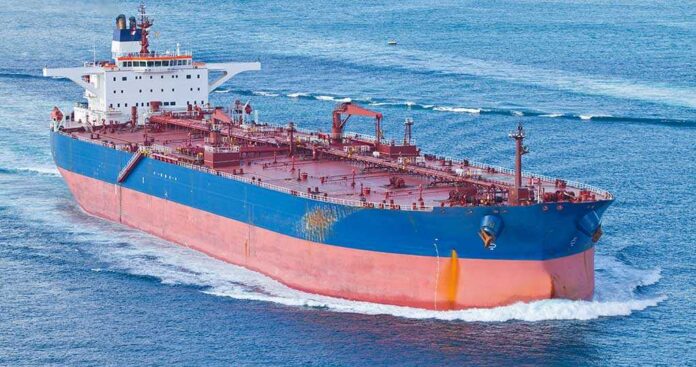
patriotsunited.org — When U.S. Marines fast-roped onto the tanker Majestic X in the Gulf of Oman, Washington said it was enforcing the rules—yet the public record still withholds the rulebook.
Story Snapshot
- Pentagon accounts say Marines boarded a “sanctioned, stateless” tanker moving Iranian oil in international waters [1][3].
- Officials framed the action as part of broader efforts to disrupt illicit networks aiding Iran [1].
- Open-source records lack the specific legal instrument and documentary proof of the ship’s status and cargo [1][2][3].
- Confusion over “blockade,” “right of visit,” and sanctions enforcement clouds how the law applies [1][2].
What U.S. Officials Say Happened On The Water
U.S. defense messaging described an overnight “maritime interdiction and right of visit” boarding of the tanker Majestic X in international waters, identifying the ship as a “sanctioned stateless vessel” carrying oil from Iran within the regional area of responsibility [1][3]. The public statements linked the operation to ongoing efforts to “disrupt illicit networks” and warned that “international waters cannot be used as a shield by sanctioned actors,” portraying the action as law-enforcement style maritime governance rather than an armed clash [1].
Officials further located the episode within a pattern of interdictions targeting ships allegedly tied to Iranian oil movements, citing a continuing campaign to deny “illicit actors and their vessels freedom of maneuver” [1][3]. A summary of the contemporaneous U.S. posture referenced a declared naval blockade policy with a Central Command clarification focused on ships entering or departing Iranian ports and coastal areas, implying a defined enforcement scope even as open materials did not include the operative directive text [2].
The Legal Basis: Asserted, Not Produced
Publicly available sources do not include the specific legal instrument invoked for boarding—such as a United Nations Security Council authorization, a domestic statutory citation, a notice to mariners, or the blockade order itself—leaving key legal predicates unverified in the open record [1][2][3]. Reporting alternates among “blockade,” “maritime interdiction,” “right of visit,” and sanctions enforcement as explanatory frames, but does not show which doctrine was actually used or how its requirements were satisfied on the facts presented [1][2][3].
The evidence gap extends to vessel status and cargo. While U.S. accounts label Majestic X as “stateless” and transporting Iranian oil, no registry extract, Automatic Identification System track, boarding report, bill of lading, or cargo manifest is provided to independently confirm those crucial points [1][3]. Without documentation from the ship’s owner, master, flag state, insurer, or a neutral maritime authority, assessments depend largely on government assertions amplified by media, a dynamic that can harden narratives before underlying proofs are public [1][3].
Regional Escalation Risks And Public Confusion
Concurrent references to Iranian Revolutionary Guard seizures and attacks in nearby waters suggest a tense backdrop that can push audiences to view the boarding through a conflict lens, not a narrow enforcement lens [1][3]. That context increases the stakes: if the act is seen as blockade enforcement, questions arise about notice, impartiality, and geographic scope; if it is framed as a high-seas “right of visit,” the inquiry centers on statelessness, registry fraud, or sanctions violations. The shifting labels impede public understanding and blur accountability [1][2][3].
US MILITARY ANNOUNCES THEY BOARDING IRANIAN-FLAGGED OIL TANKER.
— First Squawk (@FirstSquawk) May 20, 2026
For citizens concerned about overreach by entrenched power, the missing documents matter as much as the dramatic video. Clear legal footing—shared publicly and tested by neutral data—helps prevent a drift toward “trust us” governance on the high seas. For those focused on security and deterrence, credible proof of statelessness, cargo origin, and location strengthens legitimacy, denies propaganda to adversaries, and reduces miscalculation. Both priorities point to the same remedy: sunlight on the rules and the records.
What Would Settle The Dispute
Four disclosures would meaningfully resolve uncertainty. First, release the operative order or notice specifying the legal theory and geographic scope of enforcement, including any blockade terms [2]. Second, publish neutral vessel-status evidence—flag registry extracts, classification records, and the boarding report—to confirm or refute statelessness claims [1][3]. Third, provide cargo-origin documentation such as bills of lading and shipper records tying the oil to Iranian ports [1][3]. Fourth, share time-stamped Automatic Identification System and satellite data establishing precise boarding coordinates [1][2][3].
Sources:
[1] YouTube – US Military BOARDS & CAPTURES Second Iran-Linked Oil Tanker …
[2] Web – 2026 United States naval blockade of Iran – Wikipedia
[3] YouTube – US Military boards Iranian-flagged oil TANKER suspected of trying …
© patriotsunited.org 2026. All rights reserved.