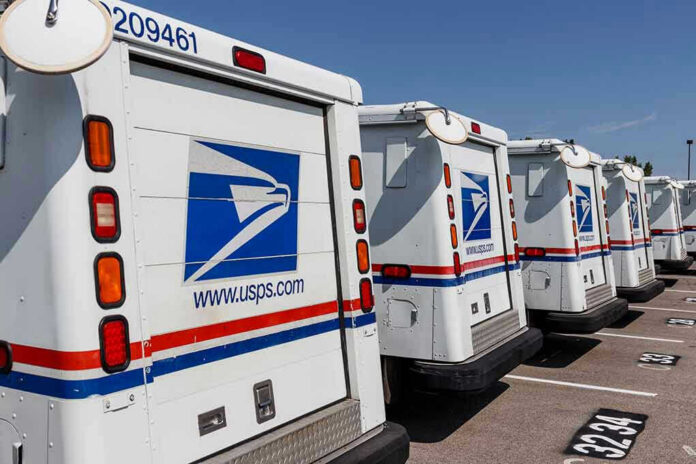
The U.S. Postal Service is proposing to nearly double the price of a first-class stamp to 95 cents—a shock that will hit working families, small businesses, and rural Americans already struggling with inflation.
Quick Take
- USPS Postmaster General David Steiner testified before Congress on March 17-18, 2026, proposing stamp prices jump from 78 cents to 90-95 cents to address a $9 billion annual deficit.
- The agency faces cash exhaustion by February 2027 without major reforms, threatening mail delivery halts and potential service disruptions nationwide.
- This represents a 15-22% price increase far exceeding typical annual adjustments, driven by a structural collapse in mail volume—down from 220 billion pieces annually in 2010 to 110 billion today.
- USPS seeks higher borrowing limits and pension reforms alongside price hikes, requiring Congressional approval and Postal Regulatory Commission clearance.
Government Mismanagement Creates Crisis for Americans
The Postal Service’s financial collapse traces directly to decades of government mismanagement and poor policy decisions. A 2006 law forced USPS to prefund decades of retiree health benefits upfront—a burden no private company faces—crippling finances for years. Even after partial relief in 2022, structural problems persist. Today’s $9 billion annual loss reflects not market reality but regulatory dysfunction and failed planning by bureaucrats in Washington.
Working Families Pay the Price
A 95-cent stamp hits hardest where it matters most: rural communities, small businesses, seniors on fixed incomes, and low-income families who still rely on mail for bills, medications, and correspondence. Rural Americans already pay the same flat rate for mail traveling thousands of miles—now they’ll pay steeper prices for services deteriorating in quality. This is government failure passed directly to everyday Americans struggling with inflation.
Digital Shift Accelerates, But Government Stays Stuck
Mail volume has collapsed by 50% in 15 years as Americans shifted to digital payments and communication—a predictable market trend. Yet USPS, a government monopoly, lacks the agility private competitors possess. FedEx and UPS adapted; USPS doubled down on outdated operations. Now taxpayers and mail users subsidize inefficiency through higher prices while the agency threatens service cuts, including potential Saturday delivery elimination and post office closures in struggling communities.
Regulatory Barriers Block Common-Sense Solutions
Postmaster General Steiner, a former FedEx executive, notes that U.S. stamp prices remain the lowest among industrialized nations—France charges $3, the U.K. $2.50. Yet the Postal Regulatory Commission artificially constrains pricing flexibility, preventing USPS from using package revenue to subsidize mail service efficiently. Congress created this regulatory straitjacket; now Americans suffer while bureaucrats debate reforms that should have happened years ago.
Congress Must Act Before Service Collapses
Without immediate action, USPS faces cash depletion by February 2027, risking vendor and employee payment delays, service disruptions, and potential mail delivery halts. Steiner’s testimony proposes borrowing limit increases and pension reforms alongside price hikes. These changes require Congressional approval—but partisan gridlock and election-year politics may paralyze action until crisis becomes catastrophe, leaving Americans without reliable mail service.
Americans may soon pay almost $1 to mail a first-class letter. The U.S. Postal Service wants to raise first-class stamp prices to between 90 cents and 95 cents as it faces a financial crunch.https://t.co/hE3iobVbSX
— WJZ | CBS Baltimore (@wjz) March 18, 2026
The USPS crisis exemplifies government failure: misguided policies, regulatory overreach, and bureaucratic inertia combine to create a crisis that punishes ordinary Americans. Higher stamp prices are a symptom of deeper dysfunction in Washington—dysfunction conservatives have warned about for years.
Sources:
USPS wants to raise first-class stamp price to as high as 95 cents
USPS proposes raising first-class stamp price to 90-95 cents amid financial struggles
Stamp costs top $1 dollar: USPS proposal
United States Postal Service eyes stamp prices near $1
USPS recommends new competitive prices for 2026