
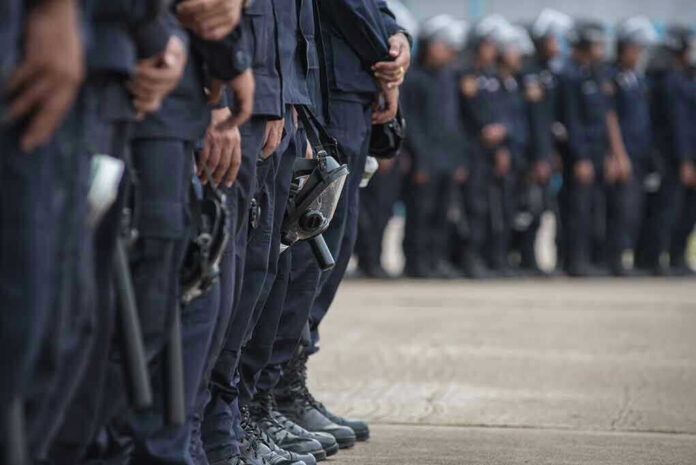
Gang terrorists in Guatemala murdered eight police officers in coordinated attacks, forcing the government to declare a 30-day state of siege that suspends constitutional rights and deploys the military nationwide—a stark reminder of how unchecked criminal organizations can paralyze entire nations.
Story Snapshot
- Eight police officers killed and ten wounded in retaliatory gang attacks after authorities raided prisons and captured a major Barrio 18 leader
- President Bernardo Arévalo declared a 30-day state of siege enabling warrantless arrests and military deployment to crush gang violence
- Gangs took 46 hostages across three prisons to protest transfer of leaders to maximum-security facilities, with 37 still held
- U.S.-designated terrorist organizations Barrio 18 and MS-13 orchestrated the violence as Guatemala’s homicide rate remains double the global average
Terrorist Gangs Strike Back Against Government Crackdown
Barrio 18 and MS-13 gang members launched coordinated attacks across Guatemala City and surrounding areas on January 18, 2026, killing eight police officers and wounding ten more in direct retaliation for a government prison raid. The assaults followed successful police operations at dawn that regained control of Renovacion I prison in Escuintla, rescued nine hostages, and captured high-profile Barrio 18 leader Aldo Dupie, known as “El Lobo.” Interior Minister Marco Antonio Villeda condemned the killings as cowardly acts of terrorism designed to intimidate security forces and undermine President Arévalo’s anti-gang crackdown that began transferring gang leaders to maximum-security facilities in mid-2025.
State of Siege Suspends Constitutional Protections
President Arévalo responded to the bloodshed by declaring a nationwide 30-day state of siege, granting security forces sweeping powers to conduct warrantless arrests and limit public demonstrations. The emergency measure, announced Sunday evening, also suspended schools nationwide beginning Monday and ordered three days of national mourning for the fallen officers. Defense Minister Henry Saenz committed army units to street operations aimed at dismantling gang networks, while the U.S. Embassy issued shelter-in-place alerts for American personnel. This represents the most aggressive government response to gang violence in recent years, prioritizing citizen safety over procedural constraints that have historically hampered law enforcement effectiveness against these U.S.-designated foreign terrorist organizations.
Prison Hostage Crisis Triggered the Violence
The deadly confrontation began Saturday morning when gang-affiliated inmates seized 46 hostages—45 guards and one psychiatrist—across three Guatemalan prisons to protest transfers of gang leaders to harsher maximum-security conditions. The coordinated takeovers at Renovacion I, Fraijanes II, and Preventivo facilities demonstrated the alarming control these criminal organizations maintain inside correctional institutions. Police and military forces used armored vehicles and tear gas to storm Renovacion I at dawn Sunday, regaining control in just 15 minutes without casualties while capturing Dupie. However, 28 hostages remained held at Fraijanes II and nine at Preventivo as of January 19, with authorities maintaining firm positions against concessions to criminal demands despite ongoing negotiations.
Guatemala Suspends Classes and Declares 30-Day State of Siege Following the Killing of Eight Police Officers in Gang Attack https://t.co/mq4zR8AJKd #gatewayhispanic via @gatewayhispanic
— MakeHeavenCrowded! (@wysterial73) January 21, 2026
Long-Standing Gang Plague Rooted in Failed Border Policies
Guatemala faces entrenched violence from Barrio 18 and MS-13, gangs that originated in Los Angeles among Central American immigrants before spreading back to the region through deportations and migration flows. These organizations, responsible for drug trafficking and thousands of homicides, have plagued Guatemala with a 2025 homicide rate of 16.1 per 100,000 residents—more than double the global average. The crisis escalated throughout 2025 with prison uprisings demanding privileges for leaders, a mass October escape of 20 Barrio 18 leaders (only six recaptured), and a summer funeral massacre killing at least seven. President Arévalo vowed his administration “will not allow violence to dictate our country’s course,” pledging to use “full state force” against what he called terrorists attempting to undermine legitimate government authority through fear and intimidation.
Sources:
8 police officers killed in attacks in Guatemala after prison crackdown on gangs – CBS News
Guatemala Declares State of Emergency After 10 Police Officers Killed – Democracy Now