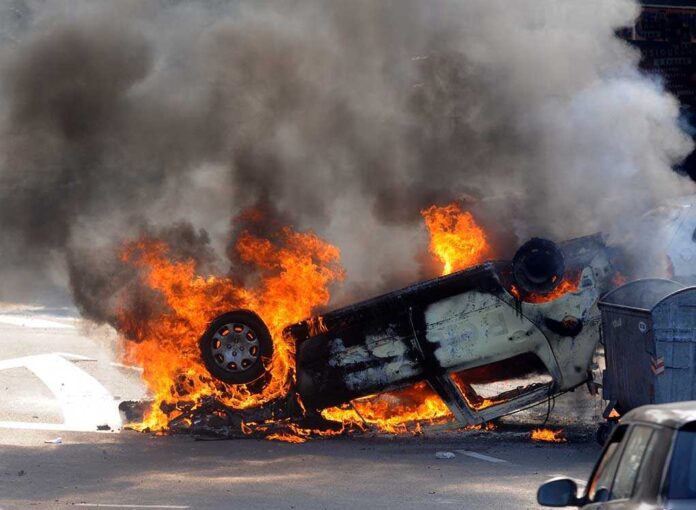
A car bomb obliterated a top Russian general in Moscow’s heart, marking the third such assassination this year and exposing Russia’s elite to Ukraine’s deadly reach.
Story Snapshot
- Lieutenant General Fanil Sarvarov died instantly when an explosive under his car detonated on December 22, 2025, in Yasenevo district.
- Russian investigators suspect Ukrainian intelligence, fitting a pattern of three generals killed in Moscow during 2025.
- Sarvarov led operational training, crippling Russia’s troop preparation amid the Ukraine war.
- Ukraine stays silent, fueling Russia’s claims of a shadow war inside its capital.
- Experts warn of psychological terror on Russian commanders, forcing security overhauls.
General Sarvarov’s Assassination Details
Lieutenant General Fanil Sarvarov, 56, commanded the Russian Armed Forces’ operational training department. An explosive device detonated beneath his vehicle at 7:00 AM on December 22, 2025, in Moscow’s Yasenevo district. Russia’s Investigative Committee confirmed his death and launched a probe into the car bombing. Investigators prioritize Ukrainian intelligence involvement, citing prior patterns. Sarvarov’s role trained troops for Ukraine combat, making him a prime target.
The blast ended Sarvarov’s life without warning, scattering debris across a residential Moscow neighborhood. Russian authorities secured the site swiftly. President Vladimir Putin received immediate briefings on the attack. No group claimed responsibility, but the method echoed previous strikes on Russian officers.
Escalating Pattern of Moscow Assassinations
General Yaroslav Moscalik, deputy chief of Russia’s general staff, died in a car bombing near Moscow earlier in 2025. General Mikhail Goodov fell to a Ukrainian missile in July 2025. Lieutenant General Igor Kirov perished in a December 2024 bomb attack in the capital. These killings total three generals in Moscow this year alone. Ukrainian services demonstrate penetration of Russian defenses deep inside the country.
Russia blames Ukraine for all incidents, viewing them as asymmetric warfare. Each target held roles vital to war efforts against Ukraine. The shift from battlefield clashes to capital strikes alters conflict dynamics. Russian security failed to protect these leaders despite heightened alerts.
Strategic Disruption of Russian Military
Sarvarov’s elimination halts key training programs for Russian troops deploying to Ukraine. Replacements lack his experience, creating command gaps during active fighting. Military analyst Marina Miron from King’s College London calls it a deliberate assassination, not battlefield loss. She notes Ukraine’s capacity for such operations inside Russia aligns with facts.
Conservative values emphasize strong defense and accountability. Russia’s repeated losses in its own capital question Putin’s security promises to the military. Common sense dictates Ukraine’s motivation: degrade invaders by hitting trainers who fuel the war machine. Miron’s analysis strengthens this view, backed by the pattern of precise strikes.
Psychological and Long-Term Fallout
The attacks instill fear among Russian generals, limiting their movements and focus. Miron highlights the psychological blow, eroding command confidence. Russia may divert resources to bodyguard details, weakening frontline efforts. Public unease grows in Moscow as war invades daily life.
Long-term, institutional knowledge drains from the military. Sustaining troop quality becomes harder without seasoned leaders like Sarvarov. The shadow war forces Putin to recalibrate, potentially easing pressure on Ukraine. These hits validate targeted killings as effective against aggressors, per strategic precedents.
Sources:
Russian general killed by car bomb in Moscow, officials say | BBC News