Story Snapshot
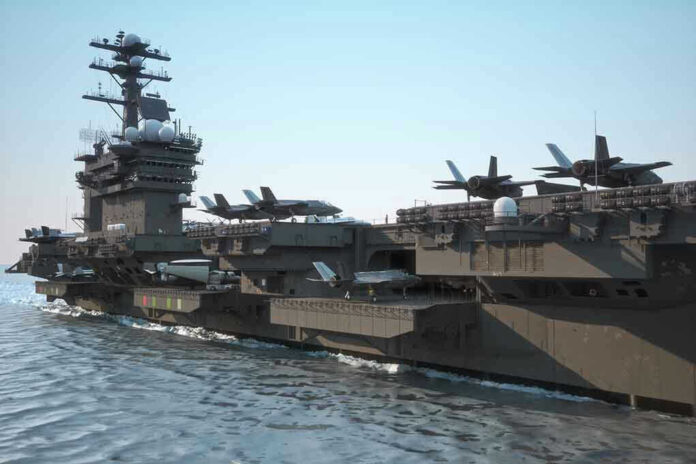
- The USS Gettysburg fired on U.S. Navy F/A-18F Super Hornets, destroying one aircraft after the crew ejected.
- The incident occurred during combat operations amid heightened threat levels and previous enemy missile interceptions.
- The Navy investigation found systemic failures in identification systems, training, and command decision-making.
- The event has prompted major changes in naval doctrine, training, and technology to prevent future friendly-fire tragedies.
Combat Environment and Immediate Threat
On December 22, 2024, the Truman Carrier Strike Group faced a volatile maritime environment where anti-ship cruise missiles and one-way attack drones had already been intercepted earlier that day. The USS Gettysburg, serving as the group’s air-defense cruiser, was on high alert. The crew’s situational awareness was degraded by the intensity of the threat, and the pressure to act quickly led to a “shoot-to-protect” mindset. In this atmosphere, the ship’s radar and identification systems misclassified two approaching F/A-18F Super Hornets as hostile missiles, triggering a catastrophic chain of events.
Systemic Breakdown and Human Error
The Navy’s investigation revealed that Gettysburg’s air-defense command and control systems suffered material deficiencies, including problems with its Identification Friend or Foe (IFF) and Precise Participant Location and Identification (PPLI) systems. These failures meant the ship could not properly track friendly aircraft, increasing the risk of misidentification. The watchstanders lacked adequate training and proficiency, and the commanding officer’s decision to fire was judged inappropriate given the broader information available. The investigation concluded that the crew’s low situational awareness and inability to restore it played a critical role in the incident.
Impact on Personnel and Operations
The friendly-fire engagement resulted in the loss of one F/A-18F Super Hornet and placed the lives of its aircrew at immediate risk. The crew ejected just before the missile struck, narrowly escaping death.
The incident disrupted operations for the Truman Strike Group and led to reputational and career consequences for Gettysburg’s commanding officer and members of the watch team. The broader naval aviation community faced renewed scrutiny over the reliability of IFF and PPLI equipment, as well as the integration of these systems into the strike group’s air picture.
Broader Implications and Lessons Learned
The Gettysburg incident has significant implications for naval doctrine, training, and technology investment. It highlights the need for robust, resilient IFF architectures, standardized data-link procedures, and realistic training scenarios that simulate mixed friendly and hostile air traffic under stress.
The case underscores the importance of better decision-support tools and clearer command doctrine to prevent individual commanding officers from making life-or-death engagement calls with incomplete or poorly fused information. The Navy has since codified clearer procedures on communications, coordination, and securing aircraft during carrier evasive maneuvers, addressing both systems and training shortfalls in air-defense identification and engagement processes
Expert Perspectives and Ongoing Questions
Military analysts and naval commentators view the Gettysburg incident as a cautionary example of how even advanced navies can suffer friendly-fire losses when facing complex, multi-axis threats that compress decision timelines and strain situational awareness.
The convergence of degraded identification systems, heightened threat expectations, and insufficiently trained teams created an environment where misclassification became more likely. While official reports and reputable defense outlets provide a high level of source credibility, uncertainties remain about the exact configuration and fault modes of Gettysburg’s combat systems, as well as the subjective experiences of the pilots involved.
Sources:
Task & Purpose: Navy Truman Planes Lost
Stars and Stripes: USS Truman Mishaps Navy Report