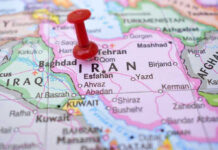
Iran’s chokehold on the Strait of Hormuz is now ricocheting into everyday life for U.S. allies—and the Philippines just became the first country to formally declare an energy emergency because of it.
Quick Take
- Philippine President Ferdinand Marcos Jr. signed Executive Order No. 110 on March 24, 2026, declaring a one-year national energy emergency tied to the Hormuz disruption.
- The Philippines imports about 26% of its energy from the Middle East, with 2024 import costs cited at $16 billion, making it especially exposed to Gulf shipping shocks.
- Officials cited roughly 45 days of fuel reserves, pushing Manila toward conservation rules, anti-hoarding enforcement, and targeted relief for transport, agriculture, and small businesses.
- The move underscores how the U.S.-Israel war with Iran is expanding beyond the battlefield into supply chains—raising fresh questions for war-weary American voters about costs and strategy.
Why the Philippines Pulled the Emergency Trigger First
President Ferdinand Marcos Jr. moved on March 24 by signing Executive Order No. 110, a one-year declaration that frames the situation as an “imminent danger” to supply stability rather than a theoretical risk. Reporting across multiple outlets converges on the same pressure points: heavy reliance on Middle East imports, the Strait of Hormuz disruption, and limited buffers at home. The government’s message is preemptive—act now to manage scarcity before it becomes visible chaos.
The Philippines’ vulnerability is unusually straightforward: about 26% of its energy supply comes from the Middle East, and those imports were valued at $16 billion in 2024. With the Hormuz route disrupted, the country faces a shipping chokepoint problem more than a refinery problem, meaning even willing sellers cannot help if cargoes cannot move safely and predictably. Officials cited around 45 days of fuel reserves, a countdown that shapes every policy choice.
What Executive Order 110 Activates: UPLIFT and a Whole-of-Government Response
EO 110 activates the UPLIFT framework—Unified Package for Livelihoods, Industry, Food, and Transport—designed to coordinate energy, transport, finance, agriculture, social welfare, and budget agencies. Reported measures include fuel management, energy conservation, and steps to keep hospitals, utilities, and essential supply chains functioning. The Department of Energy is positioned to implement conservation and intervene when needed, while the broader committee structure centralizes decisions under the president.
Authorities also signaled a crackdown mindset: anti-hoarding measures and monitoring aimed at preventing profiteering as prices rise and supplies tighten. That matters because “emergency” governance often expands enforcement powers quickly, and normal market signals can get replaced by directives. The available reporting emphasizes continuity—keeping the economy moving—yet it also hints at friction, since a year-long emergency framework can reshape how movement, purchasing, and distribution are regulated.
The War’s Energy Shock Meets Political Reality—Even Outside the U.S.
Coverage ties the emergency directly to the broader U.S.-Israel war against Iran and Iran’s retaliation affecting Gulf routes. The Philippines is not declaring war; it is declaring that war has reached its fuel docks. Analysts cited in coverage warn that short-term reserve releases can buy time, but a two- to three-month disruption could push more countries into similar emergency footing. If that happens, price spikes become structural—not temporary—and voters everywhere feel it.
Why This Resonates With War-Weary Conservatives at Home
For Americans watching from afar, the Philippines’ declaration is a clear indicator of second-order costs that rarely make it into upbeat press briefings. The core fact pattern is simple: conflict around Iran affects Hormuz; Hormuz affects global supply; global supply affects allies and ultimately U.S. consumers. In 2026, as MAGA supporters debate U.S. involvement and the scope of commitments overseas, this is the kind of tangible “price of escalation” data point that cuts through slogans.
Reporting also shows how fast official messaging can change under pressure: one day, there’s “no oil crisis,” and soon after, there’s a national emergency declaration. That whiplash is familiar to Americans who lived through years of shifting narratives on inflation, energy policy, and “temporary” disruptions that didn’t feel temporary. Even without dramatic shortages on day one, Manila’s move signals that policymakers believe the math of reserves and shipping risk demands immediate controls.
What to Watch Next: Reserves, Restrictions, and the Timeline No One Can Prove
The biggest unknown is duration: the available coverage does not establish when shipping conditions will normalize or how quickly reserves would drain under different demand scenarios. What is clear is the policy direction—conserve, prioritize essentials, and prepare for longer disruption under a one-year legal framework. For Americans frustrated with endless conflicts and expensive energy, the Philippines’ emergency is a concrete example of how a faraway war can tighten the screws on everyday life worldwide.
Philippines Declares National Energy Emergency: Ferdinand Marcos Jr. Activates Urgent Measures in Response to the Blockade of the Strait of Hormuz Caused by the Middle East Conflict
READ: https://t.co/1hh2Rz2Gd2 pic.twitter.com/jXpyA4OxgP
— The Gateway Pundit (@gatewaypundit) March 25, 2026
For U.S. decision-makers, the headline is not simply that an ally of an ally declared an energy emergency. The headline is that the war’s energy fallout is now measurable in official decrees, not just market chatter. As this conflict grinds on, the political test in America will be whether leaders can articulate achievable objectives and a realistic end state—because the global energy system is already signaling the bill is coming due.
Sources:
Philippines Becomes 1st Country to Declare Energy Emergency Due to Mideast Conflict
Marcos declares state of national energy emergency